The most interesting thing happening in luxury right now isn’t another private island or members‑only rooftop. It’s your coffee. As culture shifts and taste becomes increasingly visual, the humble cup has evolved into a quiet status symbol—an object of design, ritual, and storytelling. Social media’s current fascination with “accidental coffee art” isn’t just a trend; it’s a mirror held up to how the elite now stage their everyday lives: meticulously, aesthetically, and always ready to be captured.
Around the world, from Tokyo’s Omotesandō to Paris’s Right Bank and Mayfair’s discreet backstreets, luxury cafés and coffee programs at five‑star hotels are being curated with the same precision once reserved for haute couture. For the globally mobile, the morning espresso has become an anchor in a constantly shifting time zone—a small daily ceremony that signals a certain standard of living. If you’ve noticed your feed filling with artful crema swirls, sculptural mugs, and light‑drenched marble counters, you’re seeing the new visual language of premium lifestyle emerging in real time.
Below, five exclusive insights for travelers who understand that how—and where—you drink your coffee quietly says everything.
1. The Quiet Power of the “Signature Pour”
Luxury hotels and design‑forward cafés are racing to establish their own “signature pour”—a house coffee or presentation that instantly identifies the property in a single image. Think of how a Dior latte at the Dior Café in Seoul or Tokyo functions not just as a drink, but as a wearable logo for your day. Similarly, brands like Ralph Lauren’s Ralph’s Coffee or Armani/Caffè have elevated their coffee offerings into instantly recognizable, photographable rituals that travel as well online as their runway looks.
For the discerning traveler, the signature pour is more than a photo moment. It’s a litmus test for the property’s attention to detail. Is the coffee program sourced with the same rigor as the wine list? Are beans from traceable estates in Colombia, Ethiopia, or Panama, roasted specifically for the house profile? Is milk choice a casual afterthought—or is there a considered pairing of alternative milks to specific roast styles? When a property takes its coffee this seriously, it almost always signals corresponding rigor across spa, dining, and even turndown service. In 2025’s premium landscape, you can judge a stay by its first cup.
2. Espresso as Architecture: Why Design‑Led Cafés Are the New Private Clubs
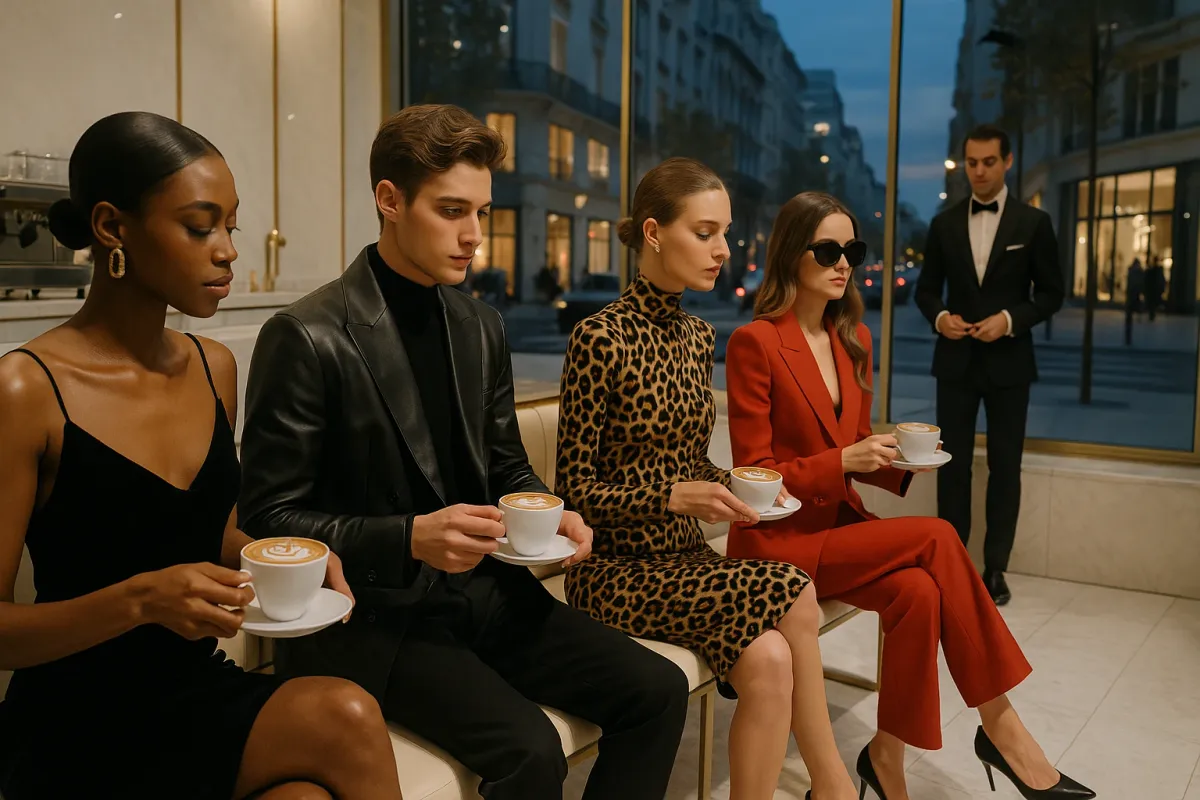
The social media wave of “accidental coffee art” has made one thing clear: people are no longer just drinking coffee; they’re curating vignettes. The most talked‑about cafés today are increasingly engineered like galleries—carefully composed spaces in which every reflection, shadow, and surface interacts with the cup in your hand. From Copenhagen’s pared‑back concrete temples to Seoul’s mirrored, sculptural spaces, the café has become a stage set for a meticulously edited life.
For luxury travelers, this has practical implications. High‑net‑worth guests increasingly structure meetings around these design‑centric cafés instead of traditional hotel lounges. They provide a neutral yet refined environment—less formal than a boardroom but more discreet than a restaurant. In cities like London, New York, and Dubai, developers now quietly anchor luxury residential projects with an in‑house café partner of note, understanding that residents want this experience at lobby level. Before booking a long‑stay suite or branded residence, pay attention to the café downstairs; its aesthetic and crowd will often forecast the property’s true cultural temperature better than any brochure.
3. From Origin Story to Status Story: The New Language of Coffee Provenance
Just as the wine world educated a generation to say “Left Bank” and “Burgundy” with precision, specialty coffee has taught a global audience to speak in regions, altitudes, and processing methods. What’s interesting now is how the luxury segment is appropriating this language and softening it into something more narrative, less technical—a story rather than a spec sheet.
High‑end properties from Aman to Four Seasons are increasingly partnering with boutique roasters and micro‑estates, curating seasonal bean rotations that come with their own backstory. You’ll see this in tasting notes that read like travel writing: “honey‑processed beans grown on a family‑run estate overlooking Lake Atitlán,” or “heirloom varietals from Yirgacheffe, dried on raised beds under eucalyptus shade.” For the globally affluent guest, being able to decode and discuss these stories has become a subtle social currency, similar to being able to speak intelligently about biodynamic Champagne.
The premium insight: when you encounter a hotel or café that can talk provenance fluently—but without lecturing—stay and explore. This is often where you’ll find limited‑release micro‑lots, tasting flights, and even coffee “cellaring” programs that parallel fine wine service. It’s also where your routine flat white quietly becomes a masterclass in global terroir.
4. Ritual as Luxury: Turning Jet Lag into a Private Coffee Ceremony
In a world of constant movement, the most coveted luxury is often not excess, but ritual—something repeatable, grounding, and intimately yours. The surge of coffee imagery across social platforms reflects a collective desire to reclaim small, controllable moments in increasingly fluid lives. For frequent travelers, building a personal coffee ritual across time zones is becoming an elegant form of self‑care.
Forward‑thinking hotels have begun to recognize this. Instead of generic capsule machines, suites at top‑tier properties in cities like Tokyo, Singapore, and Zurich are being equipped with hand grinders, pour‑over setups, or compact La Marzocco and Slayer machines, along with a curated selection of beans. Some properties now offer “jet‑lag coffee menus,” pairing lighter roast profiles with morning arrivals and deeper, chocolatey notes with late‑night check‑ins. Others collaborate with wellness teams to design caffeine protocols that align with circadian support—micro‑dosed espresso shots for mid‑afternoon slumps instead of sugar‑loaded snacks.
For the luxury traveler, the opportunity is to treat coffee as choreography: a morning hand‑brew in silence before emails, a single mid‑day macchiato taken standing at the bar in Milan, a decaf single‑origin sipped slowly on a terrace at dusk. These micro‑rituals, repeated in different cities, form a private thread through an otherwise crowded itinerary—your own quiet brand of continuity.
5. The Photogenic Cup as Currency: How Coffee Signals Belonging in the Digital Age
The current online fascination with “accidental coffee art”—those unplanned swirls of foam and shadow, the way sunlight hits a saucer, the abstract shapes a spill leaves on marble—reveals an uncomfortable truth: premium lifestyle is now performed as much as it is lived. The most observant users, the ones collecting and sharing these images, have effectively become the new trend scouts, documenting a visual language of luxury that’s subtler and more intimate than logos.
For those moving in high‑end circles, the coffee in your hand is swiftly becoming a form of soft identification. The minimalist ceramic cup from a cult Tokyo roaster, the hand‑thrown stoneware from a Lisbon café no one can yet pronounce, the monogrammed china from a heritage Parisian hotel—these props signal not just taste, but access and awareness. They say: I know where to be, and I know what details matter.
This doesn’t mean performative excess is the goal. In fact, the most compelling images shared now are almost anti‑staged: a small drip on a linen tablecloth at a countryside hotel in Provence, a slightly imperfect latte art rosette on a weathered wooden counter in Kyoto, the shadow of a palm crossing a demitasse in Cabo. These are the moments that resonate precisely because they feel unforced. For the sophisticated traveler, understanding this shift means curating experiences that are genuinely lived first—and incidentally photogenic, rather than the reverse.
Conclusion
The evolution of coffee from commodity to quiet luxury mirrors a broader transformation in how the world’s most discerning travelers define a premium life. It’s no longer about the loudest suite or the most obvious upgrade; it’s about the texture of a morning, the provenance in a cup, the way light and ceramic and aroma conspire to make a transient moment feel almost cinematic.
As your feed fills with ever more intricate portrayals of “accidental coffee art,” consider it an invitation—not just to document, but to refine. Choose properties that treat their coffee program as seriously as their spa. Seek out design‑driven cafés that feel like an extension of your own aesthetic vocabulary. And above all, allow your coffee rituals, wherever you land, to become a signature as distinct and deliberate as your passport stamps. In 2025, luxury is not just where you travel; it’s how you take your first sip.
Key Takeaway
The most important thing to remember from this article is that this information can change how you think about Premium Lifestyle.