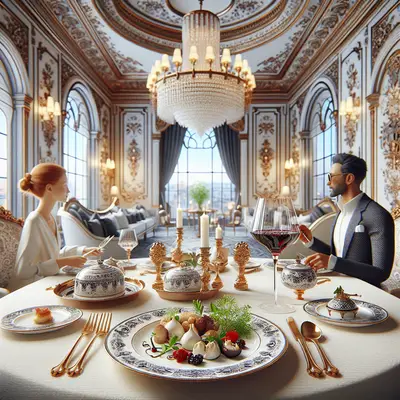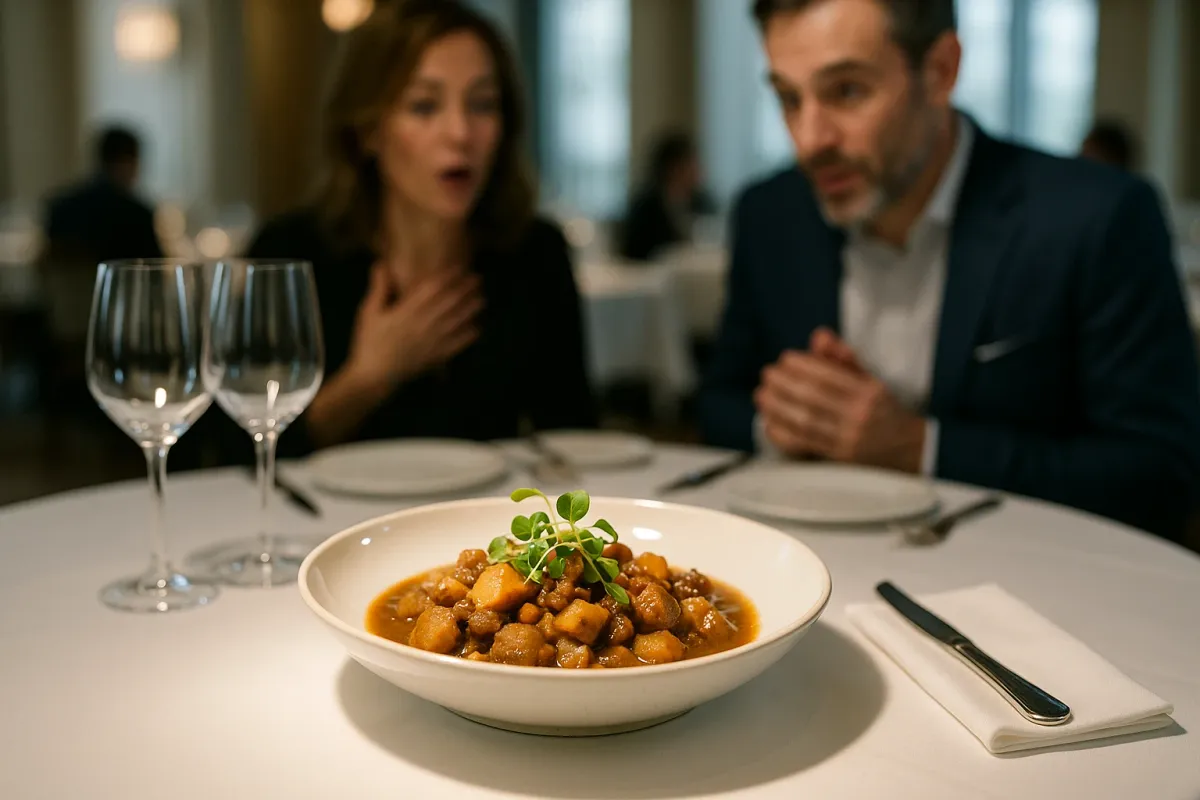
There is a particular kind of horror story that surfaces online again and again: the dinner party where the casserole glistens with mystery oil, the chicken is a shade you’ve never seen in nature, and dessert tastes like it has survived three different centuries—and not gracefully. One of today’s viral pieces, “36 Of The Most Foul Things People Were Forced To Eat As Guests In Someone’s Home,” has the internet recoiling and laughing in equal measure. But beneath the comedy is a revealing contrast: at the very moment home–cooked hospitality is going unexpectedly feral, luxury restaurants around the world are taking the same “comfort” archetypes and elevating them into objects of quiet, meticulous beauty.
For the Jet Ready traveler who lives in first-class cabins and discreetly serviced suites, this tension—between the terrifying plate and the transcendent one—is more than a meme. It marks a deeper shift: fine dining is no longer about distance from the familiar, but about reclaiming it with discipline, craftsmanship, and an almost couture-level obsession with detail. While social media revels in culinary horror stories, the world’s most interesting dining rooms are turning nostalgia, homestyle dishes, and humble ingredients into the most sought-after reservations of the season.
Below, five ultra-specific insights to keep you firmly on the right side of that divide—where comfort food arrives pressed, polished, and perfectly plated.
1. The New Status Dish Is the One You’re Almost Embarrassed to Crave
As people share their “never again” dishes online—overcooked meats, lurid salads suspended in gelatin, casseroles of unclear origin—chefs at the top of the game are moving in the opposite direction. In New York, London, Copenhagen, and Singapore, the most intriguing tasting menus now include something that looks, at first glance, almost disarmingly simple: a reimagined lasagna, an elevated pot roast, a deceptively nostalgic pudding. The difference lies in the rigor. At places like Daniel Humm’s Eleven Madison Park, where vegetables are treated with the kind of respect once reserved only for wagyu, or at Paris’s Septime, where a single carrot can feel like its own course, chefs are applying haute technique to the flavors many of us associate with childhood kitchens—just not the chaotic ones going viral today.
For luxury travelers, this means that the dish you might hesitate to order in a business-class lounge—macaroni and cheese, roast chicken, a bowl of rice pudding—has become a subtle marker of refinement when executed with precision. The status shift is quiet but real: in the same way an understated, logo-less coat signals confidence, a “simple” dish on a Michelin-starred menu announces a chef’s technical authority. When you see a home-style reference on a serious menu, order it. It’s almost always a flex.
2. Refinement Begins Long Before the Plate—And Has Nothing to Do with Fussiness
Those viral “foul meal” posts point to a recurring sin: indifference. Food left out too long, ingredients of suspicious age, techniques that confuse improvisation with negligence. In fine dining, luxury is the opposite of that carelessness. The most sophisticated restaurants today are using backstage systems that resemble high-end manufacturing more than a domestic kitchen. In Tokyo and Osaka, for example, kaiseki and omakase counters are balancing centuries-old discipline with state-of-the-art refrigeration, hyper-precise timers, and ingredient traceability that would impress a pharmaceutical lab.
From a traveler’s standpoint, refinement isn’t the number of components on your plate—it’s the invisible chain of decisions that brought it to you. When you sit down at a table in a place like Copenhagen’s Alchemist or Mexico City’s Quintonil, you’re participating in a choreography that began months earlier: producers chosen not for trend but for consistency, logistics routes mapped to keep herbs breathing, sauces tested across seasons. Ask your server, calmly and without performance, how long a signature dish has been in development or how frequently a key ingredient’s source changes. A concise, confident answer is often a more reliable indicator of quality than any sommelier’s speech.
3. Comfort Can Be Hyper-Local Without Being Rustic
One of the revelations from those “worst meal ever” confessions is how often “family recipe” is code for “no one has questioned this in 40 years.” The fine-dining world is in the middle of a course correction: hyper-local does not mean improvised, and heritage does not excuse mediocrity. In Lima, chefs like Virgilio Martínez and Pía León have proven that local and ancestral ingredients can be catalogued, studied, and elevated with scientific precision. Across Scandinavia, New Nordic’s second wave is softening its edges—still rooted in terroir, but with a more sensual, less severe expression.
For travelers, this is where the most interesting opportunities lie. Rather than defaulting to the city’s most famous international name, consider the restaurants that apply haute rigor to regional comfort: the refined izakaya in Tokyo that treats its karaage like jewelry, the Lisbon dining room where caldo verde becomes a layered, textural experience, the Cape Town kitchen that approaches bobotie with the structure of French pâté en croûte. When you see a menu that reads almost like a local grandmother’s notebook—but the room, lighting, and wine list whisper meticulous restraint—you’ve found the modern sweet spot: comfort without complacency.
4. The True Luxury Is How Little You Have to Worry About Etiquette
One of the darker threads running through those viral home-dining anecdotes is social tension: guests trapped between politeness and self-preservation, silently calculating how little they can eat without offending their host. Luxury restaurants have taken note. The most forward-thinking fine-dining rooms in 2025 consciously remove that anxiety. Dress codes have softened from prescriptive to suggestive—“smart, comfortable elegance”—and menus have become more transparent and flexible, even at the high end.
In major dining capitals, it’s now common to see tasting menus that can accommodate preferences and allergies without turning the experience into a negotiation. At elite rooms in London or Hong Kong, a quiet mention of an aversion at the booking stage is enough; the substitutions appear seamlessly, courses still arriving in cadence with the table. The underlying philosophy is simple: a guest anxious about rules cannot fully taste. For luxury travelers used to orchestrating complex itineraries, this shift toward “effortless correctness” is crucial. Look for restaurants where the welcome email or confirmation message feels calm, clear, and gracious rather than prescriptive. That tone usually carries straight through to the plate.
5. Instagram May Love the Spectacle—But the Best Tables Still Whisper
The current wave of “disaster meal” posts thrives on spectacle: unhinged plating, ominous textures, colors that belong in warning labels. High-end restaurants, aware that social media can make or break a new opening, are tempted to chase that same visual extremity. Many do, and not always successfully. Yet at the very top tier, a quiet countertrend is emerging: dishes designed first for the palate and only incidentally for the camera. They are photogenic the way a perfectly tailored jacket is—shape, proportion, detail—rather than through shock.
For luxury travelers, this creates a useful litmus test. In Paris, Milan, or New York, if a restaurant’s entire identity seems to rest on one “viral” dish, expect the experience to age as quickly as the algorithm changes. Instead, study how the dining room looks when nobody is taking a photo: the distance between tables, the way glassware is handled, the ambient sound. When a course arrives that makes the table reach for phones, pause a moment before joining in. Notice aroma first, then texture, then temperature. In the world of truly refined dining, the most shareable detail is often the one a camera can’t capture: the exact warmth of a sauce, the precision of a resting time, the way acidity lands and vanishes. Post the image if you like—but keep the memory for yourself.
Conclusion
As the internet gleefully documents the worst that home hospitality can offer, the upper echelons of global dining are quietly doing the opposite: taking familiar urges—comfort, nostalgia, the desire to feed and be fed—and subjecting them to extraordinary discipline. The same themes appear in both worlds, but on different frequencies. Where the viral casserole is chaotic, the luxury counterpart is composed. Where the “foul” plate is accidental, the fine-dining dish is obsessively intentional.
For the Jet Ready traveler, the opportunity is clear. Seek out the restaurants that treat simplicity as a stage for craft, that lean into local roots without hiding behind them, that choreograph service so you never have to wonder what to do next. In a world that loves to laugh at bad meals, there is a particular pleasure in sitting down to a plate that feels instantly, deeply comforting—then realizing just how much invisible excellence it took to make it look that effortless.
Key Takeaway
The most important thing to remember from this article is that this information can change how you think about Fine Dining.