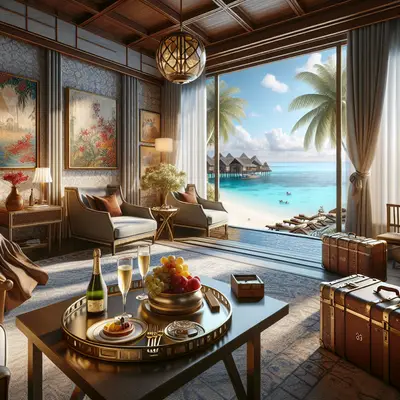
The most interesting thing happening in luxury right now isn’t a new overwater villa or a record-breaking penthouse sale. It’s a shift in what affluent travelers actually want to remember when they get home. Against a news cycle packed with spectacle, one quietly compelling trend stands out: a renewed obsession with craftsmanship—particularly fine woodworking—as a marker of taste, status, and permanence.
Today’s viral fascination with extraordinary wooden creations, from museum-worthy furniture to sculptural everyday objects, mirrors what’s happening in the premium travel world. In much the same way that people are pausing mid-scroll to marvel at pieces that look “too beautiful to be practical,” luxury travelers are slowing down to seek destinations where the experience is not just consumed, but crafted—literally. The new aspirational itinerary isn’t just about where you stay; it’s about the hands, materials, and traditions behind every surface you touch.
Below, five quietly powerful shifts in high-end travel, inspired by this global rediscovery of wood as an art form—each one a cue for how to curate your next journey with a more discerning eye.
1. From Branding to Grain: Reading the Room Like a Connoisseur
In a digital landscape recently charmed by images of astonishing wooden objects—everything from complex joinery to sculptural furniture—the world has been reminded of a simple truth: true luxury is legible in the details. For the premium traveler, that means learning to “read” a room the way a collector reads a piece of art. When you walk into a suite, look beyond the infinity pool and the view, and pay attention to the timber underfoot, the cabinetry, the joinery on a desk drawer.
High-end properties in regions like Kyoto, the Dolomites, and the Swiss Alps are leaning heavily into this aesthetic, commissioning local artisans to create custom pieces from indigenous woods: Japanese sugi and hinoki, Italian walnut, Austrian oak. The difference is tangible. Doors close with a soft, weighty precision. Bedside tables reveal dovetail joints instead of nails. Even the wardrobe handles have a warmth, a patina-in-waiting, that plastic or chrome can’t replicate. The luxury traveler who notices these things—and chooses properties accordingly—is no longer chasing logos, but lineage.
This subtle shift changes how you book. Instead of asking for “the best suite,” ask which room category features locally crafted furniture, reclaimed beams, or collaboration with a named artisan. You’ll quickly discover that the most desirable spaces are not necessarily the largest, but the ones where every surface whispers intention.
2. The Atelier Itinerary: Collecting Skills, Not Just Stamps
The same kind of online enthusiasm that’s currently pouring over images of hand-carved bowls and complex wood sculptures is spilling into travel planning. More affluent travelers are building itineraries around ateliers and workshops rather than only around Michelin stars. The most coveted souvenirs now are skills—and the stories that come with them.
From Scandinavian design hotels offering private woodworking sessions in forest-side studios, to luxury ryokans in Japan arranging intimate introductions to local carpenters, the workshop has become the new wine cellar tour. Instead of a passive tasting, guests are invited to plane a board, understand the grain, or try their hand at traditional joinery under the quiet supervision of a master. It’s not about leaving as an expert—it’s about stepping, briefly, into a lineage.
For those curating a premium trip, the key is to look for properties and DMCs (destination management companies) that can arrange one-to-one or very small group sessions with real artisans, not tourist demonstrations. Ask whether you’ll be in a working studio, whether the artisan sells to notable galleries or designers, and whether you can commission a piece that begins during your visit and is finished after you leave. The result is a journey that continues: months later, a piece arrives at your home, carrying with it the smell of the workshop and the memory of the hands that made it.
3. Wood, Wellness, and the New Sensory Luxury
The current fascination with extraordinary wooden creations isn’t just visual; it’s deeply tactile. That same instinct is reshaping premium wellness travel. Bespoke wooden elements are increasingly central to spas, hammams, and wellness suites, not as rustic décor, but as calibrated instruments of calm.
High-end spas in Nordic countries are lining saunas with thermally treated fir and aspen for optimal scent and heat diffusion. Japanese-inspired retreats are installing hinoki soaking tubs carved from single logs, known for their naturally antibacterial qualities and delicate citrus aroma. In the Alps, forest-therapy programs pair guided walks among centuries-old trees with treatments in wood-clad, low-scent treatment rooms where the grain runs seamlessly along walls, benches, and floors.
For the discerning guest, the question becomes: how does the material palette contribute to how my body feels? Wood, when thoughtfully selected and finished, absorbs sound, softens light, regulates humidity, and delivers subtle scent—creating an atmosphere that high-gloss marble and glass can’t achieve alone. When choosing a wellness-focused property, look for design that uses wood as a primary element in treatment rooms, relaxation lounges, and even in-room amenities—wood-handled brushes, combs, or massage tools made by local craftspeople. This is sensory luxury at its most refined: not louder, but deeper.
4. Commissioned, Not Collected: Travel as a Curated Object
The viral celebration of unique wooden pieces—each one a singular expression of time, patience, and material—dovetails with a growing desire among high-net-worth travelers for trips that feel “commissioned” rather than merely “booked.” Just as a collector commissions a bespoke table or sculpture, ultra-luxury guests are increasingly seeking journeys that are designed around a central crafted object or experience.
Consider the emerging model: you choose a destination not simply for its beauty, but because it hosts a particular artisan whose work you admire, perhaps discovered through a social post featuring an extraordinary wood creation. Your travel designer orchestrates a narrative around this encounter: private studio visit, selection of wood, discussion of form and function, followed by time in the landscape where that wood originated—a forest hike, a lakeside picnic, a visit to the sawmill.
The piece you eventually commission—a console, a tray, a sculptural chair—becomes more than décor. It is a three-dimensional travel diary. Instead of cabinets full of logoed luggage and souvenirs, your home becomes quietly punctuated by singular pieces, each tied to a place, a season, a conversation. The premium insight here: the future of status is provenance, and travel is rapidly becoming the most meaningful provenance of all.
5. The New Environmental Aesthetic: Sustainability Without Slogans
The current cultural infatuation with wood as a medium also reflects a deeper unease with disposability. Pieces that go viral now are often those that clearly took time—hours of carving, weeks of joinery, years of seasoning the timber. Luxury travelers are mirroring this preference by gravitating toward properties and experiences that treat materials, and environments, with similar respect.
In premium hospitality, that means moving beyond performative “green” labels toward an environmental aesthetic that’s visible, tangible, and quietly rigorous. You’ll see it in resorts that use reclaimed wood from local barns, piers, or historical structures, documented and celebrated in-room. You’ll see it in lodges that source timber from certified forests, mill it nearby, and work with regional artisans to reduce transport and preserve traditional skills.
For the savvy traveler, this is not about guilt; it’s about coherence. There is a particular elegance in waking up in a suite where the floorboards once lined a local warehouse, the headboard is carved from storm-fallen timber, and the bedside table is signed on the underside by the maker. When evaluating luxury properties, ask pointed questions: Where was this wood sourced? Who designed and built the furniture? Is there a narrative of restoration or regeneration? The properties with genuine answers tend to offer a deeper, more settled form of luxury—one that feels less like consumption and more like participation.
Conclusion
As feeds fill with extraordinary wooden creations that look both timeless and quietly radical, a similar aesthetic is reshaping the upper tiers of travel. The new premium lifestyle isn’t about adding more destinations to a list; it’s about deepening the texture of each one—through craft, provenance, and the human hands behind every surface.
For Jet Ready travelers, this moment offers an invitation: choose stays where the story is built into the grain, itineraries that include studios as often as spas, and souvenirs that will outlast trends and algorithms alike. In an age of constant replacement, the most luxurious journeys are those that leave you with something you never feel the need to upgrade.
Key Takeaway
The most important thing to remember from this article is that this information can change how you think about Premium Lifestyle.