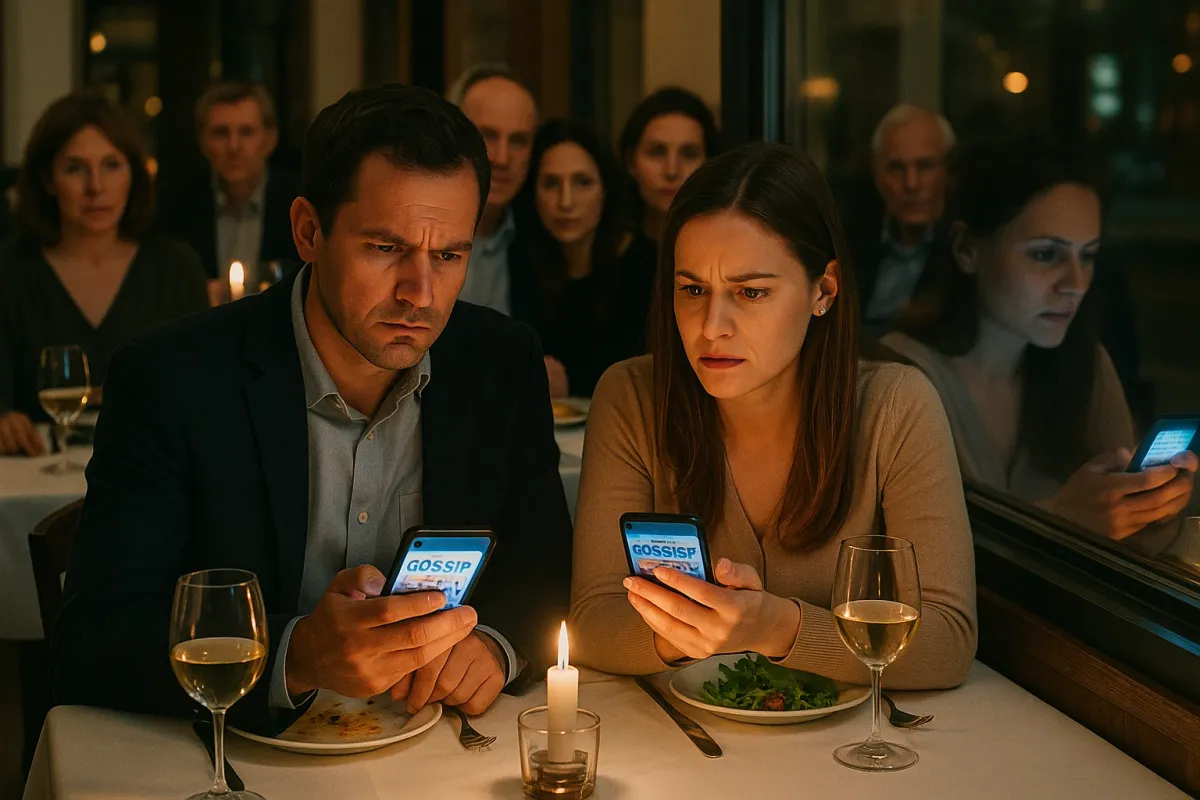
The internet may have turned restaurant gossip into a spectator sport, but for discerning travelers, one recent headline lands closer to the tasting menu than the tabloids. Reports of JD Vance allegedly being spotted raising his voice at wife Usha in a restaurant, followed by a wave of online commentary dissecting his behavior, have done more than fuel political or personal speculation—they’ve quietly reframed how we think about being seen while we dine.
In an age where a single smartphone can turn a private moment into a viral clip, the fine dining room is no longer just about cuisine and crystal. It’s a stage, a backdrop, and increasingly, a reputational risk. For luxury travelers who move through Michelin-starred rooms, discreet hotel restaurants, and hard‑to‑book chef’s counters, understanding the new etiquette of visibility is as essential as knowing the difference between grand cru and premier cru.
Below, five insights drawn from this very public restaurant moment—translated into private strategies for those who expect more from their next reservation.
1. The New Luxury Is Not Being the Story
The JD Vance incident—whether viewed as political, personal, or purely behavioral—unfolded in the most modern of arenas: a public restaurant, followed by an even more public trial-by-comment section. For high‑net‑worth travelers and public‑facing figures, the lesson is quietly profound: the greatest luxury in a dining room now is anonymity, not attention.
Elite properties are responding. Discreet hotel restaurants in New York, Paris, and Singapore are redesigning layouts so marquee guests are seated away from obvious sightlines and camera-happy tables. Side entrances, private elevators, and host stands positioned to minimize public exposure are no longer purely for celebrities—they’re now requested by executives, founders, and even ultra‑discreet family offices who understand that one overheard argument can become the world’s headline tomorrow.
For travelers, the strategic move is to choose spaces where the architecture protects you from becoming collateral content. Ask how the restaurant handles high-profile or privacy‑sensitive guests. In a world where every dining room can double as a live set, the most refined experience is one where you are never the main character.
2. Dining Rooms Are Becoming Reputation Management Suites
What that viral restaurant moment reveals, more than anything, is how quickly a dining room can become an extension of your personal PR. The table is no longer just where you eat—it’s where strangers edit your character in real time, based on a few charged seconds.
In response, hospitality brands at the top end of the market are pivoting. Fine dining teams are being trained not only in service choreography but in quiet crisis management: how to move a guest to a more private corner, how to read tension at a table, when to offer a well‑timed pause between courses to allow a conversation to cool. Some flagship properties in London and Dubai now brief senior staff on which guests may attract unwanted attention and how to proactively shield them from it.
For luxury travelers, this makes the maître d’ almost as critical as the chef. When booking, it is no longer gauche to ask: How does the restaurant handle privacy concerns? What is their policy if another table begins filming without consent? The right answer signals you are not merely reserving a table—you are buying into a reputational buffer built into the very fabric of service.
3. Emotional Conduct Is Quietly Joining the Dress Code
The JD Vance restaurant discourse was not about the menu, the wine list, or even the setting; it was about conduct. Viewers who never saw the check still felt entitled to pass judgment on behavior, tone, and dynamics. In luxury dining, the unspoken dress code now extends well beyond wardrobe.
Top‑tier restaurants are responding by curating atmospheres that subtly discourage escalation. Sound design, table spacing, lighting temperature, and pacing of courses are all being calibrated to keep the room calm rather than performative. Some intimate omakase counters and chef’s tables now quietly decline guests who arrive visibly intoxicated or agitated, even if they have a confirmed booking, to protect the experience of the room.
For the sophisticated traveler, this is an opportunity rather than a constraint. Treating fine dining as a ritual—and arriving emotionally composed—is becoming part of the luxury itself. It is the difference between simply eating at a three‑star and belonging in the room. As public incidents remind us, the most memorable course of the evening may be not what is on the plate, but how gracefully you inhabit the moment.
4. The Smartest Tables Are Now the Least Visible Ones
The restaurant at the center of a scandal often becomes a character in the story, whether it wishes to or not. In the wake of the JD Vance reports, every detail—from the type of restaurant to how public it was—fed the narrative. For property owners, it’s a cautionary tale. For well‑traveled diners, it’s a playbook.
High‑end dining spaces are quietly evolving in two directions: hyper‑visible “scene” rooms designed for social media, and cloistered, design‑forward spaces that intentionally resist virality. Luxury hotels in capitals like Tokyo, Paris, and Hong Kong are expanding the latter: think low‑capacity dining rooms with sightlines broken by screens, greenery, or sculptural partitions, and a deliberate absence of “Instagram angles.”
From a traveler’s perspective, the privileged move is to request—not the “best” table in the traditional sense, but the least narratively exploitable. Corner banquettes, semi‑private alcoves, and tables buffered by architectural elements are the new sought-after real estate. You still enjoy impeccable service and a world-class cellar—without your evening becoming anyone else’s content.
5. Discretion Is Becoming the Ultimate Hospitality Amenity
The most striking part of any public restaurant drama is often what the dining room did—or did not—do. Was staff present but passive? Did management intervene? Were guests protected from becoming unwilling extras in someone else’s scandal? In the luxury segment, discretion is no longer a poetic word on a website; it is a measurable, operational standard.
Some of the world’s most rarefied properties are codifying a new, quietly stringent approach. Staff are trained to tactfully discourage filming other guests, to route high‑profile diners through back‑of‑house corridors, and to treat sensitive moments—raised voices, emotional conversations—as signals to protect privacy, not opportunities for gossip. In a few ultra‑private resorts, phone-free dining areas are no longer nostalgia—they are a premium amenity, requested by name.
For the luxury traveler, this is the new checklist: Does the restaurant have a documented privacy policy? Are there phone‑restricted dining rooms or private salons? Will the team coordinate with your hotel to ensure discrete arrivals and departures? As public incidents remind us, in today’s dining landscape, refinement is less about the spectacle of the room and more about the sanctuary it creates around you.
Conclusion
A headline about a public figure and an uncomfortable restaurant scene may feel distant from the quiet ritual of a well‑curated tasting menu in Kyoto or Lake Como. Yet it captures the new reality of fine dining in 2025: every room is potentially public, every table a stage, every interaction a fragment of your larger narrative.
For those who travel well, the response is not to retreat from exceptional restaurants, but to choose them differently. Seek out spaces where architecture, service, and culture are all aligned around one principle: that the rarest luxury is not being watched, but being held—briefly, exquisitely—outside the reach of the feed.
In this new era, the finest dining experiences are no longer those everyone talks about. They are the ones no one else ever quite knows you had.
Key Takeaway
The most important thing to remember from this article is that this information can change how you think about Fine Dining.