The internet has just cast its votes for the year’s most disliked stars, and the results are everywhere—from Ranker’s data‑driven list to the comment sections dissecting every fall from grace. But beyond the spectacle of public opinion lies a quieter, more interesting shift: high‑net‑worth travelers are watching, and so are the world’s most exclusive resorts. In an age where one celebrity misstep can trigger a global boycott, the luxury retreat is no longer just about infinity pools and private chefs; it’s about reputation risk, narrative control, and the kind of privacy money can almost—but not quite—buy.
As this new list of “most disliked” celebrities circulates and reshapes brand strategies overnight, top‑tier resorts are recalibrating who they welcome, how they protect other guests, and what kind of stories they allow to be told on property. For discerning travelers, the backlash economy is becoming a surprisingly effective compass. It reveals which retreats are truly curated sanctuaries—and which are simply high‑priced stages for the next PR disaster.
Below, five exclusive insights into how the current wave of celebrity unpopularity is subtly—but decisively—reshaping the world’s most rarefied hideaways.
1. The Rise of the “Reputation Curated” Guest List
This year’s viral tally of the most disliked stars is more than internet gossip; it functions as a real‑time risk index for ultra‑luxury resorts. When a public figure falls out of favor, the consequences don’t end at endorsements or box office numbers—they extend to the properties that host them. Resort GMs quietly study the same trending lists that fans share, not out of curiosity, but to make informed decisions about who might compromise the experience of their core clientele.
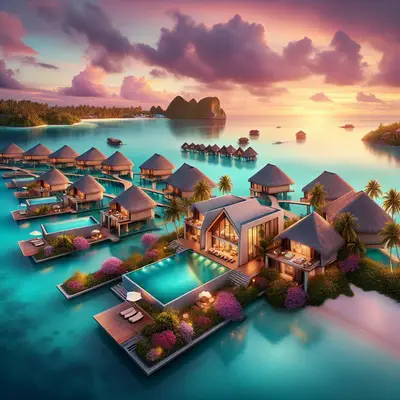
At the highest level, this has given rise to an unspoken but very real practice: reputation‑curated guest lists. Some exclusive properties, particularly in the Maldives, the Seychelles, and coastal Italy, are now far more selective about high‑visibility names that request stays, especially if they appear on the year’s “most disliked” rosters or are embroiled in ongoing online backlash. The goal isn’t moral judgment; it’s risk mitigation. One contentious figure at a 16‑villa private island can change the entire dynamic for other guests—who are increasingly paying not only for beauty and privacy, but for the psychological comfort of not sharing their sanctuary with controversy.
For luxury travelers, this is becoming a new, quiet standard of excellence: the properties that decline loud drama in favor of discreet harmony. The most seasoned guests are now asking not “Who stays here?” but “Who doesn’t?”
2. Off‑Grid Luxury as the Ultimate PR Firewall
With social media outrage cycles accelerating, the most precious amenity a resort can offer a high‑profile guest—or their neighbors on property—is the ability to disappear. As more celebrities find themselves on public “disliked” lists and under constant scrutiny, the demand for resorts that are structurally resistant to visibility has surged. These are not just remote—they are architected to be unphotographable in any meaningful way.
Think: properties with private arrival by seaplane directly to villa docks, underground or concealed access routes between suites and wellness facilities, and topography that blocks any clear sightlines between residences. In select Caribbean and Mediterranean enclaves, villas are now being redesigned with layered setbacks, lush vertical gardens, and hidden plunge pools that cannot be captured from the water, the air, or another terrace. For travelers uninterested in becoming collateral background in someone else’s paparazzi story—or being geotagged alongside a polarizing figure—this architectural discretion is priceless.
This season, as public dislike lists make certain names even more target‑rich for tabloids, off‑grid luxury has evolved into something deeper than seclusion. It is a PR firewall—for you and for those you share the island with.
3. A New Luxury Metric: The Absence of Content
In a year where the internet ranks its least‑favorite stars with clinical precision and every resort lobby can become accidental B‑roll, discerning travelers are embracing a radical new metric of luxury: how little of the property exists online in real time. It’s a subtle shift, but profound. The more controversial the digital landscape becomes, the more appealing a resort’s digital silence feels.
Top‑tier retreats are responding by rethinking their relationship with visibility. Some now limit or entirely prohibit influencer partnerships during peak season, choosing long‑term trust over short‑term reach. Others quietly watermark and monitor any official imagery to discourage casual guests from broadcasting identifiable details like dock layouts, entry paths, or signature views that can be used to pinpoint stay dates. In private members’ resorts, policies are tightening: no drones, no public tagging, and no posting location‑specific content until after departure.
For elite travelers tracking today’s online backlash against overexposed celebrities, this restraint signals something invaluable: a property that understands that true luxury is not in what it shows off, but in what it refuses to broadcast.
4. Bespoke Crisis‑Aware Concierge Services
The same ecosystem that elevates and demotes celebrities via public voting has also made every traveler more reputation‑sensitive. Executives, founders, and even ultra‑private families are now acutely aware that one misinterpreted image, one accidental association, can trigger its own mini‑backlash among stakeholders, investors, or boards. As a result, concierge services at exclusive resorts are evolving from pure experience‑crafting to subtle risk management.
At the very top end, guest relations teams now quietly screen external experiences for potential optics issues: a yacht charter that has recently hosted a controversial name from this year’s “most disliked” list may be gracefully substituted with another vessel; a restaurant whose clientele has shifted toward tabloid‑friendly chaos is replaced with a chef’s‑table experience in‑villa. Even spa programs are being adapted—some wellness directors now offer discreet “digital detox” and “reputation recovery” stays designed for guests emerging from public storms, with scheduled media breaks, controlled communication zones, and therapeutic programming to support both body and mind.
For the traveler, this creates an entirely new layer of service: a concierge who not only secures the impossible, but quietly ensures that nothing—and no one—you encounter on your retreat undermines the life you return to.
5. The Quiet Return of Character‑Driven Hospitality
As the internet publicly ranks dislike, luxury is increasingly ranking something else: character. The backlash against certain celebrities this year, cataloged so neatly in viral lists, has made values a visible currency. In response, a number of exclusive resorts are choosing to differentiate themselves not by louder design or more extravagant amenities, but by a more nuanced, values‑driven hospitality philosophy.
You see it in hiring: properties gravitating toward GMs and guest‑facing staff with backgrounds in diplomacy, psychology, or cultural institutions—people skilled in reading a room, not just running it. You see it in programming: partnerships with conservationists, artists, or philanthropic foundations whose presence on property adds depth instead of noise. You even see it in who resorts quietly decline to work with, from brand collaborations to event buyouts that might compromise the atmosphere for their most discerning guests.
For luxury travelers, this marks a subtle but powerful evolution. When the public sphere is busy deciding who it dislikes most, the most refined retreats are doubling down on who—and what—they quietly respect. The result is a kind of hospitality that feels less like a backdrop for status, and more like a sanctuary for discernment.
Conclusion
In a world where a single list of the year’s most disliked celebrities can ignite debates across platforms, the smartest exclusive resorts are reading those signals as more than gossip—they are treating them as design criteria. Reputation is now a structural element, as critical to the modern sanctuary as privacy, architecture, and view. For the traveler who values discretion over spectacle, this is a fortuitous alignment.
The most coveted retreats in 2025 will not be those most frequently photographed with famous faces, but those whose guest lists you never see, whose stories are told only in person, and whose silence online is a deliberate act of protection—not just for the celebrated, but for the sophisticated few who prefer their escapes to stay exactly that: an escape.
Key Takeaway
The most important thing to remember from this article is that this information can change how you think about Exclusive Resorts.