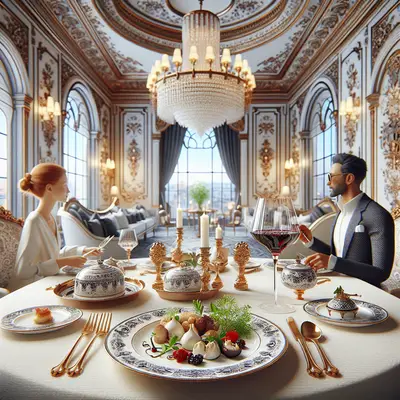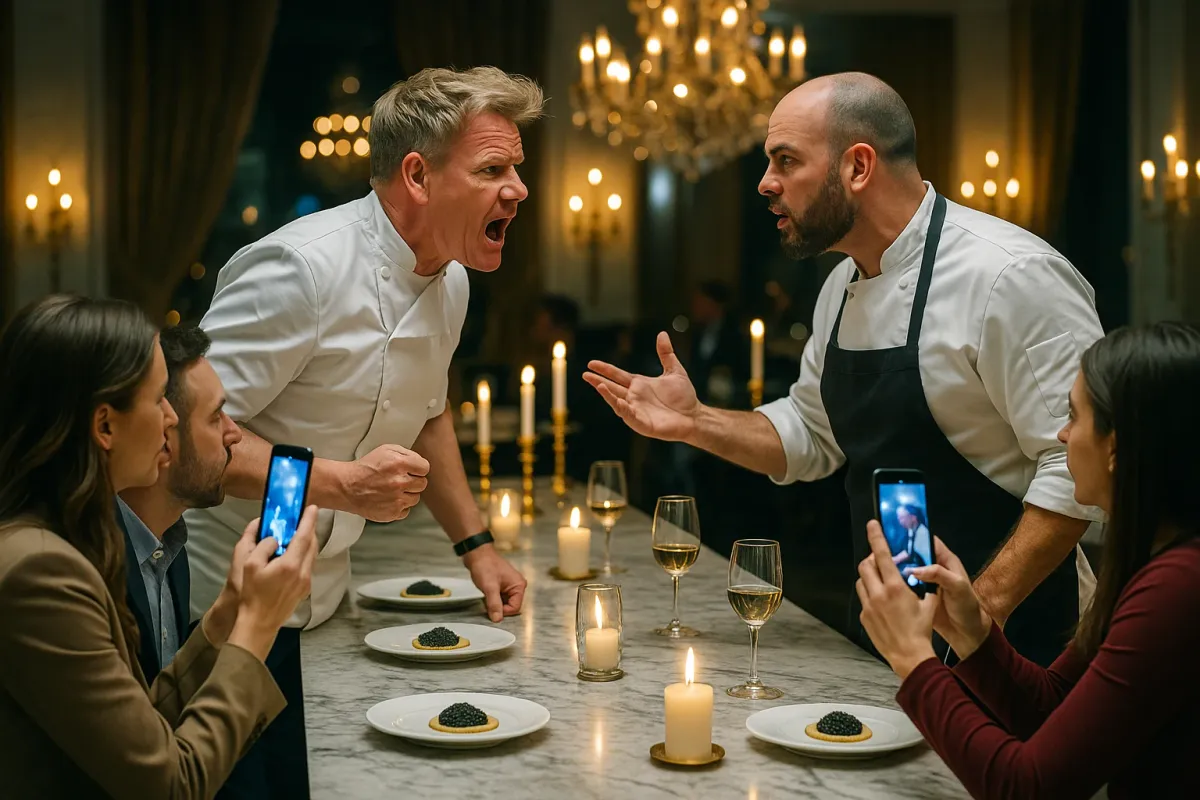
There is a particular kind of modern fame that no publicist can spin and no award can guarantee: being seen inside a famous person’s kitchen. Over the past week, Elton John’s unexpected clapback at fans critiquing a “filthy” detail in his home kitchen has done more than ignite comment sections—it has exposed how obsessively we now scrutinize the spaces where food, status, and identity intersect. For luxury travelers, this isn’t just entertainment; it is a live masterclass in how the private rituals of taste are redefining what feels genuinely premium in dining.
In a digital culture obsessed with catching celebrities “off guard,” kitchens have become the new red carpet. A single frame—an unpolished stovetop, a scuffed pan, a bowl of fruit that’s a touch too ripe—can trigger outrage, defense, and think pieces about standards, aesthetics, and what wealth is “supposed” to look like. Elton John’s response to being trolled over one overlooked kitchen detail underscores a fascinating shift: perfection is no longer the aspiration; authenticity is. And the world’s most interesting dining rooms are taking note.
Below, five exclusive insights for luxury travelers who want to stay ahead of the curve—and book the tables that quietly understand what this moment in food, fame, and aesthetics really means.
1. The New Status Symbol: An Imperfect, Lived‑In Kitchen
The internet’s fixation on Elton John’s kitchen—down to a single item viewers labeled “filthy”—reveals an uncomfortable truth about our expectations of luxury: we still subconsciously equate wealth with flawless surfaces. Yet the most in‑demand fine dining experiences of 2025 are deliberately rebelling against that idea. From chef’s counters in Paris where copper pans are proudly tarnished, to Michelin‑starred Nordic houses that serve exquisite tasting menus in kitchens lined with visibly used cast‑iron, the message is clear: patina is the new polish. High‑end travelers in the know now look less for gleaming, untouched show kitchens and more for signs that the room has actually lived. Scuffs, burn marks and handwritten labels on jars are visual shorthand for craft over spectacle. If Elton’s kitchen had been staged to perfection, the internet would have scrolled past it. The outrage proves something important: we are starved for spaces where excellence doesn’t erase evidence of work. When evaluating your next “must‑try” restaurant, look not only at the dining room, but at how honestly the kitchen is allowed to show its age.
2. From Celebrity Homes to Open Kitchens: Radical Visibility as Luxury
Elton John’s decision to publicly clap back at criticism demonstrates a broader shift among public figures: the willingness to let the world see them at home, unfiltered. Fine dining has been quietly working in a similar direction for years. Open kitchens were once a novelty; now they are the heartbeat of serious restaurants in New York, London, Copenhagen, Dubai, and Tokyo. What matters now is not just that you see the brigade—it’s how much of the process they are willing to expose. Top European properties are experimenting with “residency kitchens,” where visiting chefs cook in glass‑walled spaces visible from the street, turning an elite dinner into a kind of private performance art. In Hong Kong and Singapore, ultra‑high‑end omakase counters now seat only four to six guests, with every movement of the chef unguarded and unedited. For luxury travelers, the lesson is simple: the most compelling tables to book this year are those where the restaurant is willing to be as visible, vulnerable, and conversational as Elton was in his response. True confidence in craft no longer hides behind a pass.
3. The Rise of the Personality‑Driven Dining Room
The online debate around Elton John’s kitchen was never really about cleanliness; it was about character. Fans and critics projected entire narratives onto an unseen life from a single domestic detail. The most interesting contemporary fine dining rooms understand this instinct and are responding with unapologetically personal spaces. Instead of anonymous, beige luxury, we’re seeing rooms that read almost like three‑dimensional autobiographies of their chefs and owners. In London and Los Angeles, celebrity‑adjacent restaurants are leaning into idiosyncrasy: mismatched vintage china from the chef’s family, framed concert posters, an heirloom piano by the bar. In Mexico City and Lisbon, some of the hardest‑to‑book tasting menus unfold in private apartments or converted townhouses where the host’s bookshelves, record collection, and art are as curated as the wine pairing. This shift away from generic opulence means that a “premium” booking is no longer defined solely by the number of stars or the price of caviar. For discerning travelers, the more revealing question to ask is: does this room feel as if an actual person lives—and cooks—behind it, flaws included?
4. When Online Scrutiny Shapes Offline Service
That a single kitchen image could ignite days of commentary signals how merciless the internet can be with perceived imperfection. Luxury dining has taken note—and is now quietly recalibrating service for a hyper‑documented age. High‑end properties in New York, Dubai, and London report that VIP guests increasingly request “photo‑ready” plating not just for the table, but for their social feeds. Some Michelin‑starred restaurants have started training staff specifically on “content‑mindful” hospitality: considering angles, light, and timing so that when a guest reaches for their phone, the visual story aligns with the brand. But there is a counter‑trend emerging, one that feels closer to Elton John’s refusal to bow to every online critique. A small but influential set of restaurants are now offering “offline services”: dining rooms where phones are gently discouraged or cameras are confined to a single course, allowing the rest of the evening to unfold unrecorded. Luxury travelers are responding enthusiastically to the idea of an experience so considered—and so confidential—that it is designed not to live online. As public scrutiny escalates, the rarest indulgence may be a meal that unfolds without witnesses.
5. The Quiet Luxury of Knowing What’s “Real”
The intense reaction to Elton John’s kitchen detail ultimately split commenters into two camps: those scandalized that any part of a superstar’s home could appear less than immaculate, and those who found the flaw disarmingly human. In the fine dining world, a similar divide is playing out between “stage set” luxury and something more grounded. On one side, you have restaurants that still chase a glossy, hyper‑controlled vision of opulence. On the other, a growing echelon of deeply serious kitchens—many in Tokyo, Kyoto, San Sebastián, and Copenhagen—where luxury comes from depth of sourcing, mastery of technique, and the integrity of relationships with farmers, fishmongers, and artisans. These are places where the soy sauce has a story, the knife maker is known by name, and the chef will frankly tell you why a certain ingredient is absent because conditions simply weren’t perfect. For sophisticated travelers, the real edge now lies in discernment: being able to tell the difference between a room designed to impress the internet and a table where substance silently outruns the spectacle. The lesson from Elton’s minor kitchen scandal is sharp: what reads as flawless online is often fragile; what withstands scrutiny usually has a little honest mess around the edges.
Conclusion
A single frame from Elton John’s kitchen has, somewhat improbably, become a lens through which we can read the future of luxury dining. In an era where every plate, every room, and every public figure is at the mercy of a zoom‑in and a screenshot, the most compelling expressions of fine dining are moving away from immaculate illusion and towards elevated reality. For luxury travelers, this is an invitation. Seek the open kitchens with visible work, the dining rooms that dare to show personality, the services confident enough to exist beyond the feed. The next chapter of premium taste will not be defined by how perfectly it photographs, but by how honestly it lives—on the plate, in the room, and, yes, even in the kitchen.
Key Takeaway
The most important thing to remember from this article is that this information can change how you think about Fine Dining.