Online this week, a viral Reddit thread about “things that felt like luxury when you grew up poor” has quietly hijacked the internet’s attention. Among the most-liked comments? Having a hotel room with a bathtub, enough fluffy towels for everyone, and the ability to order room service without doing mental math on the bill.
On the surface, it’s just a heartwarming social media moment. For luxury travelers, however, it’s also a sharp reminder: what the internet now calls “luxury” is really just dignity, comfort, and care—things that the true high-end hotel should have mastered long ago. As global hospitality brands race to add AI concierges, “immersive” lobbies, and ever-more-theatrical amenities, the most coveted rooms in 2025 are increasingly the ones that do the quiet things flawlessly.
Below, five exclusive, timely insights for discerning travelers who expect more than theatrics—and know that, in the end, the soft-close door matters as much as the private jet.
1. The New Status Symbol: Seamless, Frictionless Stay
As millions online confess that “two-ply toilet paper” once felt like a splurge, top-tier properties are rethinking what guests actually brag about after check-out. It’s no longer the chandelier in the lobby—it’s how little effort the guest had to expend from arrival to departure.
The most forward-thinking luxury hotels in 2025 are investing less in spectacle and more in invisible systems: biometric or number-plate recognition check-in, keyless elevator access that “just works,” and staff who already know your preferred pillow density from your last stay in another city. High-end brands like Four Seasons and Aman are quietly building deep guest profiles that move with you across properties—not to upsell, but to remove micro-frictions: the laptop-height desk when they see you booked a “workcation,” the standing mirror positioned perfectly for your usual morning routine, the HVAC already set to the climate you favor at home.
For private travelers arriving by jet, the entire choreography is being refined: discreet airport-side greeting, luggage appearing in the suite before you do, and no registration cards thrust under your pen after an overnight flight. In a world where many still remember childhood trips where every soda from the minibar was agonized over, the new mark of true luxury is this: the feeling that nothing requires permission, and nothing requires explanation.
2. The Bathroom as a Sanctuary, Not a Showcase
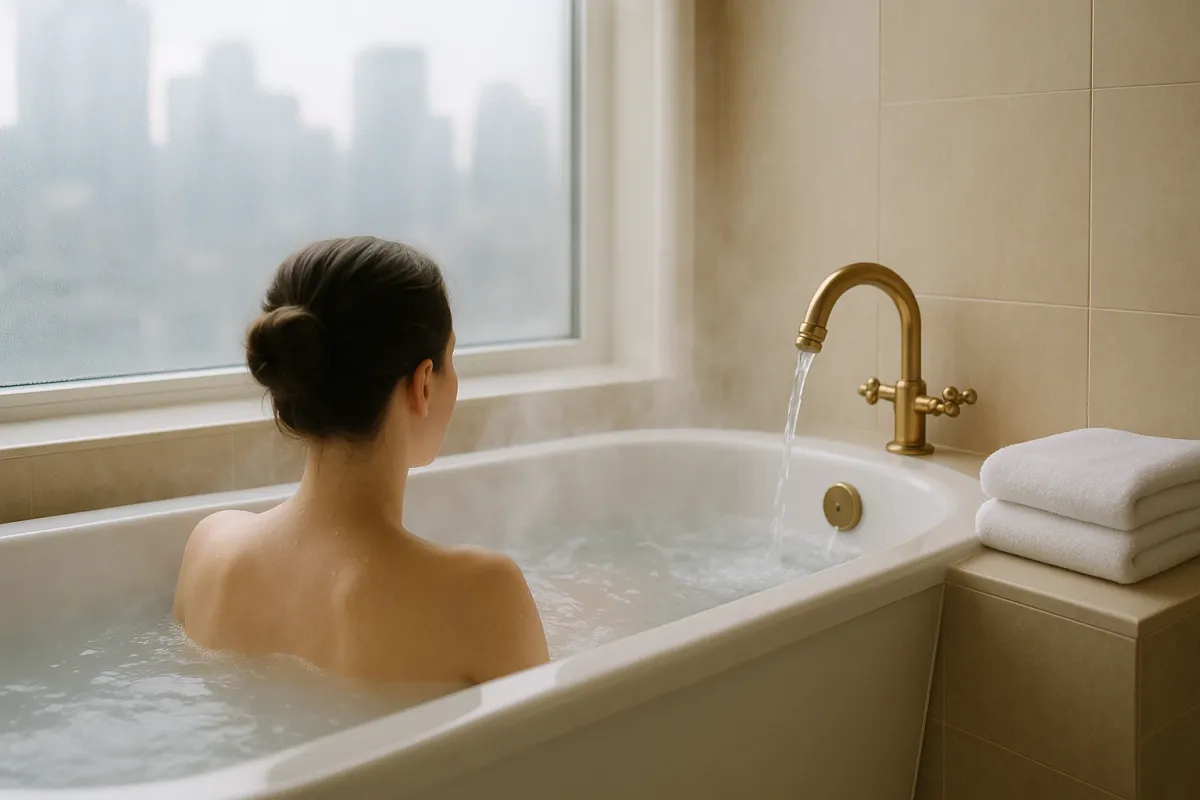
That viral Reddit thread has turned the spotlight, unexpectedly, onto bathrooms. People are sharing memories of “dreaming” of hotel tubs and hot showers that never ran cold. For the elite traveler, this resonates more than expected: no matter how extravagant a suite is, a badly designed bathroom instantly breaks the illusion of care.
The top global suites today—from the Peninsula’s Beijing Terrace Suites to the newest villas in the Maldives—are treating bathrooms as private spas rather than functional afterthoughts. Expect double rainfall showers with separate, intuitive controls (no instruction manual needed), deep soaking tubs with integrated headrests, and lighting that moves from “perfect for makeup” to “perfect for midnight bath” with one touch.
Premium materials are shifting too. What once screamed luxury—high-shine marble and flashy chrome—is quietly giving way to honed stone, burnished metals, and acoustically considerate design that muffles external noise. Heated floors are becoming non-negotiable in northern climates; in tropical destinations, advanced ventilation that eliminates humidity without an arctic blast is a subtle flex. For travelers who remember that simply having a private bathroom once felt extravagant, today’s most elevated suites offer something different: an enclave of privacy, silence, and ritual that feels better than any spa lobby selfie.
3. Service That Anticipates Without Performing
The trending conversation about “luxury” rooted in childhood scarcity has underscored a simple truth: real comfort is not performative. It does not draw attention to itself. Yet many five-star properties still mistake elaborate greetings and choreographed formality for good service.
At the ultra-luxury level in 2025, the best hotels are training staff to be observant rather than ornamental. This is service that notices you moved your chair closer to the window at breakfast—and relocates you there automatically tomorrow. It’s a butler who sees that you’re always working from the bed, and quietly brings a lap desk and charging cable extension without asking. It’s minibar curation by behavior, not by branding: sparkling water refilled more often when they see you ignore the sodas, a particular tea blend appearing after you order it twice.
Crucially, leading brands are drawing a hard line between attentiveness and surveillance. Guests who grew up counting pennies at check-out are often the same guests who now have the means to buy privacy. The most refined properties respect that. No overfamiliar small talk, no unnecessary knocks on the door, and no app notifications interrupting a nap just to ask for a rating. The ultimate luxury, in a world that overshares, is a hotel where your preferences are understood—but never turned into content.
4. From “All-Inclusive” to “All-Considered” Experiences
The viral Reddit stories about vacations where you “couldn’t touch the minibar” or had to “share a single entree to save money” have also highlighted how emotionally loaded hotel spending can feel. Aspirational travelers remember, in granular detail, every price-checked moment. High-end properties are responding by refining a new concept: the all-considered stay.
Rather than the traditional mass-market “all-inclusive” model, top luxury resorts are moving toward clear, comprehensive experiences that remove decision fatigue without sacrificing choice. You see it in places like Costa Rica’s most discreet eco-lodges and Iceland’s high-end retreats: tasting menus included, private transfers standard, wellness rituals and guided excursions woven in rather than sold à la carte. Not “free,” but flawlessly integrated, so there are no awkward pauses over whether a second kayak hour incurs an extra fee.
For jet-setters booking out entire riads in Marrakech or chalets in Gstaad, bespoke agents are now building “no-signature days” into itineraries—24-hour windows where everything is pre-paid, pre-approved, and nothing requires checking a folio before saying “yes” to another bottle. For those who can still recall the childhood stress of “don’t touch anything or we’ll be charged,” this is more than convenience. It is emotional restoration: a stay where indulgence never has to be weighed against anxiety.
5. Quiet Rooms, Real Sleep: The Most Underrated Luxury of 2025
If that viral Reddit thread proves anything, it’s that most people’s earliest version of “luxury travel” was extraordinarily modest: a room with working air-conditioning, a bed each, and enough peace to actually sleep. Ironically, many flashy urban five-stars still fail at precisely that.
The new frontier of elite hospitality is sleep architecture. The smartest hotels are now designing from the bed outward: blackout that genuinely blocks city glare, triple-glazed windows even in heritage buildings, and advanced sound engineering that silences elevators and corridor chatter. Brands like Six Senses have made sleep a calling card; others are quietly catching up with bespoke mattresses, temperature-zoned bedding, and circadian lighting that adjusts if your jet lands at 3 a.m.
For those arriving by private aviation, where time zones blur and boardrooms follow, this is not a wellness gimmick—it’s operational necessity. Top-tier properties now coordinate with flight manifests, pre-setting in-room lighting and humidity to ease guests from cabin to pillow with minimal disruption. Some are even offering “recovery suites” with oxygenation systems, gently cooled mattresses, and doctor-designed jet-lag menus delivered in-room. In a world that once equated luxury with simply “not sharing a bed with your siblings,” the highest expression of privilege may now be this: a night of sleep so perfectly engineered, you wake with no memory of having tried.
Conclusion
The internet’s sudden obsession with what once “felt like luxury” is more than nostalgia; it’s a mirror held up to today’s travel landscape. It reminds us that real luxury was never the infinity pool or the marble lobby—it was the absence of worry, the dignity of space, the certainty that you were, for a brief moment, completely cared for.
For the Jet Ready traveler, this is the compass. As you choose your next hotel, villa, or resort, look beyond the theatrics and ask: Does this place promise frictionless ease? Does it honor privacy while anticipating needs? Does it understand that sleep, serenity, and subtlety are the new status symbols?
Because in 2025, anyone can add a champagne tower. The properties worth chartering a jet to reach are the ones that understand something far rarer: how to make even the simplest childhood dream of comfort feel, at last, effortlessly and exquisitely fulfilled.
Key Takeaway
The most important thing to remember from this article is that this information can change how you think about Luxury Travel.