There is a particular kind of silence you only hear in an old house: polished floorboards that remember every guest, staircases softened by a century of footsteps, sunlight tracing moldings carved by hands long gone. That quiet is having a moment. As global design media fixates on historic homes and craftsmanship—most recently with viral features like “50 Beautiful Old Houses That Show How Craftsmanship Has Stood The Test Of Time”—the luxury travel world has been quietly moving in lockstep. Heritagized mansions, palazzi, and townhouses are no longer side notes to five‑star hotels; they are becoming the main event.
What began as an aesthetic trend on Instagram and architecture forums has evolved into a decisive shift in ultra‑high‑end hospitality. From Parisian hôtel particuliers converted into private keys, to Lisbon’s tiled townhouses reborn as design‑forward guest palaces, the global elite are increasingly choosing places where every cornice and keyhole carries a story. In 2025, “old house” no longer means “compromise”; it means access—to a slower rhythm, to local history, and to a highly curated form of privacy that modern glass towers simply cannot match.
Below, five insider realities shaping this new era of heritage‑driven luxury travel—and how to move through it like an owner, not a tourist.
1. The Most Coveted Suites Aren’t in Skyscrapers Anymore
The recent fascination with century‑old homes—amplified by viral galleries of restored manors and townhouses—has reframed what “aspirational” looks like. For years, status in travel was measured in altitude: penthouse, sky villa, top‑floor suite. Now, some of the most requested keys sit behind modest facades on quiet streets, hidden beneath mansard roofs or within cloistered courtyards.
Leading hotel groups and independent developers have taken note. In Paris, Madrid, and Vienna, the most coveted rooms are increasingly in converted bourgeois residences where guest counts are intentionally kept low—often under 30 keys—to preserve the sense of being in a private home rather than a commercial property. In places like Porto and Budapest, investors are sensitively reimagining 19th‑century townhouses with a light touch: plaster rosettes remain, as do marble staircases and original doors, but they’re joined by silent climate systems, underfloor heating, and discreet tech concealed behind period paneling. For high‑net‑worth travelers, the real luxury is this duality: spaces that look untouched, but function with the precision of a contemporary flagship suite.
2. Craftsmanship Has Become the New Concierge
The global appetite for photo essays of “beautiful old houses” has done more than fuel interior‑design mood boards; it has re‑educated the eye of the luxury traveler. Guests now arrive attuned to the difference between original hand‑cut stone and machine‑replicated facades, between artisan joinery and generic carpentry. In elite circles, being able to speak the language of craftsmanship—marquetry, limewash, encaustic tile—has become a subtle marker of cultural fluency.
Savvy properties are responding by foregrounding craft as actively as they once did spa menus or Michelin‑starred chefs. You’ll increasingly find in‑house “heritage curators” offering private tours of a mansion’s details: the original plasterwork restored by a fifth‑generation atelier; the staircase balustrade recast using 19th‑century molds; the silk wall coverings sourced from the same Lyonnais house that supplied a nearby palace. For ultra‑high‑end guests, it’s common to arrange bespoke experiences with local artisans—cabinetmakers, glassblowers, stone carvers—bridging the gap between staying in history and commissioning it. In this context, craftsmanship isn’t just décor; it is a service layer, as meticulous and intentional as butlering.
3. The Most Exclusive “Amenities” Are the Stories You Can’t Post
What made those recent images of old houses resonate online was not just their beauty, but the suggestion of lives lived there—family portraits, worn stair treads, slightly uneven floors that signal age rather than flaw. Luxury travelers are now seeking that same narrative depth in their stays, but they want it calibrated with restraint.
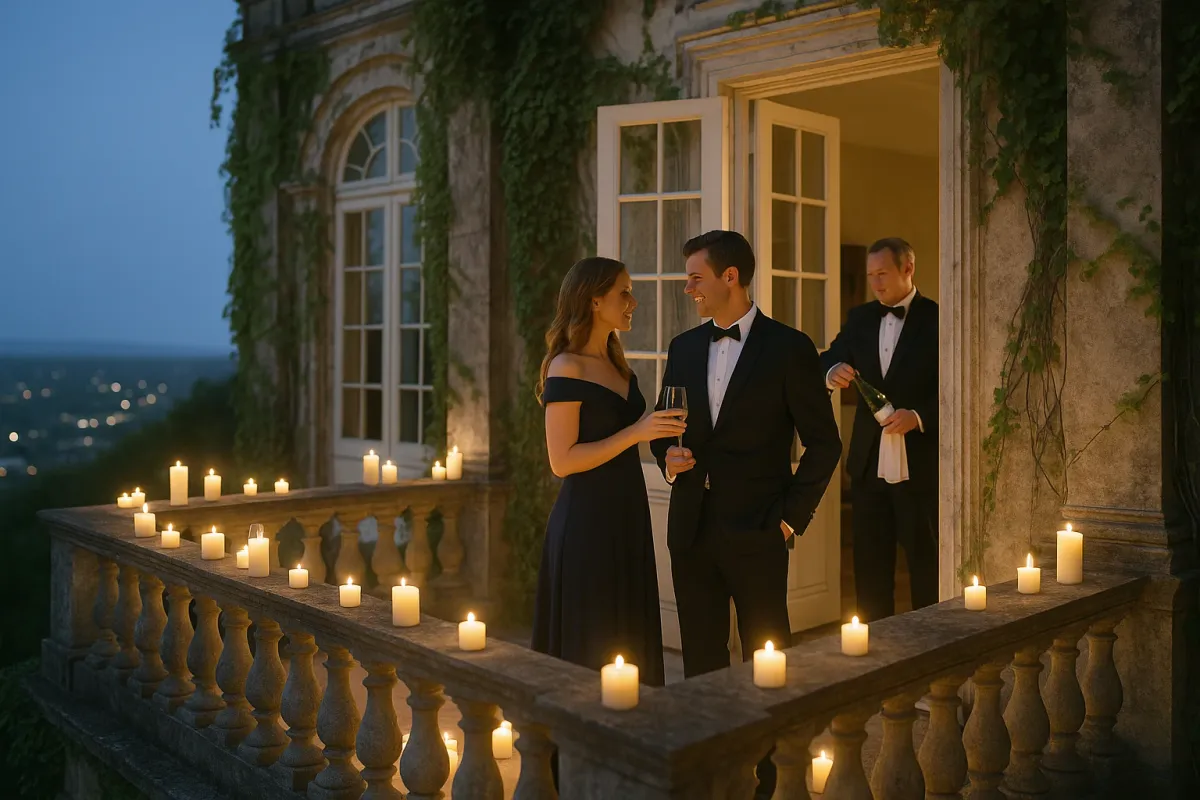
High‑end heritage properties are designing experiences that feel cinematic yet entirely unmarketed. Think: a supper laid in a library never listed on the website, table set with monogrammed porcelain inherited with the house; a private recital in a drawing room whose acoustics were designed for chamber music; cocktails on a hidden rooftop where the original owner once watched processions pass below. The point is less about content capture and more about knowing you have stepped into a layered story very few will ever access. The most sophisticated guests will intentionally leave phones in their rooms, understanding that the value of these moments lies in their untranslatable quality.
4. Sustainability, Reframed as Architectural Stewardship
As heritage homes dominate design feeds, they simultaneously highlight an uncomfortable truth: building well, once, is often more sustainable than building endlessly, fast. In luxury travel, this is reframing sustainability not as a checklist of certifications, but as stewardship of existing fabric.
Today’s most forward‑thinking high‑end properties are transparent about the environmental calculus of restoration versus new build: reclaimed original timbers reused in new wings; roofs retiled using traditional techniques that maximize thermal performance; historic shutters repaired to reduce the need for aggressive climate control. Instead of performative “green” language, guests are offered specificity: water usage before and after restoration, materials sourced within 100 kilometers, artisan cooperatives supported during the project. For discerning travelers increasingly skeptical of generic eco‑claims, backing a property that preserved an endangered building—rather than erasing it for a glass tower—has become both an ethical stance and a point of quiet pride.
5. Privacy Is Now Architected, Not Just Promised
One under‑acknowledged reason old houses are trending—both in news features and in booking data—is that they solve a problem modern luxury hotels struggle with: meaningful privacy. High‑net‑worth individuals, public figures, and family offices want something beyond “private wing” or “VIP floor”; they want a spatial experience that never feels like they have entered a hospitality machine.
Urban mansions and country estates answer this innately through their bones: enfilades that allow staff to move invisibly behind walls, secondary staircases originally built for domestic staff now repurposed for security details, garden pavilions converted into wellness suites accessible without crossing a lobby. The most elevated conversions preserve these separations and layer them with technology—unseen perimeter sensors, intelligent access control on heritage doors, sound‑insulated rooms hidden within original wall cavities. For the guest, the effect is seamless: they move through salons and courtyards that feel entirely theirs, supported by a service infrastructure that is rarely visible, always anticipatory, and architecturally embedded rather than awkwardly added.
Conclusion
As old houses trend across digital culture, the luxury traveler is quietly rewriting what it means to travel well. The future of ultra‑high‑end hospitality is not necessarily taller, shinier, or more maximalist; it is more storied, more precise, and more intimately scaled. Historic mansions and townhouses—once considered charming but impractical—are emerging as the new status addresses, precisely because they promise what contemporary builds often cannot: craftsmanship with memory, privacy with texture, and sustainability rooted in preservation rather than reinvention.
For those charting their next journeys, the most compelling itinerary may not be a list of cities, but a progression of houses: a sequence of old walls that whisper, each in its own language, of how luxury once lived—and how, very quietly, it is choosing to live again.
Key Takeaway
The most important thing to remember from this article is that this information can change how you think about Luxury Travel.