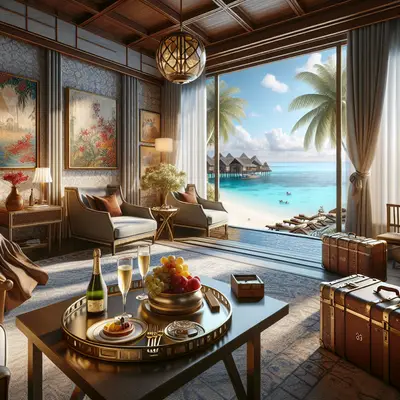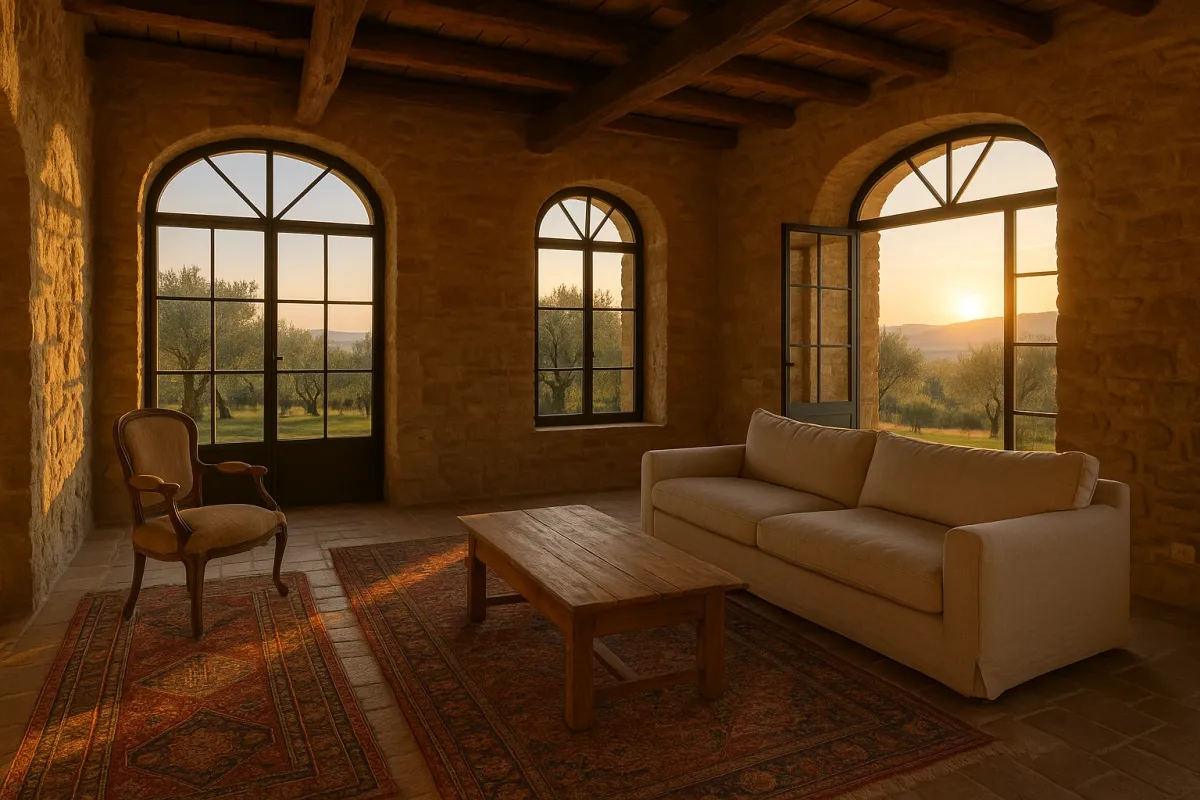
There is a particular kind of silence you only find in old houses—the kind that hums with memory rather than absence. As the internet swoons over a new wave of photographs celebrating historic residences (from century-old townhouses to weathered coastal villas), a quiet shift is unfolding in the world of premium travel: heritage architecture is no longer just a backdrop for your stay; it is the experience.
Inspired by the renewed global fascination with beautifully preserved old homes—highlighted this week by viral galleries of historic properties and their enduring craftsmanship—high-end travelers are rethinking what “luxury” means. The question is no longer how new, how high-tech, or how glossy a property feels, but how deeply it’s anchored in time, place, and story.
Below, five discerning insights for travelers who see character, patina, and provenance as the ultimate luxuries.
1. From Shiny to Storied: The Shift Toward Architectural Provenance
As social feeds fill with painstakingly documented moldings, original floorboards, and century-old staircases, the world’s most sophisticated travelers are no longer impressed by “new for the sake of new.” Instead, they’re asking: Who built this? Who lived here? What has this building seen?
This shift mirrors a larger trend in premium real estate and hospitality: properties housed in restored palazzi, riads, and townhouses increasingly command a premium over generic “luxury” builds. In Europe, meticulously restored châteaux and town mansions are now quietly competing with contemporary glass-and-steel towers for high-net-worth buyers and long-stay guests. For travelers, staying in a 19th-century townhouse with its original ceiling frescoes, hand-carved banisters, and slightly uneven stone steps isn’t an inconvenience—it’s the point. Architectural provenance has become a status marker: knowing you’re in a home that survived wars, fashion cycles, and multiple generations communicates a cultural literacy that glossy new build hotels simply can’t replicate.
2. The Return of Craft: Why Imperfection Feels Incredibly Expensive
Today’s fascination with historic homes is, at its core, a celebration of craftsmanship. You can feel it in the way natural light grazes a slightly warped wooden panel, or how hand-laid tiles don’t quite align in the way an algorithm would demand. In a world defined by frictionless, mass-produced surfaces, the micro-irregularities of old houses read as a rare, tactile privilege.
Luxury travelers are increasingly seeking this level of artisanal detail in their stays. Boutique properties in restored townhouses are commissioning local artisans to repair original plaster, revive centuries-old marquetry, and recreate textiles from archival patterns. The result isn’t museum-like perfection; it’s lived-in elegance. The true premium guestroom today might have a subtle hairline crack in a 120-year-old cornice, or a solid oak door that requires a gentle, knowing push to close—small reminders that you are inhabiting something made by human hands, not extruded from a supply chain. In this context, “imperfection” doesn’t read as wear; it reads as authenticity, and authenticity has become the new silent flex.
3. Slow Space: Why Heritage Layouts Are Rewriting the Luxury Stay
The most interesting thing about many old houses isn’t their façades; it’s their flow. Long enfilades of rooms, inward-facing courtyards, shaded loggias and high-ceilinged salons create a spatial choreography that is entirely at odds with the open-plan, all-glass aesthetic of contemporary developments. For luxury travelers, these inherited layouts offer something algorithmically designed hotels struggle to deliver: psychological depth.
In heritage properties, you move through space in chapters. A discreet entry hall buffers you from the street. A library or salon becomes a liminal zone between day and evening. A walled garden or terrace serves as a private, alfresco living room. This segmentation of space aligns perfectly with the new “slow luxury” ethos: stays where you read rather than scroll, dine in rather than rush out, and let the building dictate your pace rather than your calendar. The most forward-thinking hoteliers are now embracing original layouts instead of erasing them—turning former drawing rooms into intimate lounges, servants’ staircases into private guest routes, and attic spaces into contemplative retreats with soaring beams and skylights. The building is no longer a shell; it is a narrative structure for how you live while you’re there.
4. Light, Patina, and the New Aesthetic of Discreet Opulence
The viral appeal of historic house imagery points to a very specific visual language: tall sash windows diffusing afternoon light, sun falling across aged parquet, muted wall colors that have faded into soft, complex tones over decades. It is a far cry from the hyper-saturated, “Instagram wall” era of luxury design. The new aesthetic is quieter, more tonal, and deeply photogenic in a way that never feels posed.
For luxury travelers, this shift is significant. The most desirable suites are increasingly those that offer what photographers seek: directional light, depth, and contrast. A worn leather armchair positioned beneath a timeworn portrait, a marble mantel with barely noticeable etching from another century, or linen drapes that billow slightly in a breeze—these are not mere decor choices, but emotional cues. They signal restraint, confidence, and taste that doesn’t need a logo to announce itself. Properties that understand this are designing for what might be called “intimate shareability”: spaces that look beautiful on camera but feel even better in person, encouraging guests to capture and share moments that appear unstyled, even when they are meticulously curated.
5. Living History, Not Visiting It: How Top Hosts Are Curating Time
What distinguishes a truly premium heritage stay from a charming old building is curation. The current fascination with historic homes has raised expectations: affluent guests don’t just want to sleep in an old house; they want to feel they are momentarily folded into its story.
The most sophisticated hosts are responding by weaving time into every layer of the experience. That might mean a welcome drink served in the same salon where previous owners hosted soirées a century ago; a short, private architectural tour that explains original details in elegant, intelligent language; or a dinner menu that reimagines dishes once served in the house, interpreted through a contemporary, chef-driven lens. Even the amenity choices are shifting: monogrammed linen, bespoke stationery echoing 19th-century letterheads, libraries curated with first editions and local history, and playlists inspired by the eras the house has lived through. Technology is present but invisible—discreet climate control, concealed audio, keyless entry—allowing guests to inhabit the past without sacrificing present comforts. The effect is transformative: you are not just in a beautiful room; you are occupying a role in an ongoing narrative that began long before you arrived and will continue long after you leave.
Conclusion
As the world collectively rediscovers the quiet magnificence of old houses—through viral photo series, design conversations, and a growing appetite for authenticity—the definition of luxury is subtly, but decisively, evolving. For premium travelers, the most compelling stays are no longer about maximal amenities but maximal meaning.
The new benchmark is a house that has outlived every trend, restored with sensitivity, curated with intelligence, and experienced with intention. In these spaces, time itself becomes the ultimate amenity—one you don’t just measure in hours, but in centuries.
Key Takeaway
The most important thing to remember from this article is that this information can change how you think about Premium Lifestyle.