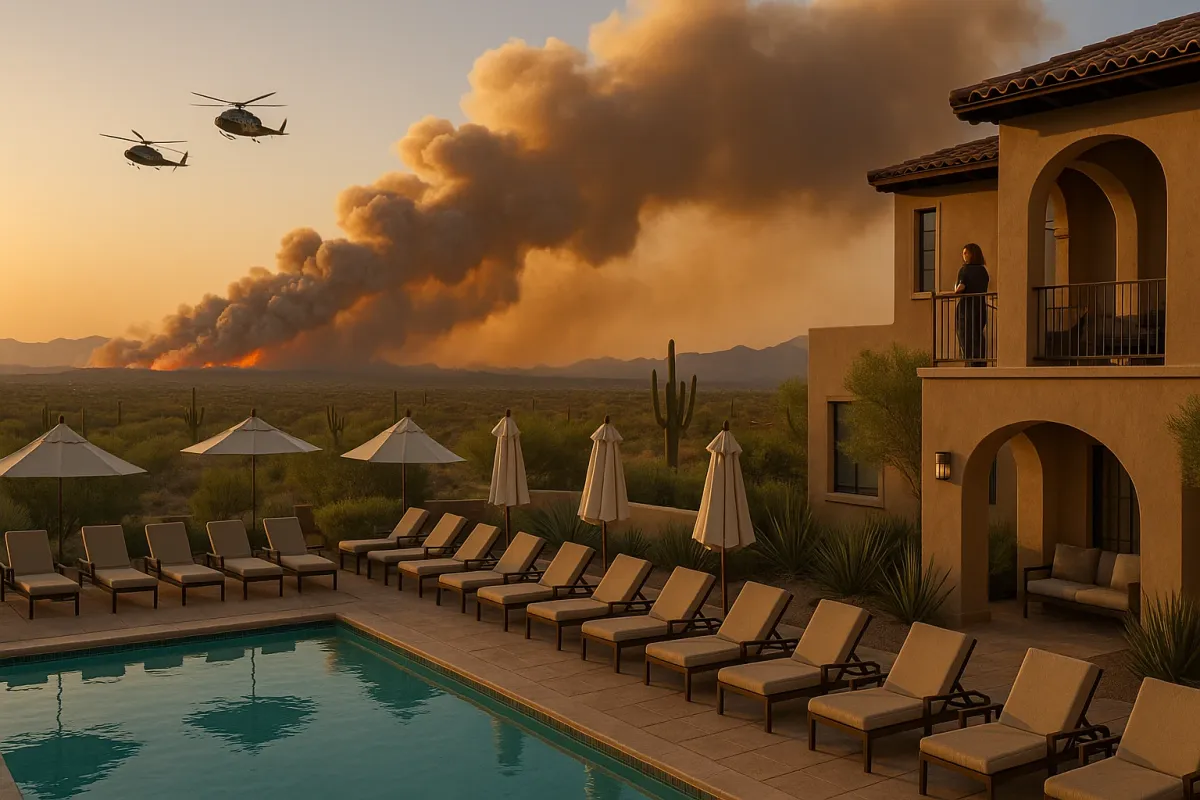
In a week when headlines detail the horrifying dismemberment of crypto figure Roman Novak and his wife Anna at a secluded luxury property in the Dubai desert, the image of the “exclusive resort” is being forced into sharp, uncomfortable focus. The very attributes that once defined aspirational escape—remoteness, anonymity, and complete privacy—are now being scrutinized by travelers who sit at the highest end of the market and expect more than just infinity pools and private butlers. They expect to feel unequivocally safe.
For the Jet Ready guest, this moment is not about fearmongering; it’s about discernment. The tragic events in Dubai are a stark reminder that exclusivity without governance is a liability, and that true luxury is as much about invisible systems—security, ethics, discretion—as it is about visible splendor. As winter booking season accelerates and demand for desert lodges and remote island compounds continues to surge in the Gulf, the Maldives, and beyond, it’s time to look at ultra‑private resorts with a more informed, quietly uncompromising eye.
Below, five exclusive insights to help sophisticated travelers recalibrate how they evaluate high‑end, high‑privacy retreats right now.
1. Privacy Without Protocol Is No Longer a Luxury
The Dubai case has brought to light an uncomfortable truth: some independent “boutique” desert resorts have marketed privacy as an almost total absence of oversight—minimal staff presence, lax visitor controls, and vague ownership structures. For years, that lack of formal structure was sold as freedom. Today, serious travelers are asking different questions.
At the ultra‑luxury level, privacy should be highly choreographed, not improvised. Leading brands—think Aman, Six Senses, and the top-tier tented camps in AlUla or Abu Dhabi’s Empty Quarter—combine seclusion with rigorous access control, advanced surveillance perimeters, and clear guest‑verification procedures. The experience on the surface feels effortless, but behind the curtain is a playbook as structured as any palace hotel. When vetting a desert retreat, your due diligence should go beyond the design and the spa menu: who owns the property, who manages it, what jurisdiction it operates under, and what protocols exist for non‑registered visitors to the estate.
2. Discreet Security Is Now a Core Part of the Amenity Set
In the wake of high‑profile incidents at both urban and resort properties—from celebrity stalkers in LA hotels to this week’s tragedy in Dubai’s dunes—high‑net‑worth travelers are recalibrating their definition of “amenity.” The request for a private plunge pool now often sits alongside the quiet expectation of a professionally trained security presence.
The most sophisticated resorts have already responded. In major hubs like Dubai, Doha, and Riyadh, palace‑adjacent resorts and branded residences increasingly integrate former diplomatic or military security experts into their leadership teams. These are not visible “guards,” but strategists designing layered protection: biometric room access, pre‑cleared transport providers, encrypted communication with guest relations, and the ability to coordinate instantly with local authorities. When choosing an exclusive resort, pay attention to the balancing act: the best properties make security feel like architecture—always present, never ostentatious, and subtly tailored to your risk profile, not applied as a blunt, one‑size‑fits‑all measure.
3. The New Status Marker: Alignment With Robust Legal and Ethical Frameworks
The Novak case also raises a quieter, more structural issue: the legal environment in which a “desert resort” operates. In regions where development has outpaced regulation, some properties exist in a kind of gray zone—remote enough that enforcement is sporadic, luxurious enough to attract guests who assume, sometimes wrongly, that everything is tightly controlled.
The new luxury is choosing properties that are not only visually spectacular but also deeply integrated into their host country’s legal and ethical architecture. This can mean a resort that sits within a clearly delineated tourism zone, is operated by a globally recognized hospitality group, or is part of a government‑backed sustainable development masterplan. In the UAE, for example, high‑end resorts tied to established developers and sovereign investment entities typically face a higher level of scrutiny and compliance than isolated, stand‑alone ventures. For the discerning traveler, understanding this context is becoming as critical as knowing a chef’s pedigree or a designer’s signature.
4. Ultra‑Seclusion Should Come With Intelligent Connectivity
The romantic idea of being “off the grid” in a tented desert suite or on a private island now carries a more nuanced subtext. Total disconnection can be blissful—until, in an emergency, it becomes terrifying. The most evolved resorts are designing a more intelligent version of seclusion: you feel emotionally unplugged, while remaining operationally connected.
Practically, that means robust, secure communications infrastructure; redundant power sources; clearly communicated emergency protocols; and staff who are trained not just in hospitality, but in crisis response. Some of the world’s top private island and desert lodges quietly offer satellite backup systems, 24/7 medical teleconsultation, and pre‑arrival risk assessments for guests arriving from volatile jurisdictions. As a guest, you should feel comfortable asking: How fast can this property get me to a world‑class medical facility? Who coordinates in the event of a security incident? The answer should come easily, and with the same calm assurance as a recommendation for sunset cocktails.
5. Curated Isolation Is Replacing “Anywhere With a Helipad”
The events in Dubai are sharpening another distinction: between properties that are simply hard to reach, and those that are deliberately, thoughtfully isolated. The former are often opportunistic—far‑flung parcels of land dressed up as “undiscovered paradises.” The latter are curated, with every element—from approach roads and landing sites to neighboring land uses—selected for coherence and control.
In practice, this is pushing sophisticated travelers toward resorts embedded in master‑planned environments: protected nature reserves, marine conservation areas, or culturally significant landscapes where development is strictly governed. Consider, for instance, the new wave of conservation‑driven desert lodges in Saudi Arabia’s AlUla, or ultra‑low‑density resorts on private atolls in the Maldives that operate under stringent environmental and zoning regulations. These are not just beautiful escapes; they are ecosystems with rules, guardians, and long‑term investment. The implication is subtle but powerful: your retreat is not an isolated, vulnerable outpost, but part of a larger, resilient framework.
Conclusion
The horrific crime that unfolded in a Dubai desert resort this week will, inevitably, be sensationalized. But for those who travel at the very top of the market, its real legacy may be quieter—and more constructive. It underscores that true exclusivity is not defined by distance from the city, the number of villas, or the height of the dunes. It is defined by the thoughtfulness with which privacy, security, and governance are woven together.
As you plan your next retreat—whether to the Arabian sands, a Maldivian atoll, or a remote alpine sanctuary—consider this a timely invitation to look beyond the Instagram view. Ask the questions that reveal the architecture beneath the aesthetics. Because in the new era of ultra‑luxury travel, the most coveted resorts will be those where you can forget the world entirely, precisely because someone has thought carefully about every possible way it might intrude.
Key Takeaway
The most important thing to remember from this article is that this information can change how you think about Exclusive Resorts.