In an online world obsessed with outrage and “most hated” lists, the true elite are quietly doing something very different: disappearing. As social feeds debate the year’s most disliked stars and viral scandals dominate public attention, high-net-worth travelers are moving in the opposite direction—toward places where anonymity is the ultimate amenity, and where the only list that matters is the guest manifest you never see.
This season, the real power moves in luxury travel aren’t happening on red carpets or in front-row fashion seats. They’re unfolding on hyper-curated private islands, buy-out resorts, and under-the-radar estates—spaces where security, taste, and silence are meticulously engineered. The global conversation about celebrity culture and reputation may be louder than ever, but the most discerning travelers are investing in something far more rare: the right to be unobserved.
Below, five insider shifts defining what “platinum-level” luxury looks like right now—and how the world’s most discreet travelers are actually moving.
1. From Famous to Unfindable: The Rise of the Algorithm-Proof Escape
As rankings like Ranker’s “Most Disliked Stars of the Year” dominate entertainment news cycles and turn reputations into spectator sports, elite travelers are seeking destinations that are structurally resistant to public scrutiny. It’s no longer enough to book a five-star suite with a private pool; the new benchmark is an escape that doesn’t algorithmically exist.
The savviest private island and estate operators are now designing their guest experience around digital invisibility. Think: no public-facing guest lists, non-disclosure hospitality agreements, and properties that appear in global booking systems only as placeholders, with the “real” inventory accessible by invitation or via private advisor channels. Forbes Five-Star–level service is assumed; what’s newly prized is a set of protocols that prevent a trip from ever becoming a headline—or a clue in a viral Reddit thread. High-profile guests are increasingly choosing destinations where their presence can’t be confirmed by a passing drone, a staff TikTok, or a “spotted” item in a gossip column. In this tier, confidentiality is no longer a courtesy; it is the core product.
2. Soft Power Itineraries: Where Privacy and Influence Quietly Converge
The same climate that produces viral “most disliked” lists has also made visible influence feel precarious. In response, the world’s most strategic travelers are curating journeys that double as soft-power summits—private, highly choreographed stays where the real value is who shares the dining table, not what’s on Instagram.
Discreet resorts in the Maldives, Seychelles, the Grenadines, and off-market Mediterranean isles are increasingly hosting off-the-record gatherings: founders’ retreats, family office weekends, quiet diplomatic introductions. Guests will officially be on a wellness sabbatical or “creative reset” while their calendar reflects something very different—curated encounters with fellow UHNWIs and cultural players orchestrated by a new breed of travel concierge who thinks more like a chief of staff than a booking agent. The itinerary might list a sunset sail; the true purpose is a conversation that will never appear in a press release. For this clientele, the trip’s ROI is measured less in relaxation and more in relationships forged with total plausible deniability.
3. Reputation-Safe Luxury: Designing Stays That Can Withstand Public Scrutiny
In a year where a single resurfaced quote or offhand remark can ignite waves of digital backlash, luxury travelers are increasingly considering not just where they go—but what their choices say if they’re ever exposed. The age of guilt-free conspicuous excess is over; the new ultra-luxury is curated to be both indulgent and defensible.
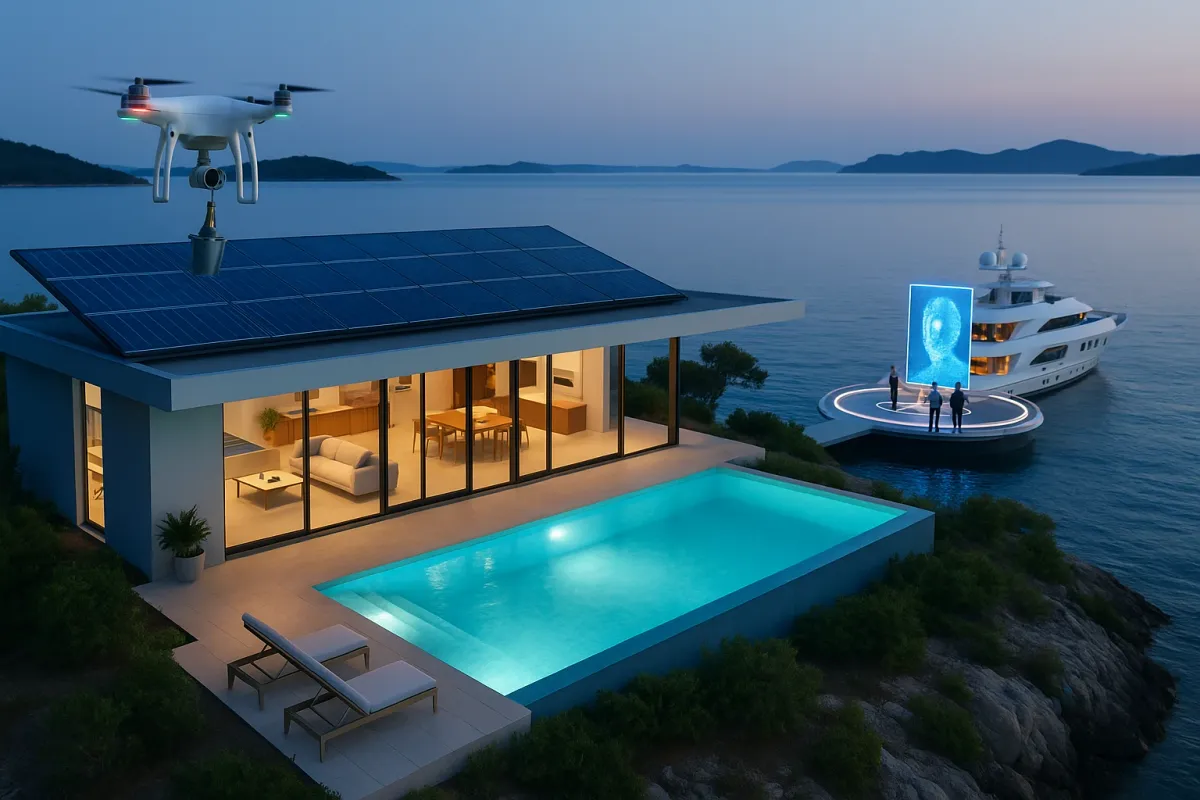
Leading hotels and private villas are responding with experiences that marry high-gloss comfort to visible conscience. Think: fully decarbonized yacht charters with marine biologists onboard, island estates powered by on-site renewables with transparent reporting, and haute cuisine tasting menus that foreground local producers and biodiversity. If a trip’s details ever became public—a leaked invoice, an errant post from a staff member—the story that emerges is one of refinement and responsibility, not tone-deaf extravagance. Discerning guests are quietly asking a new set of questions: Who owns this land? How are staff treated? What is the environmental ledger of this resort? The luxury that endures is the kind that can withstand uncomfortable curiosity.
4. The Anti-Spectacle Social Life: Curated Companionship Without the Crowd
As viral outrage cycles highlight just how quickly public sentiment can turn on once-beloved names, the social architecture of ultra-luxury travel is evolving. Travelers at the top end no longer want to be “seen at the right place at the right time.” They want to be with exactly the right people—with nobody watching.
Instead of buzzy, influencer-heavy hotspots, elite guests are favoring properties that specialize in precision-matched micro-communities. A buy-out of a 10-villa estate for three aligned families; a mountain lodge quietly hosting a circle of philanthropists and artists; a coastal compound in Portugal or Chile reserved for a single, interwoven guest list over several weeks. The markers of status shift accordingly: not a recognizable restaurant or nightclub, but a sommelier who already knows which vintner you invested in, or a wellness director who has coordinated with your medical team ahead of arrival. Here, connection is intensely personal, not performative. The social capital is in knowing the right doors to knock on, not being recognized when you pass through them.
5. Quietly Bespoke: Moving Beyond “Luxury” as a Look, Toward Luxury as a Language
At a time when mass culture endlessly ranks and rates public figures, luxury travelers are increasingly rejecting anything that feels standardized—even at a high price point. The very concept of “the world’s best hotel” or “the top resort” reads as faintly dated to a clientele whose expectations have moved beyond glossy consensus.
In this rarified layer, luxury has become less about visible markers—marble lobbies, infinity pools, brand-name designers—and more about linguistic and emotional fluency. The best properties don’t ask, “Still water or sparkling?” They recall that you prefer water at room temperature poured into a stemless glass, because chilled water affects your voice before a morning call. They know the specific altitude at which your sleep is most restorative and the fragrance notes that quietly calm you after long-haul travel. Tailoring is so deep it becomes almost invisible: a yacht tender timed to the exact light conditions you prefer for photography, an arrival menu designed around the blood-sugar pattern your nutritionist has shared, evening turndown that references the book you mentioned in a single pre-arrival email. At this level, luxury is not a look; it is a language that the property speaks with native precision.
Conclusion
As the public internet grows louder, harsher, and more obsessed with tearing down the visible few, the most sophisticated travelers are stepping away from the spectacle entirely. Their retreats are not just beautiful—they are structurally engineered against exposure, misunderstanding, and noise.
The next wave of true luxury will not announce itself in rankings or viral posts. It will be felt in the ease of a check-in that never requires your name spoken aloud, in a dinner conversation that could change a company’s future but leaves no digital trace, in a villa whose beauty is matched by its ethical backbone. In a world that relentlessly sorts people into “most loved” and “most hated,” the rarest privilege is no longer to be admired—it is to move through the world exquisitely, and almost imperceptibly, free.
Key Takeaway
The most important thing to remember from this article is that this information can change how you think about Luxury Travel.