Luxury dining has never been just about what arrives on the plate. It’s about narrative, ethics, provenance, and the sense that every decision—down to the last garnish—has been considered with near-obsessive precision. That’s why a seemingly distant online controversy can reverberate through the dining rooms of the world’s most coveted restaurants.
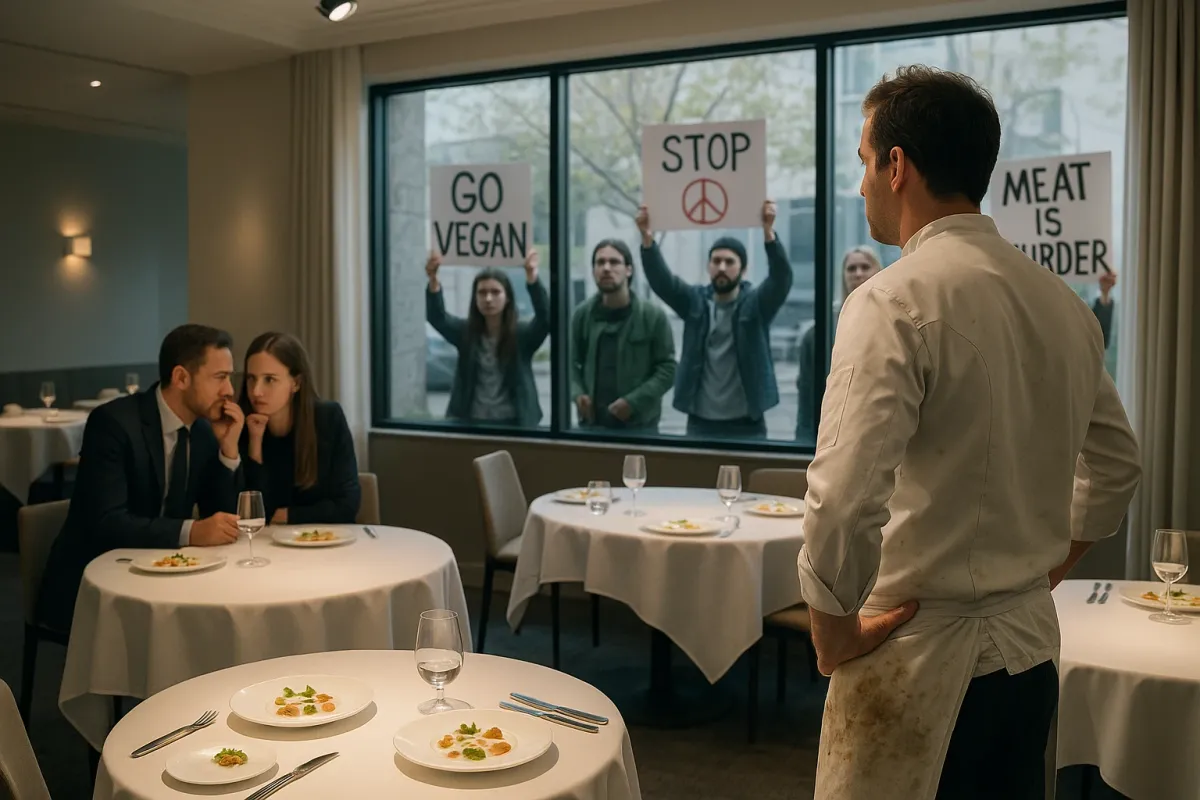
In recent days, a trending story has surfaced about an ex-employee who claims to have been hired by the meat industry to “discredit” veganism online, allegedly seeding doubt, confusion, and conflict in public discourse about plant-based eating. This isn’t just internet drama; for the world of haute cuisine, where tasting menus and chef philosophies are dissected like artworks, it’s a warning shot. Narrative can now be manipulated as easily as a social feed—yet discerning guests are demanding more transparency, not less.
For fine dining travelers curating their next destination meal, this moment is instructive. The luxury experience is no longer defined solely by foie gras versus fermented beetroot. It is defined by whether the restaurant’s story stands up to scrutiny in a world newly alert to spin, agenda, and quiet influence.
Below, five discreet yet decisive signals that separate performative “green gloss” from genuinely forward-thinking, reputation‑proof fine dining—especially relevant in light of the current veganism narrative wars.
The New Luxury: Proof, Not Promise
The online revelations about coordinated anti‑vegan messaging highlight a simple truth: words are cheap; verification is not. As debates rage over plant-based diets, emissions, and ethics, the most sophisticated dining rooms are quietly evolving from poetic menu copy to demonstrable proof.
For luxury travelers, the question is no longer, “Does the chef champion sustainability?” but, “Can they show how?” The restaurants that will endure this new era are those that can produce supply-chain documents as confidently as they pour vintage champagne: traceable farms, audited certifications, transparent sourcing partnerships. Some leading tasting-menu destinations now present digital provenance maps along with the menu, allowing guests to see where each ingredient originated, how it was raised or grown, and under what standards. In this context, a chef boasting about “local and seasonal” without specificity feels as dated as a paper wine list without vintages. The luxury traveler should look for restaurants that treat ethics and evidence as part of the experience—not as a press release.
Flexitarian Fine Dining as the Quiet Status Signal
The uproar around paid anti‑vegan campaigns also underlines how polarized the conversation around food choices has become. Yet the most refined restaurants are stepping away from dogma—neither defensively anti‑meat nor aggressively plant‑evangelical. Instead, they are embracing a flexitarian haute cuisine, where caviar and kelp, wagyu and koji‑aged pumpkin, can coexist in the same narrative.
For the high-end diner, this is the new status symbol: chefs who are confident enough in their craft to offer plant‑forward tasting routes alongside more classic menus, without relegating one to “alternative” status. In some of the world’s most sought-after reservations, the vegetable course has quietly become the most technically ambitious dish of the night, a direct response to guests who are both ethically attuned and gastronomically demanding. In a landscape where online forces try to discredit entire eating philosophies, luxury dining’s answer is nuance. Travelers should seek restaurants where the question “vegan, vegetarian, or omnivore?” is not a constraint but an invitation to tailored creativity.
Behind the Pass: Ethics as a Hidden Course
The scandal around orchestrated online narratives is ultimately about trust—who is behind the message, and what they stand to gain. The same question is now being asked of fine dining kitchens, particularly by guests flying in specifically for marquee restaurants. The most advanced dining rooms are responding by making their internal values as important as their external polish.
This is where luxury travelers can quietly differentiate between a restaurant that photographs well and one that will define the decade. Ask, or discreetly research, how the team speaks about staff welfare, training, and working hours. Some of the most acclaimed kitchens in Europe and Asia, for example, are now openly publishing their commitments to mental health support, reasonable shift lengths, and equitable progression for junior cooks. In today’s climate, where manipulation and burnout are increasingly exposed, a restaurant that is proud to reveal what happens behind the pass is signaling a new form of integrity. For the guest, it adds another layer to the experience: knowing that the tasting menu is the product of excellence rather than exhaustion.
The Rise of the “Traceable Menu” in a Post‑Spin World
Reading about a paid effort to undermine veganism online makes one thing very clear: information is now an ingredient. In response, a growing number of high-end restaurants are embracing what might be called the “traceable menu”—where each course becomes a micro‑documentary of relationships, rather than a cryptic list of nouns.
Expect to see—and seek out—menus annotated not just with suppliers’ names, but with QR codes leading to short films from the farm, profiles on foragers, or background on regenerative agriculture practices. A few pioneering houses have started offering pre‑dinner “provenance salons,” intimate briefings where sommeliers, farmers, and sometimes even fishermen speak directly with guests about the evening’s ingredients. In a world where online narratives can be fabricated, this direct line between producer and plate is a subtle luxury. For travelers curating destination dining experiences, prioritizing these traceable menus ensures the meal is anchored in reality, not simply marketing.
Digital Discretion: When Online Noise Meets Offline Calm
The current veganism‑discrediting story also underscores how noisy, volatile, and performative food discourse has become online. For the elite traveler, true indulgence may now lie in dining spaces that consciously resist this volatility—restaurants that maintain a digital presence but refuse to let algorithms dictate their identity.
Look for venues that do not chase viral trends but instead treat social media as an archive, not a stage: posting menus and milestones without courting controversy or spectacle. Some of the most sophisticated rooms are increasingly phone‑light by design—seatings that encourage guests to experience dishes rather than document them, with service teams fully prepared to explain the philosophy without rehearsed talking points. In a climate where food opinions are weaponized for clicks, the rare restaurant that offers an offline sanctuary, untouched by manufactured outrage, becomes more valuable than ever. For luxury travelers, this digital discretion is the new sign of confidence: a house that knows its worth without needing the constant affirmation of the feed.
Conclusion
The revelation that an online actor may have been paid to quietly undermine veganism is more than a niche internet curiosity; it is a glimpse into how easily our culinary narratives can be shaped, distorted, and sold back to us. For fine dining, where narrative is inseparable from experience, the implications are profound.
The most compelling luxury restaurants of this moment are responding not with louder slogans, but with deeper substance: verifiable sourcing, flexitarian creativity, transparent kitchen culture, traceable menus, and a measured, almost austere digital footprint. For the traveler whose calendar is marked not by holidays but by reservations, choosing where to dine is increasingly an act of curation—and of alignment.
In an age of engineered opinion, true luxury in fine dining may be this: a room where the story is as honest as the cooking, and where every course quietly answers the question the internet keeps asking—who can you trust?
Key Takeaway
The most important thing to remember from this article is that this information can change how you think about Fine Dining.