The most coveted tables in the world no longer belong solely to the restaurants with the longest waitlists or the most Michelin stars. Increasingly, they’re the rooms that feel like a meticulously directed scene—where lighting, texture, sound, and pacing are orchestrated as deliberately as a film by Wes Anderson or David Lynch. As design studios reimagine home offices in the visual language of iconic directors, luxury dining rooms are undergoing a similar transformation: restaurants are being conceived less as “places to eat” and more as finely tuned sets for an immersive narrative.
For the high-end traveler, this shift is not academic—it’s practical. The world’s most interesting dining rooms are now crafted by the same architectural minds behind museum-grade interiors and cinematic concept spaces. If you’re planning where to dine in 2025, you’re not simply choosing a menu; you’re choosing a director’s cut of how the night will feel.
Below, five quietly powerful cues—drawn from today’s director-inspired design trend and its translation into hospitality—that will help you recognize, and reserve, the most forward-thinking fine dining rooms on the planet right now.
1. Director-Level Atmosphere: Why the Best Dining Rooms Feel Like a Carefully Framed Shot
Budget Direct’s recent design project, which reimagined home offices as if they were conceived by Wes Anderson, David Lynch, and other auteur directors, tapped into something the luxury dining world already knows: a space with a clear visual point of view is more memorable, more photogenic, and more emotionally resonant. Today’s top restaurant architects are borrowing that logic wholesale.
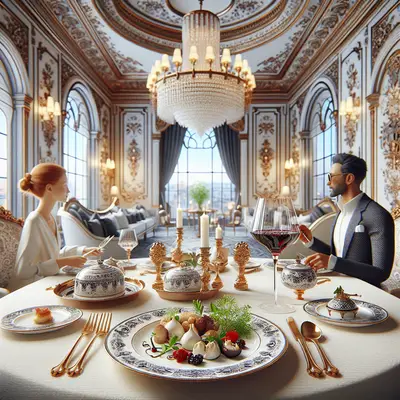
Look for dining rooms where the composition feels intentional from every angle, the way a film still does. In Paris and London, design-forward restaurants are embracing symmetry, color blocking, and almost cinematic sightlines: a bar framed like a proscenium arch, a hallway lit as if it were a tracking shot, a chef’s pass staged like a close-up. Lighting is soft but precise—faces glow, plates gleam, yet nothing feels harsh to the eye or the camera. These are spaces where the atmosphere is not an afterthought; it is the first course.
For luxury travelers, the cue is simple: if you can describe the room in a single visual sentence—“a jewel box of moss green velvet and smoked brass,” “a shadowy, lacquered cocoon with a single ribbon of light”—you are likely dining somewhere that understands that ambiance is part of the meal, not just the backdrop.
2. Immersive Storylines: Menus That Unfold Like a Carefully Written Script
Just as those director-inspired offices reflect a narrative—Wes Anderson’s precise whimsy, Lynch’s surreal unease—the most interesting tasting menus now read like screenplays, with acts, pacing, and emotional shifts. Around the world, high-end restaurants are trading rigid “starter–main–dessert” structures for tasting experiences that build tension, offer quiet interludes, and resolve with a final, lasting impression.
The seasonal menu might open with a quiet, almost whispered course—something raw, minimal, and delicate—before escalating into bolder, warmer flavors that feel like the second act. Intermezzi, once purely functional palate cleansers, now act as scene breaks, resetting your senses with a single distilled idea: a forest in winter, a shoreline at dusk, a garden at peak bloom. Desserts arrive not as sugary finales, but as epilogues—often lighter, more aromatic, and unexpectedly savory.
As you book, read menus the way you might scan a festival film lineup. Is there a clear progression in the dishes? Are ingredients and regions threaded through with intention? The restaurants most in sync with today’s design and storytelling trends will present their menus as journeys, not inventories—and a sommelier who can narrate that journey is every bit as important as the director behind the room.
3. Cinematic Color and Texture: The New Palette of Luxury Dining
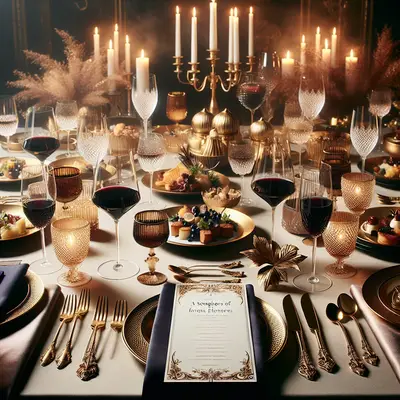
The same trend that gave us director-inspired workspaces—like moody, noir-inflected offices or pastel-perfect Anderson-esque studies—is reshaping how dining rooms use color and texture to signal quiet opulence. Instead of the traditional white tablecloth and crystal brightness, the current luxury vocabulary leans into depth: oxblood leather, midnight-blue walls, soft caramel suedes, tobacco-toned woods, and burnished metals that catch candlelight like jewelry.
These choices are not simply visual; they’re tactile and psychological. A velvet banquette invites lingering. A matte, stone tabletop tempers the sparkle of stemware and allows plating to read with photographic clarity. Underfoot, thick rugs soften ambient noise, ensuring that conversation never competes with the room. Even plateware is part of the mise-en-scène: hand-thrown ceramics in muted neutrals, or stark porcelain against near-black surfaces, create an almost editorial contrast that photographs beautifully.
When you scan photos before reserving, pay attention to the chromatic language. Does the room feel like it could have been conceived as a frame from an art-house film? Are the hues layered rather than loud? Luxury travelers who understand that color is a form of hospitality—not just decoration—tend to choose spaces where the palette does half the relaxing for you.
4. The Soundtrack of Supper: Why Audio Is the Ultimate Understated Luxury
Iconic directors are inseparable from their soundscapes; you can often recognize a film by its score within seconds. The most forward-thinking fine dining rooms are increasingly adopting the same philosophy—treating sound as a conscious decision, not a by-product.
Where once luxury dining meant near silence, today’s refined rooms curate an acoustic environment that feels intimate rather than hushed. Carefully tuned playlists—often analog, sometimes live—sit at a precise volume where you notice them only when you choose to. Materials such as ribbed paneling, heavy draperies, and upholstered ceilings serve double duty as both design statements and acoustic buffers, preventing the now-infamous “restaurant roar” from intruding on the experience.
As you consider new openings and established temples of gastronomy, look for subtle clues in reviews: mentions of being able to hear tablemates without leaning in, references to music that evolved gently over the evening, nods to the absence of harsh echoes. In an era when everything is photographed, the restaurants that will matter in the next five years are those that remember a meal is also listened to—and that a flawless soundtrack can be as luxurious as a vintage wine pairing.
5. The Unseen Hand: Service Choreography Inspired by Film Direction
Director-inspired design projects often highlight not just the look of a space, but how a person might move through it—where they’d sit, what they’d touch, how light would fall across their face. The world’s best fine dining rooms are taking this one step further by choreographing service with quiet, almost cinematic precision.
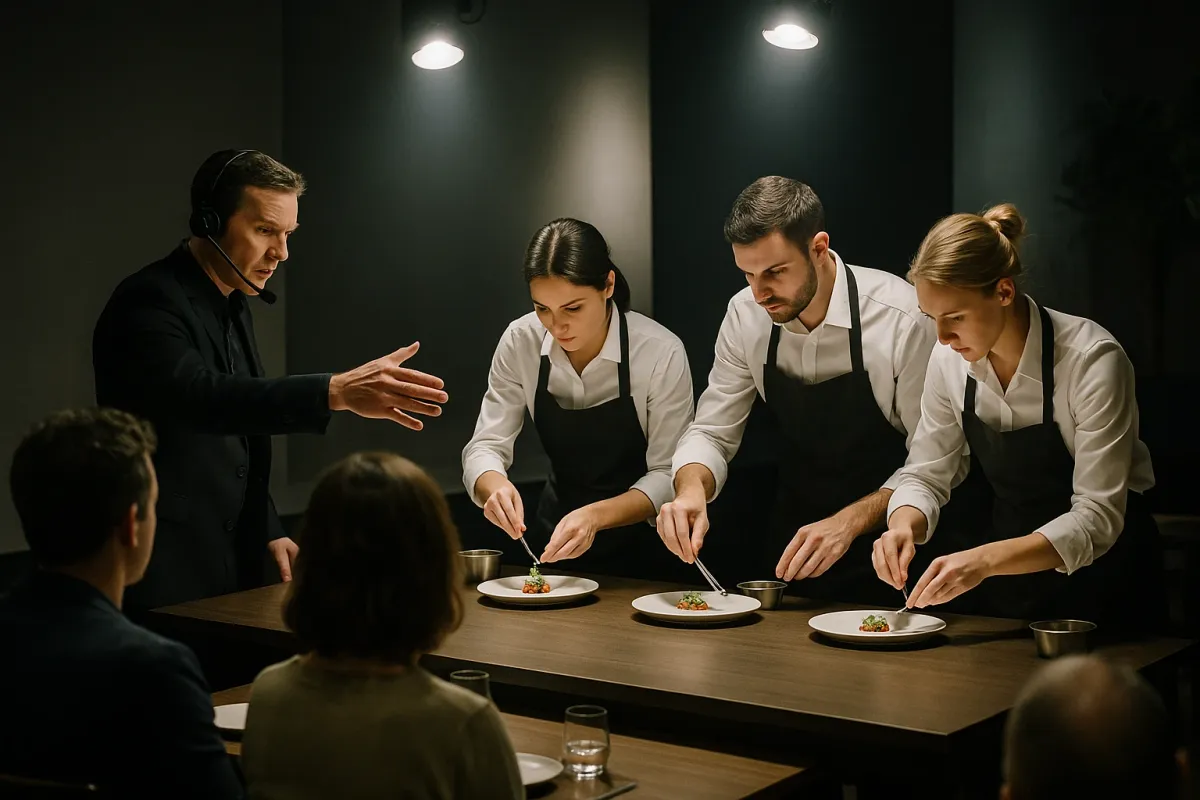
In these spaces, a great maître d’ functions like a director: blocking entrances and exits, staggering courses so that no two adjacent tables receive the same plate at the same moment (avoiding that “banquet” feel), and orchestrating staff so they appear exactly when needed and vanish when not. The result is a dining experience that feels improbably effortless. Glasses are refilled without interruption. Coats reappear as if summoned by thought. A detour into a complex wine question leads to the swift appearance of the sommelier, already briefed on your preferences.
Luxury travelers should look for rooms where service paths are unobtrusive—where staff can circulate without crossing the dining floor unnecessarily, and where the closest thing to a “stage” is the pass from which dishes emerge like carefully timed entrances. When a restaurant invests in this kind of invisible direction, the cumulative effect is profound: you feel not merely served, but personally hosted within a tightly edited, beautifully paced evening.
Conclusion
As director-inspired design concepts trend across the internet—turning home offices into miniature film sets and everyday spaces into mood pieces—fine dining is quietly absorbing the same creative energy. For the discerning traveler, this is a moment of rare opportunity. The most compelling restaurants of 2025 are those that treat every element—light, color, sound, timing, service—as part of a coherent narrative, one in which you are both audience and protagonist.
Choosing where to dine now means choosing the story you want your night to tell. Whether you gravitate toward the warm, jewel-toned intimacy of a candlelit room or the cool, sculptural minimalism of a monochrome space, the spaces truly worth crossing oceans for will feel directed, not decorated. In a world of endless options, that level of intentionality is the new definition of luxury—and the finest meals are the ones that unfold, course by course, like the most memorable scene you’ve ever stepped into.
Key Takeaway
The most important thing to remember from this article is that this information can change how you think about Fine Dining.