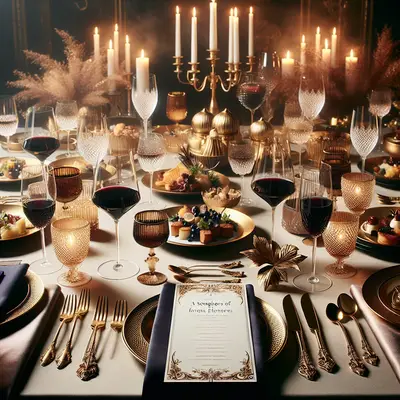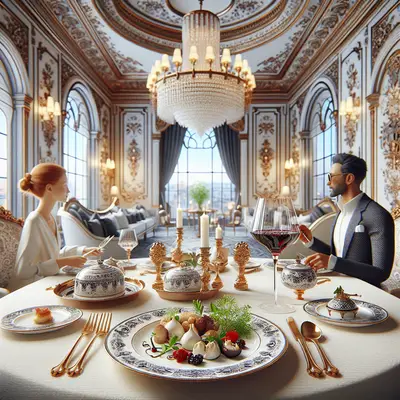
The most memorable meals for luxury travelers rarely announce themselves with spectacle. They unfold quietly—through a door that doesn’t face the street, a menu that never quite reveals everything, and a room where the lighting feels perfectly calibrated to your arrival. For the Jet Ready traveler, fine dining is less about reservations and more about orchestration: timing, discretion, and the subtle choreography of people, place, and palate. This is the world where dinner becomes a private performance, and you are both audience and patron.
Below, five exclusive insights shape how seasoned travelers approach fine dining at the highest level—details that transform a good meal into a signature memory.
The Unlisted Table: Understanding True Access
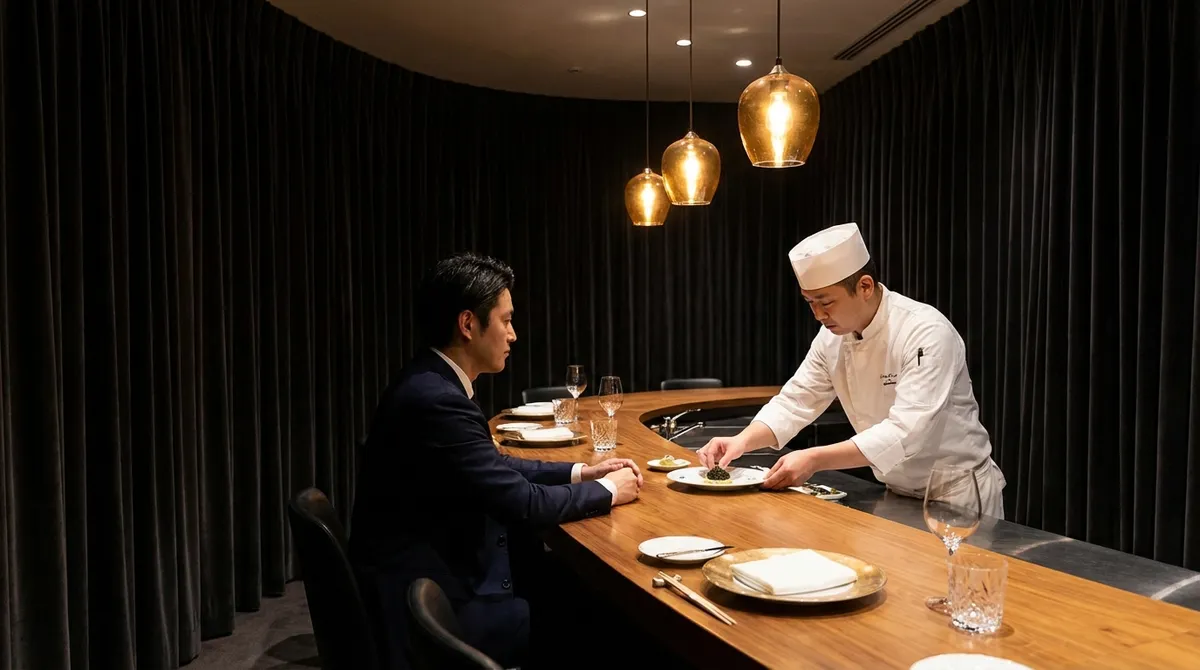
In the upper tiers of dining, the most coveted seat is frequently the one that doesn’t technically exist. It may be a chef’s counter not publicly advertised, a “kitchen table” only offered to certain guests, or a private room that is never mentioned online. Luxury travelers understand that in this world, access is rarely requested—it is recognized.
Hotels and restaurants within major culinary capitals (Paris, Tokyo, New York, Copenhagen) often maintain invisible layers of seating, held for loyal guests, discreet regulars, or those introduced by trusted concierges. A well-connected hotel concierge—particularly at high-end properties—can access these layers not by demanding favors, but by operating within a quiet network of mutual respect and reciprocity.
For the serious gourmet traveler, this means treating each visit as the first chapter of a longer relationship. Return visits, thoughtful feedback, and genuine interest in the cuisine often open doors that cannot be unlocked with a credit card alone. The unlisted table is never about entitlement; it is about alignment—between your curiosity and the restaurant’s desire to create something singular.
The Tempo of a Meal: Mastering Pacing and Timing
Fine dining at its highest level is a study in tempo. It is not just about what you eat, but when—and at what rhythm. Luxury travelers learn to read this cadence and shape it quietly, without disrupting the restaurant’s flow.
Early seatings, often dismissed by casual diners, can be a strategic advantage for those who value precision and attention. First-in seating at acclaimed restaurants frequently means a fully focused kitchen brigade, a less pressured service environment, and the ability to adjust pacing with far greater finesse. Conversely, a late seating in cities with vibrant nightlife can transform dessert into a bridge toward the evening’s next chapter.
Guests attuned to timing signal their preferences softly: a considered pause before ordering, a simple “we’d love to take our time between courses,” or a clear indication that they need to leave by a certain hour. In refined rooms, these are not inconveniences—they are coordinates. A well-run dining room will adjust cooking and service to deliver a meal that feels measured rather than rushed, lingering rather than static.
At this level, time is treated as an ingredient. When managed well, it seasons the evening with a sense of inevitability—as if every course arrived exactly when it was meant to.
The Whisper of the Cellar: Elevating the Pairing Conversation
For discerning travelers, the wine list is not a test of knowledge; it is an invitation to collaborate. The most satisfying experiences often begin not with brand names but with intentions: how you want to feel over the course of the meal, what you are curious to explore, and how adventurous you wish to be.
A skilled sommelier can structure an evening with the nuance of a composer. Rather than defaulting to a traditional pairing, luxury guests are increasingly exploring thematic approaches: wines from a single region, grower Champagnes throughout the meal, or low-intervention wines that mirror the kitchen’s philosophy. For those who prefer to moderate alcohol, high-level restaurants are now developing sophisticated non-alcoholic pairings that treat tea, ferments, and infusions with the same reverence once reserved for grand cru.
The refined traveler never approaches the wine list as a catalogue of status symbols. Instead, the conversation with the sommelier becomes a discreet dialogue about tempo, texture, and mood. The most elegant signal you can send is not “show me the best,” but “show me what you’re excited about that most guests never see.” That single question often unlocks bottles the general public never touches: off-list allocations, rare half-bottles, or the final glasses of a special vintage.
The Language of Detail: Reading a Room Without Saying a Word
At the top end of fine dining, service is less about choreography and more about intuition. The unspoken language between guest and staff determines everything—from how often your glass is refilled to how readily additional courses or substitutions appear.
Experienced travelers understand that the room is constantly observing subtle cues: where you place your phone, how frequently you scan the room, whether you lean into conversation or towards the plate. Guests who treat the space as a stage set for Instagram tend to receive a different type of attention than those who behave as if the room belongs only to the present moment.
The refined approach is quiet and intentional. Phones remain out of sight except for a discreet photo or two. Requests are measured rather than constant. Preferences are shared early but without prescription: dietary needs, sensitivities, and general likes or dislikes. This allows the restaurant to respond with creativity rather than mere compliance.
In eminent dining rooms, staff remember more than faces. They remember pacing preferences, seating choices (banquette vs. table), and whether you prefer a printed menu at the end of the meal or nothing at all. Over time, these small details accumulate into a sense of being genuinely known—one of the rarest luxuries in modern travel.
Beyond the Meal: Treating Restaurants as Cultural Gateways
For luxury travelers, the finest restaurants are not simply destinations; they are cultural instruments—tuned precisely to the cities and regions around them. The right reservation can offer a deeper understanding of a place than any museum ticket or guided tour.
In Tokyo, a counter-only kaiseki restaurant can function as a living essay on seasonality and craft. In the Basque Country, an experimental tasting menu might articulate the region’s dialogue between land and sea more clearly than any travelogue. In Mexico City, a tasting menu built around native ingredients can compress centuries of culinary history into a single evening.
Discerning guests don’t stop their curiosity at the edge of the plate. They ask about producers, fishermen, foragers, and farmers; about how the menu shifts with the local climate; about what the restaurant team eats when the last guest has gone. They use fine dining as an aperture through which to view architecture, agriculture, and even politics.
This mindset turns every serious restaurant visit into an act of informed travel. A meal becomes a map—one that leads to markets, vineyards, workshops, and artisans that most visitors never encounter. For the Jet Ready traveler, the reservation is simply the first point of contact with a much wider, richer narrative.
Conclusion
At its most elevated, fine dining is not about excess or display. It is about precision, discretion, and resonance—the sense that an evening was crafted specifically, and quietly, around you. Luxury travelers who recognize this treat top-tier restaurants not as trophies to be collected, but as salons of craft and culture where time, taste, and attention intersect.
Access to unlisted tables, mastery of pacing, nuanced dialogue with the cellar, fluency in the language of detail, and a willingness to treat each meal as a cultural gateway—these are the quiet advantages that separate a pleasant dinner from an unforgettable one. In a world enamored with visibility, the finest experiences still happen where the lights are just low enough, and the performance feels entirely your own.
Sources
- Michelin Guide – Official Website - Global reference for high-level restaurants and evolving standards in fine dining
- World’s 50 Best Restaurants - Insight into leading restaurants, culinary trends, and chef philosophies worldwide
- The New York Times Food & Dining - In-depth reporting on restaurants, chefs, and dining culture across major cities
- Harvard T.H. Chan School of Public Health – The Nutrition Source - Evidence-based information on ingredients, nutrition, and culinary approaches
- U.S. Travel Association - Context on travel behavior and trends, including luxury and experiential travel patterns
Key Takeaway
The most important thing to remember from this article is that this information can change how you think about Fine Dining.