Fine dining, at its highest form, is less about sustenance and more about orchestration. For the luxury traveler, an exceptional meal is not an isolated event but a discreet continuation of a life curated in rarefied detail—from the airport transfer to the final sip of digestif. What distinguishes a merely “good” restaurant from a truly world‑class dining room is not always obvious at first glance; it is felt in micro‑moments, in the rhythm of service, in the way a room seems to anticipate your next gesture.
Below are five exclusive insights that sophisticated travelers quietly track when they step into the world’s most exceptional dining rooms—and how you can begin to read those same subtle signs.
The Invisible Architecture of the Room
Before the first glass is poured, the truly discerning guest reads the room itself. Fine dining spaces of the highest caliber are not designed to impress; they are designed to control energy, focus, and flow.
Notice first the acoustics. In elite dining rooms, you rarely hear individual conversations, only a soft, textured hum. Thoughtful soundproofing, fabric choices, and table spacing ensure that privacy is felt, not announced. You are never forced to raise your voice, yet you are never uncomfortably aware of your own.
Lighting reveals another layer of intent. The best rooms are lit with gradient rather than uniform brightness: a subtle emphasis on the table surface, softened light at eye level, and nearly theatrical shadows that contour glassware and porcelain without drawing attention to any single element. If you can read the menu comfortably while your reflection in the window remains understated, the lighting has been calibrated correctly.
Table placement also speaks volumes. Notice whether your line of sight includes the kitchen pass, the entry, or a major circulation corridor. In the most sophisticated dining rooms, high‑value tables are oriented to feel at once connected to the room’s energy and slightly removed from its traffic—a position where staff are always within range, yet never hovering.
When everything feels calm—but never static—you are likely in the hands of a team that understands hospitality as spatial choreography, not merely floor planning.
Service as Discreet Personalization
In true high-end dining, service is not about scripted warmth; it is about the calibrated degree of presence. Luxury travelers, accustomed to five‑star environments, can instantly sense whether a team understands this.
The first indicator: how quickly and how accurately the staff reads your tempo. A polished team will understand in the opening minutes whether you are on a pre-theatre timeframe, a long-form tasting indulgence, or a discreet business dinner. Course pacing, bread service, and even water refills will then subtly align to that rhythm.
Watch for micro‑tailoring. Does the sommelier adjust vocabulary and depth of explanation to your level of engagement? Are dietary considerations handled quietly and precisely, without drawing attention to the deviation? In refined dining rooms, staff do not “announce” accommodation; they simply integrate it seamlessly.
Another detail: the memory of preferences. In restaurants that serve a global, returning clientele, your previous choices—favored grape varietals, aversion to certain textures, preference for half portions of heavy courses—are often discreetly noted and revisited. When champagne is offered in the style you preferred on your last visit, without fanfare, you are experiencing a level of personalization that transcends hospitality training and becomes institutional memory.
Service at this level feels like shared intelligence: unobtrusive, ahead of your needs, and always calibrated to your privacy threshold.
Culinary Precision Beyond the Plate
Luxury travelers often speak of “starred” restaurants as though the distinction alone were sufficient. In reality, what defines the world’s most disciplined kitchens is not culinary theatrics but an almost obsessive precision, much of which is hidden from the guest.
Menus that appear effortless are frequently supported by a complex network of sourcing relationships—small producers, seasonally limited ingredients, and long-term collaborations with farmers and fishmongers. At the uppermost echelon, chefs often know not just the source, but the specific plot of land or particular fishing vessel. This depth of provenance is not a marketing slogan; it’s a control point for quality and consistency.
Technique is another layer. In serious kitchens, even the simplest element on the plate—an herb oil, a broth, a purée—has been calibrated, tasted, and standardized repeatedly in pre-service. The question is never just “does this taste good?” but “does this taste exactly as it should today?” A precise balance of salinity, acidity, texture, and temperature is tested and re-tested before the first guest is seated.
Temperature control is an often-overlooked sign of excellence. Notice whether hot dishes arrive truly hot to the core, not just warm at the surface, and whether cold elements maintain their integrity through the course of a bite. This reveals a kitchen in control of timing, plating speed, and distance to the pass.
The luxury traveler understands: the artistry is compelling, but it is the relentless, quiet discipline behind it that transforms dinner into an experience worthy of crossing an ocean.
The Wine Program as Cultural Lens
For the sophisticated guest, the wine list in a fine dining restaurant is not merely a catalogue; it is a cultural document that reveals the establishment’s philosophy, network, and long-term vision.
A world-class program balances depth with curation. Page count alone is not impressive; what matters is coherence—how the list supports both the region’s strengths and the chef’s culinary style. In Europe’s grand palaces, for example, an anchored Old World backbone with verticals of prestigious producers might be complemented by selective, thoughtful New World entries. In cutting-edge urban properties, expect more experimental grower champagnes, artisanal producers, and less familiar appellations chosen for food pairing versatility.
Another refined signal: format diversity. Half-bottles, magnums, and a sophisticated by-the-glass program using Coravin or similar preservation systems point to a restaurant that understands how luxury travelers actually drink—sometimes wanting multiple pairings without the commitment of multiple bottles.
Relationship-driven allocations are often hidden in plain sight. Certain rare cuvées, micro-production Burgundy, or small-lot Japanese whiskies appear only where a long-standing bond exists between restaurant and producer or importer. When you see highly coveted bottles offered at fair (if still premium) pricing, it often signals a multi-year partnership rather than opportunistic acquisition.
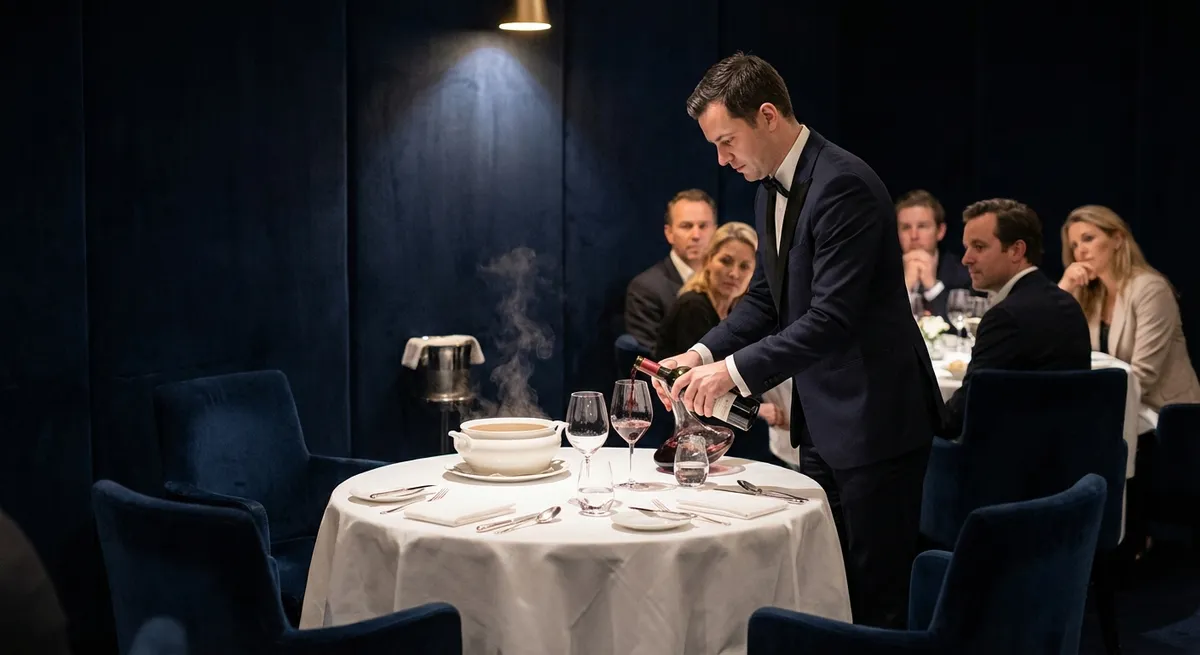
The most valuable insight: how comfortably the sommelier navigates your preferences, budget, and curiosity. In exceptional houses, you never feel upsold; you feel guided. When a sommelier can translate “I want something elegant, mineral, and not ostentatious” into a perfect glass or bottle, you are experiencing a discipline that blends scholarship with emotional intelligence.
The Afterglow: How Exceptional Restaurants Shape Memory
For the luxury traveler, the real measure of fine dining is not the Instagram vignette but the quality of memory it leaves behind. The finest restaurants understand that the experience does not end when the plates are cleared; it dissolves gradually, with intention.
Consider the close of service. Do staff maintain their attentiveness at the same level after payment as before? In truly refined spaces, the final 20 minutes are treated as critical: digestifs offered thoughtfully, tea and coffee service executed with the same precision as the main courses, farewell gestures calibrated to your mood and energy.
Some establishments extend the experience with discreet, non-transactional gestures: a small package of breakfast pastries for the following morning, a printed copy of the tasting menu with wine pairings, or a personalized note referencing something you mentioned during dinner (an upcoming trip, an anniversary, a professional milestone). These are not generic “amenities”; they are signals that your presence was specifically registered.
Memory is also shaped by narrative. The best dining rooms do not overwhelm you with exposition during the meal; rather, they leave enough context—about ingredients, producers, techniques—that when you reflect later, the experience feels anchored in place and time. You don’t just remember “the fish course”; you remember the story of the coastline it came from, or the older vintage poured to complement it.
Luxury travelers often maintain a private ledger of such experiences—not as a checklist, but as a personal cartography of taste and hospitality. Restaurants that understand this are not simply serving dinner; they are authoring a chapter in a guest’s ongoing narrative of how, and where, they choose to live well.
Conclusion
At its rarest level, fine dining is not a spectacle but a quiet alignment of dozens of details: space, service, sourcing, wine, and memory. Luxury travelers recognize that what they are seeking is not just “the best restaurant” in any given city, but those singular rooms in which everything—lighting, cadence, tone, and taste—resolves into an experience that feels precisely, almost impossibly, suited to them.
When the table becomes a stage and you are both audience and participant, you are no longer simply tasting a chef’s work. You are inhabiting a temporary world built for you, and for a few refined hours, everything outside that room falls gently out of focus.
Sources
- Michelin Guide – About the MICHELIN Guide - Background on how top restaurants are evaluated and what defines high-level dining.
- World’s 50 Best Restaurants – How the list is compiled - Explains the methodology and global perspective behind ranking elite restaurants.
- Harvard T.H. Chan School of Public Health – The Nutrition Source: Dining Out - Provides insight into menu structure, ingredient considerations, and how restaurants think about food composition.
- Court of Master Sommeliers, Americas - Authoritative overview of sommelier training, wine service standards, and beverage program excellence.
- Cornell University School of Hotel Administration – Center for Hospitality Research - Research publications offering data-driven perspectives on service quality, guest experience, and restaurant operations at the luxury level.
Key Takeaway
The most important thing to remember from this article is that this information can change how you think about Fine Dining.