There is a new status symbol in luxury travel this season, and it is not another overwater villa or private island. It is a veterinarian in a helicopter, a tranquilized rhino dangling from a cargo net, and a conservation report with your name discreetly attached to it. As wildlife vet diaries and dramatic field footage—like those “airlifting rhinos and tracking leopards with perfume” stories now trending online—circulate across social media, they are quietly reshaping what affluent travelers consider truly luxurious.
In 2025, the most coveted safaris are no longer just about ticking off the Big Five. They are about entering the backstage of the wild—joining anti-poaching patrols at dawn, watching a vet reverse anesthesia on a sedated lion, or financing a collar that will protect a leopard for the next decade. Inspired by the reality of vets who “airlift rhinos” and even use mainstream brands like Calvin Klein’s Obsession to study elusive cats, a new generation of ultra-luxury properties is turning high-end safari into something rarer: a meaningful, measurable act of stewardship.
Below, five exclusive insights shaping the next chapter of conservation-led luxury travel—designed for those who collect experiences, not just passport stamps.
1. The New “Suite Upgrade” Is a Seat Beside the Wildlife Vet
On the most rarefied safaris in Southern and Eastern Africa, the real upgrade is not a bigger plunge pool; it is proximity to the experts who keep the wilderness alive. Properties partnering with leading conservation NGOs and field veterinarians are now curating immersive, behind-the-scenes days where guests shadow the people whose daily routine includes darting rhinos from helicopters, relocating giraffe, or fitting tracking collars on predators. These experiences are never guaranteed—ethics, weather, and animal welfare come first—but when a call-out does happen, select guests may be invited to observe from a safe, meticulously controlled distance.
The sophistication lies in the subtlety. No glossy theatrics, no staged “rescues”—simply the raw choreography of real fieldwork: rotor wash, radio chatter, and the quiet, almost reverent efficiency of vets working against the clock. Luxury in this context becomes a kind of access: a private safety briefing in camp, a debrief with the veterinary team over a tasting menu under the stars, a chance to review thermal drone footage and understand how specific operations alter the survival odds of a local population. For those used to VIP lounges and black cards, being on a first-name basis with the people literally holding a species’ future in their hands feels like a far more compelling privilege.
2. From “Photo Safari” to “Impact Itinerary”: Measuring What Your Trip Actually Saved
The days when conservation was just a line item on a lodge invoice are fading. Taking a cue from the radical transparency seen in viral wildlife vet stories—where every operation has a clear purpose and outcome—high-end safari operators are beginning to quantify impact for their guests with almost investment-grade precision. Instead of vague references to “supporting local projects,” you might receive a discreet, beautifully printed dossier at the end of your stay outlining exactly what your visit funded.
That impact might be a portion of a rhino dehorning program to deter poaching, a month’s worth of fuel for a mobile vet unit, or the telemetry collars now tracking a specific pride of lions whose data you can follow via a private portal. Some properties are integrating impact dashboards into in-suite tablets, where you can see, in near real time, how your stay contributes to veterinary interventions, anti-snare patrols, or habitat restoration. For UHNW travelers accustomed to transparency from their family offices and foundations, this level of detail transforms a safari from “feel-good” leisure into something closer to a curated philanthropic asset—except the dividends are measured in lives saved and territory secured.
3. Privacy Reimagined: An Entire Conservation Landscape as Your “Private Estate”
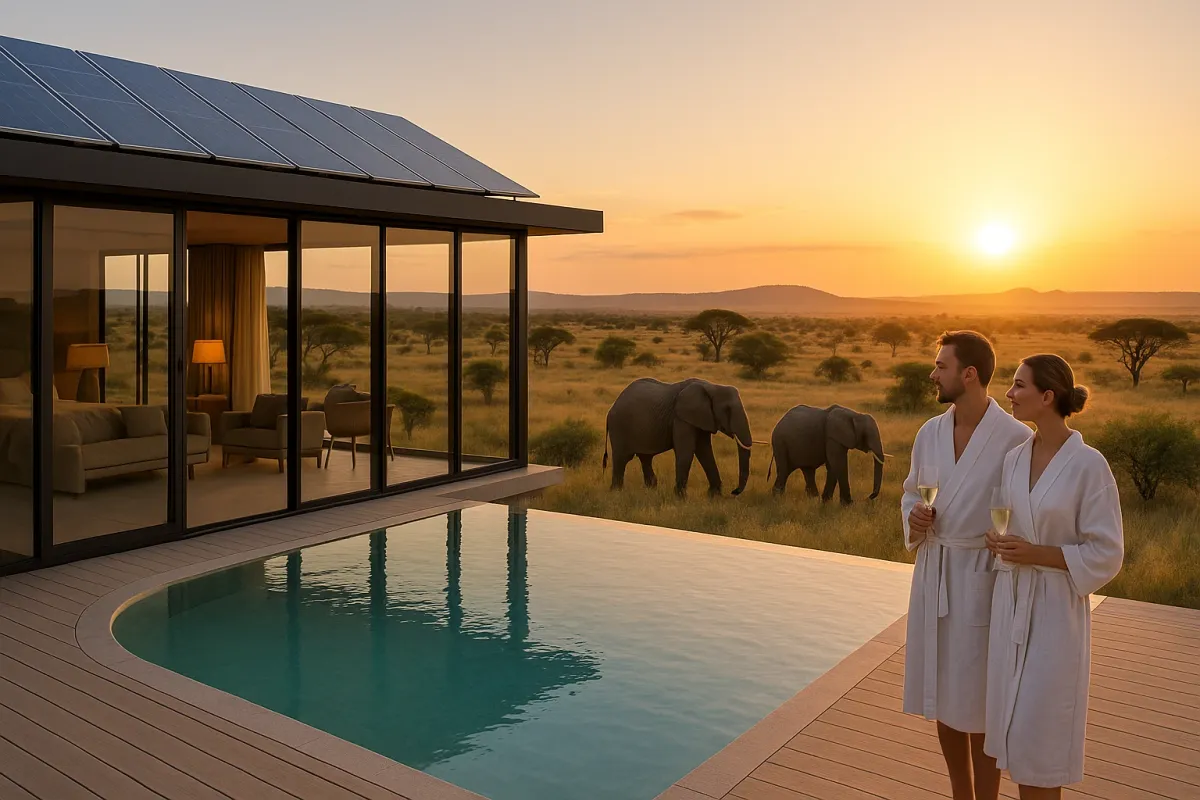
Ultra-luxury lodges are increasingly embedded in vast conservancies and private reserves, some of which rival small countries in size. In 2025, the most exclusive experience is not merely a private villa, but a private landscape—10,000, 50,000, even 100,000 hectares where vehicle density is low, ranger presence is high, and the horizon feels entirely your own. The inspiration comes straight from the operational needs of wildlife vets and conservation teams: animals need space, minimal disturbance, and corridors to move safely. Affluent travelers, it turns out, want much the same.
High-end partners now offer full-park buyouts or quasi-exclusive use of large sectors within a reserve, coordinated around conservation schedules. One day your guide might reroute a game drive to avoid stressing a sedated cheetah undergoing a dental procedure; another, you might track fresh tracks to a spot where a vet team worked at dawn, guided by the scent markers they use—yes, including the famously effective designer-fragrance stand-ins that have captivated social media. The luxury is in knowing that your solitude is not performative; it is a byproduct of a system optimized for the animals’ wellbeing first, your experience second. In this equation, you are not the center of the world, merely a privileged witness to a much more important narrative unfolding around you.
4. Scent, Sound, and Silence: The Sensory Design of Tomorrow’s Safari Lodges
Those wildlife vet stories about using human scents—like Calvin Klein fragrances—to tempt shy leopards into camera range invite a more nuanced thought: if animals are so acutely affected by scent, how should we be designing the olfactory and acoustic footprint of our lodges? The most forward-thinking properties are already experimenting. They are stripping guest amenities of harsh synthetic fragrances, opting instead for ultra-subtle botanicals that do not disrupt animal behavior. Candles and diffusers are chosen as carefully as wine; some are reserved only for indoor use to maintain a “neutral” perimeter outside.
Sound design is getting the same meticulous attention. Where older lodges relied on generators and clattering service routines, new builds are engineered around near-silence: buried power lines, battery-based systems, softly padded walkways, and staff trained to move like stagehands in a Michelin-starred kitchen. Night becomes an orchestral performance of real wilderness, not the hum of infrastructure. For seasoned luxury travelers, the refinement is almost subversive—luxury not as opulence, but as the absence of anything unnecessary, a sensory quiet that lets you hear the distant alarm call of impala without interference.
5. From Instagram Moments to Legacy Narratives: Curating a Story That Outlives the Trip
In an era when a single viral clip of a rhino airlift can ignite global conversations about conservation, sophisticated travelers are reassessing the role of storytelling in their journeys. The savviest luxury operators now pair guests with professional documentarians, conservation photographers, or writers who help curate a personal narrative that goes beyond the usual carousel of sunset shots. Instead of another lion close-up, you might capture the delicate process of repairing a bird’s wing, or the meticulous logging of data after a veterinary intervention—moments of quiet precision rather than spectacle.
Some camps are offering post-trip “legacy briefings” via private video calls, where senior conservationists update you on the animals and projects you encountered. Your leopard, the one lured by scent and collared while you observed from a hillside, might have had cubs; your funded de-snaring patrol could have opened a safe corridor for migrating elephants. This evolving story can be woven into your philanthropic profile, shared selectively with family offices, or become the centerpiece of an intimate salon dinner back home. In a world saturated with instantly forgettable travel content, the rarest luxury is a narrative that continues to deepen long after your bags are unpacked.
Conclusion
The luxury safari of 2025 is no longer a beautifully packaged commute between sundowner spots. It is an invitation into the complex, often demanding world of those who protect the wild for a living. The same real-world stories captivating social feeds—the wildlife vet dangling from a helicopter, the unconventional use of perfume to study elusive cats—are now the quiet engine behind a new class of high-end travel: exacting, ethically ambitious, and profoundly immersive.
For travelers who have done “everything,” this is where the frontier has shifted. Not toward ever-greater excess, but toward ever-greater intimacy with the natural world—and a willingness to assume some responsibility for its future. In that sense, the true luxury is not the lodge, the aircraft, or even the exclusive access. It is the knowledge that, for a brief, privileged moment, your presence in the wild left a trace that mattered.
Key Takeaway
The most important thing to remember from this article is that this information can change how you think about Luxury Travel.