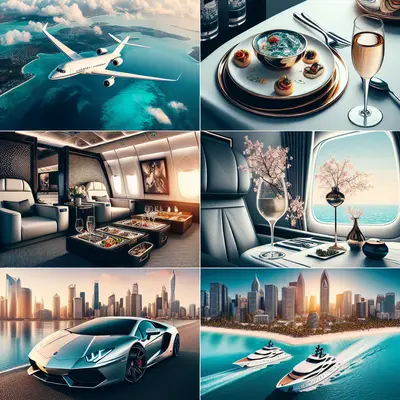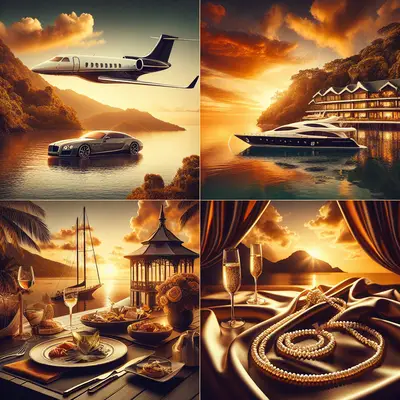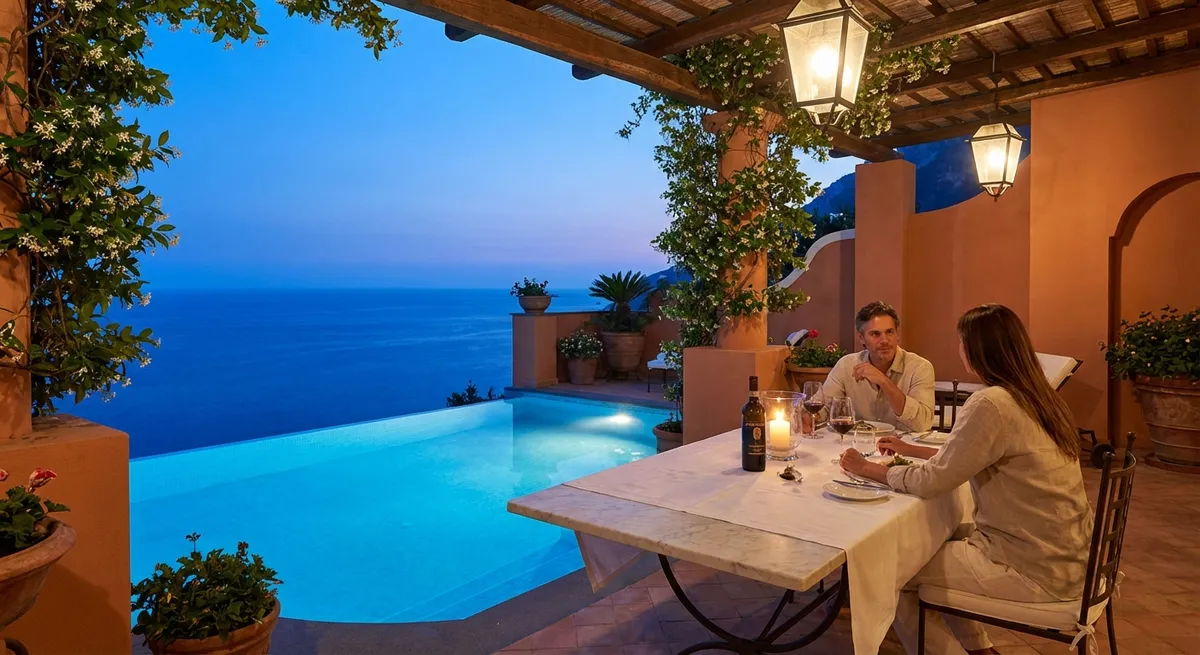
Luxury travel today is less about being seen and more about feeling singular. The finest journeys are no longer measured in star ratings or square footage, but in the precision with which an experience mirrors the traveler’s quiet preferences. For the discerning, the world has become a series of beautifully choreographed moments—each touchpoint, from the first airport interaction to the final nightcap, curated with the subtlety of a bespoke suit lining. This is the new grammar of luxury in motion.
The New Signature: Hyper‑Personal Itineraries That Feel Effortless
The most coveted itineraries now read less like schedules and more like personal biographies in motion. Instead of templated “best of” tours, elite travelers are commissioning journeys that reflect their inner life—obsessions, rituals, even circadian rhythm.
A private art viewing is timed not by gallery hours, but by when you feel most alert and receptive. A coastal sailing route is plotted to intersect not just with good weather, but with fleeting seasonal phenomena: bioluminescent bays on specific moon cycles, rare bird migrations, or open-cellar days at cult vineyards that usually stay closed to the public.
The true luxury lies in the invisible scaffolding. Expert destination fixers, local academics, and veteran guides collaborate behind the scenes so that the traveler only ever encounters a sense of seamless inevitability—everything appears to “just happen” at precisely the right moment. The result is an itinerary that feels less planned and more predestined.
Privacy as a Design Principle, Not a Perk
Privacy has evolved from an amenity to a design philosophy. High-end travelers are increasingly seeking environments where they can move through the world without the constant friction of negotiation—no queues, no unnecessary conversations, no superfluous decisions. Space, time, and interaction are all curated.
In practice, this manifests as private airport suites with direct tarmac transfers, villa-style accommodations where check-in occurs long before arrival, and yacht or train charters where the staff already knows not just your allergies, but how you like your coffee on the second morning rather than the first. The architecture of these spaces often features strategic sightlines, concealed entrances, and layered access—everything from private elevators to staff-only pathways that preserve a sense of sanctuary.
The most refined properties are also discreet about their discretion. There are no visible cameras or conspicuous security theatrics. Instead, privacy is enforced quietly, through non-invasive technologies, carefully trained staff, and layouts that let you feel completely at ease while remaining subtly protected.
Culinary Journeys That Mirror Personal Narratives
For sophisticated travelers, dining has become less about “the best restaurant in town” and more about how a meal can echo personal history, values, and curiosity. A tasting menu is no longer just a chef’s expression; at the highest tiers, it becomes a dialogue between the kitchen and the guest.
Imagine a progression of courses inspired by the cities that shaped your life, reinterpreted through the lens of local terroir. A chef might integrate an ingredient from your childhood into a dish built around a regional specialty, or reimagine a family recipe using techniques from the destination’s culinary heritage. Menus are increasingly crafted only after a pre-arrival consultation, where dietary restrictions are merely the starting point; preferences, travel patterns, and even your typical dining tempo inform the design.
The wine and spirits programs follow suit. Rare allocations are reserved not for status, but for relevance—particular vintages poured at meaningful personal anniversaries, or bottles from winemakers you’ve met previously, appearing unexpectedly mid-journey. The finest experiences leave you with the sense that the menu could not have been served to anyone else in precisely the same way.
Time as the Ultimate Luxury Asset
For travelers at the top tier, time is the only truly finite resource—and luxury providers are building entire ecosystems around its preservation and optimization. The goal is not just to save time, but to elevate the quality of each hour in transit and on the ground.
This begins with advanced logistics: private aviation or first-class commercial flights synchronized with driver transfers, security fast-tracking, and pre-cleared immigration where available. Bags are collected, processed, and often unpacked before you reach your suite. Administrative friction—forms, confirmations, reservations—is increasingly handled through pre-travel concierge teams and secure digital profiles, reducing “decision fatigue” upon arrival.
Crucially, premium time-management in travel now includes intentional unscripted intervals. High-end itineraries reserve generous, protected windows for nothingness—stretches where you can spontaneously follow a local’s suggestion, linger in a café, or simply watch the light change from a terrace. The luxury is not merely in doing as much as possible, but in having the option to do less without feeling you are wasting the moment.
Invisible Wellness: Staying Optimal Without Announcing It
The most exclusive wellness in travel no longer announces itself with slogans and slogans or Instagram-ready spa lobbies. For the globally mobile, peak condition is treated as an operational priority rather than an indulgence—and the best providers respond with offerings that are integrated, subtle, and highly customized.
Advanced programs begin before departure: sleep and nutrition plans adjusted for time zones, light exposure strategies, and even personalized cabin environments on private flights—humidity, temperature, and lighting tuned to reduce jet lag. Upon arrival, biometric assessments may quietly inform everything from your massage protocol to your room’s pillow selection and minibar configuration (electrolytes, adaptogens, or low-intervention wines instead of generic snacks).
Recovery becomes as important as exertion. Destination experiences—early-morning hikes, private ski guides, urban cycling tours—are paired with physiotherapy-level treatments, infrared or cryotherapy sessions, and quiet spaces specifically designed for cognitive decompression. Wellness here is not a separate “program” but a continuous thread that allows you to land in a new timezone not depleted, but sharpened.
Conclusion
The true frontier of luxury travel is not louder, shinier, or more conspicuous—it is more precise. The most exceptional journeys today are those that register at the level of nuance: a room that feels instantly familiar, a menu that seems to understand your memory, a city experienced without friction or haste.
For the traveler who navigates the world frequently and decisively, luxury is no longer defined by what is added, but by what is removed—noise, inconvenience, generic touchpoints. What remains is a clean line of experience: highly personal, beautifully orchestrated, and quietly unforgettable.
Sources
- Virtuoso: 2024 Luxe Report - Industry insights on evolving luxury traveler preferences and personalization trends
- Condé Nast Traveler – The Future of Luxury Travel - Overview of how high-end travel is shifting toward privacy, personalization, and meaningful experiences
- Forbes Travel Guide – What Defines Modern Luxury Travel - Discussion of contemporary luxury benchmarks, including wellness and service design
- Harvard Business Review – The Experience Economy - Foundational perspective on experiential value that underpins premium travel design
- World Travel & Tourism Council (WTTC) Reports - Data and analysis on global travel trends, including premium segment growth and traveler behavior
Key Takeaway
The most important thing to remember from this article is that this information can change how you think about Luxury Travel.