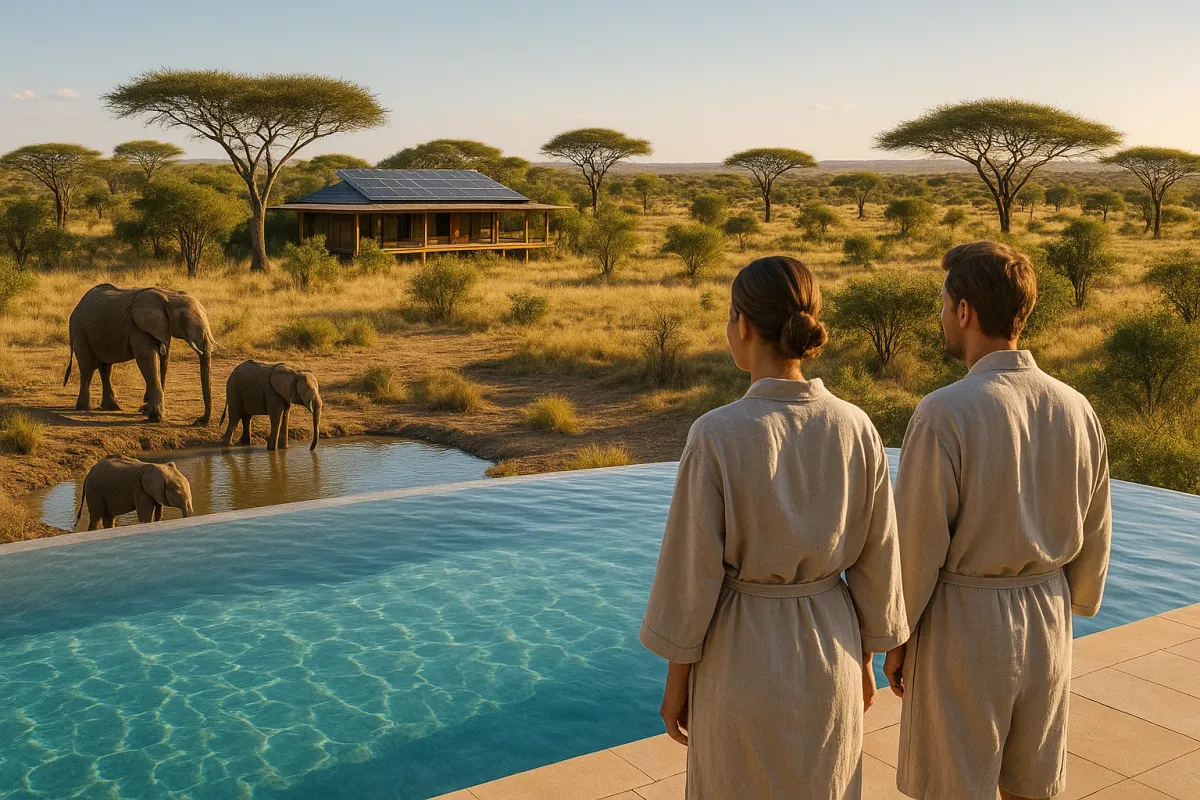
In today’s luxury travel landscape, the most coveted amenity is no longer a plunge pool or a private butler. It’s purpose. As headlines spotlight wildlife veterinarians airlifting rhinos and using scent from Calvin Klein’s “Obsession” to track elusive leopards, a quiet shift is underway: the world’s most discerning travelers are seeking not just remoteness, but relevance. The frontier of exclusive resorts is moving decisively toward conservation-led, experience-rich safaris where the line between guest, guardian, and patron becomes artfully blurred.
This isn’t eco-tourism as a marketing flourish. It’s a new stratum of ultra-luxury—where helicopter sedations, anti-poaching units, and field laboratories share the same horizon as tasting menus and handwoven linens. For travelers who are as fluent in carbon offsets as they are in Champagne vintages, these properties offer something rare: the chance to step into the story behind today’s wildlife headlines, without sacrificing an inch of comfort.
Below are five nuanced insights shaping this new era of conservation-driven exclusivity—details that sophisticated travelers are already reading between the lines of today’s news.
1. The New “Front-Row Seat” Is Behind the Scenes
The viral story of a wildlife vet sedating rhinos from helicopters and tracking big cats with designer fragrance highlights a profound truth: the most compelling drama on the planet today is unscripted and unfolding in real time in conservation zones. Elite safari lodges and private reserves are now giving select guests highly curated access not just to the spectacle of wildlife, but to the infrastructure that protects it.
This might mean shadowing a veterinary team on a non-emergency collaring mission, observing from a carefully controlled distance as a tranquilized animal is monitored, tagged, and revived. Or joining a dawn briefing with rangers as they review overnight movements of rhino via satellite telemetry. These are not Instagram safaris; phones are often put away, and participation is limited, both for safety and ethics. What makes it luxurious is the level of orchestration: bespoke scheduling, private briefings with scientific leads, and personalized context about how that single intervention fits into a decades-long conservation plan. For the right traveler, sitting in a field operations tent—hearing a veterinarian describe the challenges of darting a rhino from a helicopter—can feel every bit as electrifying as front-row seats at a fashion week show, only far more enduring.
2. From Guest to Patron: Conservation as a Curated Asset Class
As more stories surface of underfunded conservation operations holding up entire ecosystems, luxury travelers are beginning to view their stays not just as indulgence, but as an instrument of impact. Top-tier lodges and private concessions have responded by making the financial architecture of their conservation work radically more transparent—and more bespoke.
At the most sophisticated properties, a guest isn’t just told that “a portion of your stay supports wildlife.” Instead, they may receive a private briefing outlining the current priorities—rhino dehorning initiatives, leopard monitoring operations guided by scent-lure research, or community-based anti-poaching programs—and be given the option to underwrite a specific project. Some properties now provide a post-stay report: how many patrol hours were funded, which collars were serviced, which veterinary missions were made possible. For ultra-high-net-worth guests, this evolves into a form of carefully curated philanthropy, not unlike art advisory or family office impact portfolios. The resort becomes both a sanctuary and a gateway to a far more structured, measurable form of giving—quiet, precise, and embedded in place.
3. Ethical Access Is the New Definition of Exclusivity
The headlines about darted rhinos and high-stakes wildlife rescues inevitably raise complex questions: How close is too close? What interventions are truly necessary? In the uppermost tier of safari retreats, the answers to these questions are no longer an afterthought; they are the brand.
Leading properties now work hand-in-hand with scientific advisors, national park authorities, and independent ethics boards to define what guests may see, where, and under what circumstances. Wildlife handling is never staged for visitor entertainment; veterinary activity is only observed if it would occur regardless of guest presence, and even then, often by invitation only and in ultra-small numbers. Some lodges limit vehicle density around key species, even when it costs them in short-term guest gratification. The result is a new, more discreet form of bragging rights: having stayed somewhere that refused to stage an encounter simply for your benefit. For the truly sophisticated traveler, the most luxurious “no” is the one that protects an animal you came halfway around the world to see.
4. Design Is Quietly Borrowing from the Field Tent
The imagery of a vet stabilizing a rhino in the dust or monitoring a sedated leopard beneath a canopy of trees has unexpectedly influenced the aesthetics of the most elevated bush retreats. The best properties are now embracing a kind of “refined expedition” design language that subtly references the field without mimicking it.
Expect canvas and timber punctuated by whisper-quiet technology: infrared underfloor heating hidden beneath reclaimed wood, satellite-linked observatories disguised as stargazing decks, and labs reshaped as discreet study lounges where guests can review camera-trap footage over single-origin coffee. Colors often echo the palette of actual field gear—sand, khaki, charcoal—but elevated with hand-dyed textiles, artisanal ceramics, and commissioned local artworks depicting the very species under protection. What differentiates this from past “safari chic” clichés is authenticity: the properties’ scientific partners actually live and work nearby. When your guide points to a brushed-steel cabinet and mentions that similar equipment is used to store veterinary sedatives at the research station downriver, the décor gains a narrative density that no amount of generic campaign furniture can match.
5. Time Is Curated Around the Rhythm of the Wild, Not the Spa
The daily rhythm at these conservation-focused sanctuaries is increasingly dictated less by the spa schedule and more by the needs of the ecosystem. If a tranquilization window for a rhino relocation requires perfect early-morning conditions, the resort may flex breakfast service, vehicle allocation, and staffing to support the field team first, and the guests second—while still ensuring that the experience feels seamless.
For travelers, this creates a new kind of luxury: the feeling that their time is synchronized with something larger and more consequential than their own itinerary. Sunrises are spent in quiet observation hides where leopards—sometimes the same individuals being modeled in research that uses scent as a tracking aid—move through their territories. Afternoons might involve participating in non-invasive activities such as vegetation mapping or aerial surveying via drone demonstration, guided by conservationists rather than hospitality staff. Evenings pivot to slow rituals: long dinners under dark-sky policies that preserve both stellar viewing and nocturnal animal behavior, with carefully restrained lighting and low ambient noise. At this level, “exclusive use” no longer means just having the property to yourself; it means being welcomed into the very cadence by which the land chooses to breathe.
Conclusion
As stories of helicopter rhino rescues and scent-tracked leopards circulate globally, they are doing more than inspiring awe; they are quietly recalibrating what it means to travel well. The most coveted exclusive resorts are those that can translate these frontline realities into thoughtful, ethically grounded experiences—places where guests find themselves not at the edge of the wild, but elegantly and responsibly inside its narrative.
For luxury travelers attuned to nuance, this convergence of sanctuary, science, and style offers something vanishingly rare: the chance to enjoy impeccable comfort while knowing that, just beyond the lantern-lit deck, the real work of protecting the planet is not a story on a screen, but a living, breathing endeavor they’ve had the privilege to support.
Key Takeaway
The most important thing to remember from this article is that this information can change how you think about Exclusive Resorts.