The viral story of a $1,800 Herman Miller Aeron chair “borrowed” by a coworker and ending in an on‑the‑spot arrest has been ricocheting across social media—equal parts office comedy and quiet class commentary. But beneath the memes is a more interesting signal for luxury travelers: when a task chair becomes an object of desire, it tells you everything about where true comfort—and power—now resides.
The Aeron saga is unfolding at the same time executives, founders, and high performers are redefining what they consider non‑negotiable in their downtime. If an ergonomically perfect chair is worth defending at work, what does that say about the standards they’re bringing into their private villas, members‑only clubs, and invitation‑only resorts?
Below, five exclusive insights drawn from this moment in corporate culture—and how the new obsession with comfort, control, and micro‑details is quietly reshaping the world’s most discreet resorts.
Comfort Has Become a Status Symbol—And Resorts Are Responding Quietly
The Aeron story struck a nerve because it elevated something utilitarian—a desk chair—into a fiercely protected personal asset. In the same way, the most exclusive resorts have shifted from showpiece opulence (marble foyers, cavernous lobbies) to precision‑engineered comfort that borders on the obsessive.
At high‑tier properties in Como, Aman, and Rosewood’s ultra‑private portfolios, mattresses are now spec’d with the same attention that a CFO gives to capital expenditures: layered toppers, bespoke pillow menus, silent climate control that holds temperature within a half‑degree. The experience is designed not to impress on Instagram, but to make a CEO’s nervous system stand down. This is comfort as a strategic resource, not a soft perk. For luxury travelers, the new litmus test is subtle: blackout blinds that actually black out, water pressure that feels like a spa, seating that supports a 14‑hour flight’s worth of shoulders. If you find yourself thinking, “I could work here for weeks without fatigue,” that’s not an accident—it’s design thinking of the same caliber as a Herman Miller prototype, simply expressed in hospitality.
“Boardroom‑Grade” Workspaces Are Now a Quiet Booking Requirement
The office chair dispute went viral because it laid bare an uncomfortable reality: professionals are now acutely aware of how their tools affect their performance—and they’re unwilling to downgrade. This mindset is crossing over into leisure. Ultra‑affluent travelers are no longer asking whether a resort has Wi‑Fi; they’re asking, “Can I run my company from that villa without compromise?”
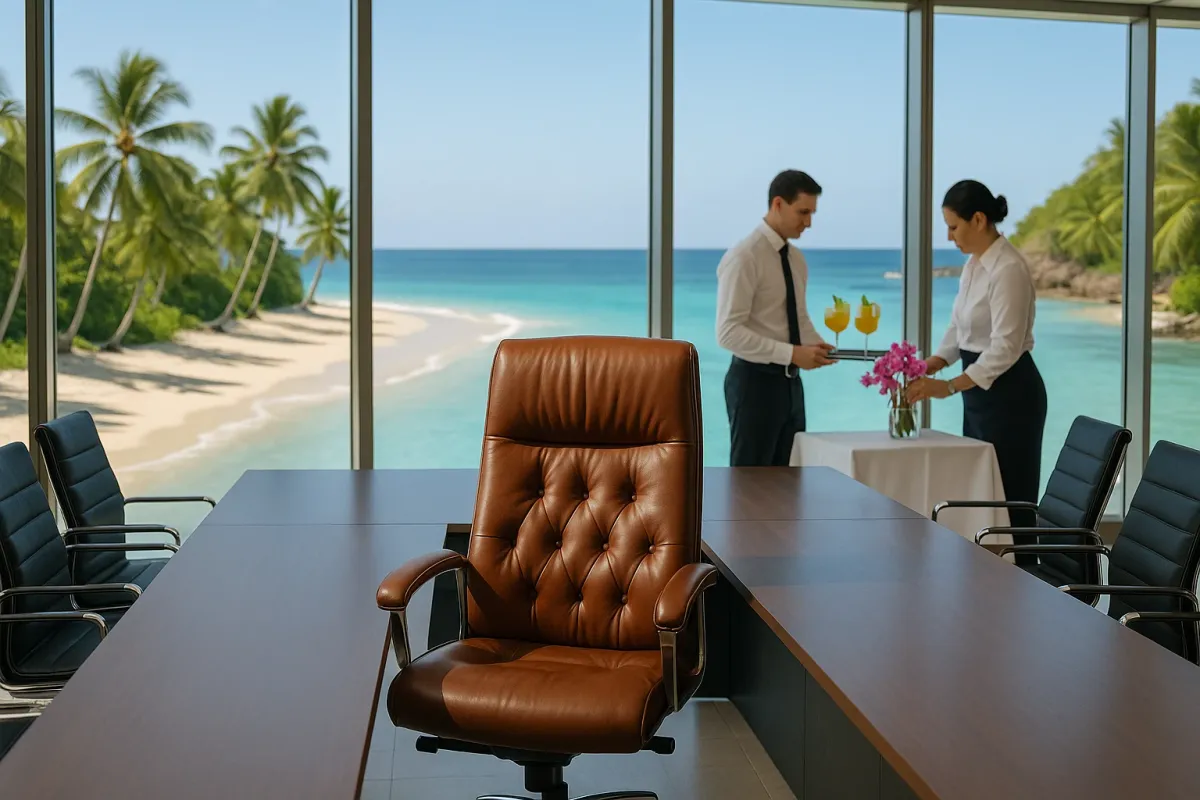
In response, top‑tier private resorts in destinations like Turks & Caicos, St. Barts, and the Maldives are quietly building boardroom‑grade work environments inside their most private residences. Think Italian executive desks, Herman Miller or Knoll seating, dual‑monitor setups hidden behind custom cabinetry, and fiber‑grade connectivity routed through soundproofed studies that can become Zoom command centers at a moment’s notice. On the surface, these suites still read as tranquil sanctuaries—hand‑loomed rugs, local art, floor‑to‑ceiling ocean views. But open a concealed panel, and you have a fully wired war room. For discerning travelers, the “ultimate luxury” is no longer leaving work behind; it’s knowing they can step into full control when needed, without ever leaving their private infinity pool.
Ownership, Boundaries, and the Rise of the Hyper‑Private Villa
In the Aeron case, the emotional charge wasn’t about a piece of plastic and mesh; it was about boundaries and ownership. The chair belonged to someone, was customized for them, and then became communal without consent. If that dynamic feels familiar, it’s because high‑net‑worth travelers have been quietly rebelling against that same erosion of boundaries in hospitality.
The response is the surge in hyper‑private villas and members‑only enclaves that feel closer to ownership than a hotel stay. Private residences at brands like Six Senses, Aman Private Residences, and branded estates from Marriott’s Luxury Collection are designed not to be “borrowed space” but an extension of one’s own life. Personal wine inventories stored on‑site year‑round, custom mattress specifications held on file, preferred art, fragrance, and even desk configurations re‑created before each arrival. In this context, the idea of a stranger “using your chair” becomes unthinkable; the entire space is coded to you. Luxury travelers seeking new levels of privacy should look beyond room categories and ask a sharper question: “How much of this is truly mine—by design, not just by booking?”
Ergonomics Is the New Jet Lag Cure
One of the quiet revelations of the $1,800 chair drama is how deeply people now understand ergonomics. They may joke about it online, but they feel it in their backs, wrists, and fatigue levels. Exclusive resorts are paying attention: they’re no longer content to offer a beautiful lounge and call it a day. They’re engineering spaces that actively repair the toll of high‑intensity lives.
At medical‑grade wellness resorts in Switzerland, Austria, and the Dolomites, you’ll now find physiotherapist‑designed seating in suites, adjustable‑height work surfaces, and spa programs that treat posture and digital strain as seriously as diet or sleep. In Asia and the Middle East, new flagship properties are quietly partnering with design‑forward furniture brands—Herman Miller, Vitra, Poltrona Frau—to furnish private libraries and executive lounges with chairs and desks that would look at home in a Silicon Valley founder’s office. For travelers, this means asking new questions when booking: not simply about spa menus and facialists, but about workstation design, in‑room seating, and sleep ergonomics. The right resort today doesn’t just pamper; it recalibrates your body so you return operating above baseline.
From Corporate Drama to Curated Calm: Why Discreet Environments Are Winning
The office‑chair arrest went viral because of its overt drama—security called, evidence shown, handcuffs applied over a seat designed to prevent back pain. But the most sought‑after resorts are thriving precisely because they offer the opposite energy: a world where nothing has to be defended, and everything is already aligned to you.
Members‑only resorts and invite‑only clubs in places like Costa Rica’s Papagayo Peninsula, Mexico’s Costa Careyes, and private islands across the Indian Ocean are carefully curating not just design but guest composition. The real luxury isn’t only the view; it’s knowing no one will “borrow” your peace, your time, or your space. Staff are trained to recognize micro‑boundaries: when to refresh a drink without interrupting a call, when a guest’s open laptop signals “do not disturb,” when to route children’s activities far from adults who are negotiating a term sheet by the pool. In a world where even a chair can become a battleground, these resorts are crafting environments where friction is designed out of existence. For those who live in constant negotiation, that level of curated calm is more valuable than another crystal chandelier.
Conclusion
The Herman Miller office‑chair saga may read like corporate farce, but for luxury travelers it’s a revealing cultural moment. A utilitarian object has become a fiercely defended personal asset, mirroring the way high performers now think about their time, bodies, and environments. The most exclusive resorts are listening: they’re building sanctuaries where comfort is engineered, ownership is respected, and every boundary—physical and psychological—is quietly honored.
For those planning their next escape, the lesson is clear. Don’t just ask about the view, the chef, or the size of the pool. Ask how the space will support your mind, spine, schedule, and sense of sovereignty. In the new era of ultra‑private resorts, true luxury isn’t about what you can show the world. It’s about never having to fight for your own chair again.
Key Takeaway
The most important thing to remember from this article is that this information can change how you think about Exclusive Resorts.