For the world’s most discerning travelers, the Northern Lights have quietly become the new Amalfi sunset—only far rarer, more elusive, and infinitely more intimate when experienced correctly. As photographers and adventurers flood social media with aurora content—echoed this week by renewed coverage of personal accounts of “the best places and times to see the Northern Lights”—the ultra‑affluent are asking a different question: not where to see the aurora, but how to own the experience.
In a travel landscape where “exclusive” is often overused, aurora‑chasing has emerged as a litmus test for genuine privacy, precision, and personalization. From glass‑roofed suites in Finnish Lapland to private lodges in the Norwegian fjords, the most sought‑after resorts are no longer simply promising a view of the Northern Lights. They are engineering an entire nocturnal world around them—curated, choreographed, and designed for those who consider time and silence the ultimate luxuries.
Below, five exclusive insights shaping the way high‑net‑worth travelers now pursue the aurora—and the ultra‑private resorts elevating it into an art form.
Aurora as a Service, Not a Sight
Public guides talk about “the best place” to see the Northern Lights; elite properties quietly offer something else: guaranteed probability, managed for you. In Finnish Lapland, for instance, high‑end resorts around Rovaniemi and Saariselkä now work with dedicated aurora forecasters who blend NASA data, solar wind metrics, and local micro‑climate knowledge into real‑time viewing plans for VIP guests. The result no longer feels like nature‑watching; it feels like having a private meteorological think tank designing your night.
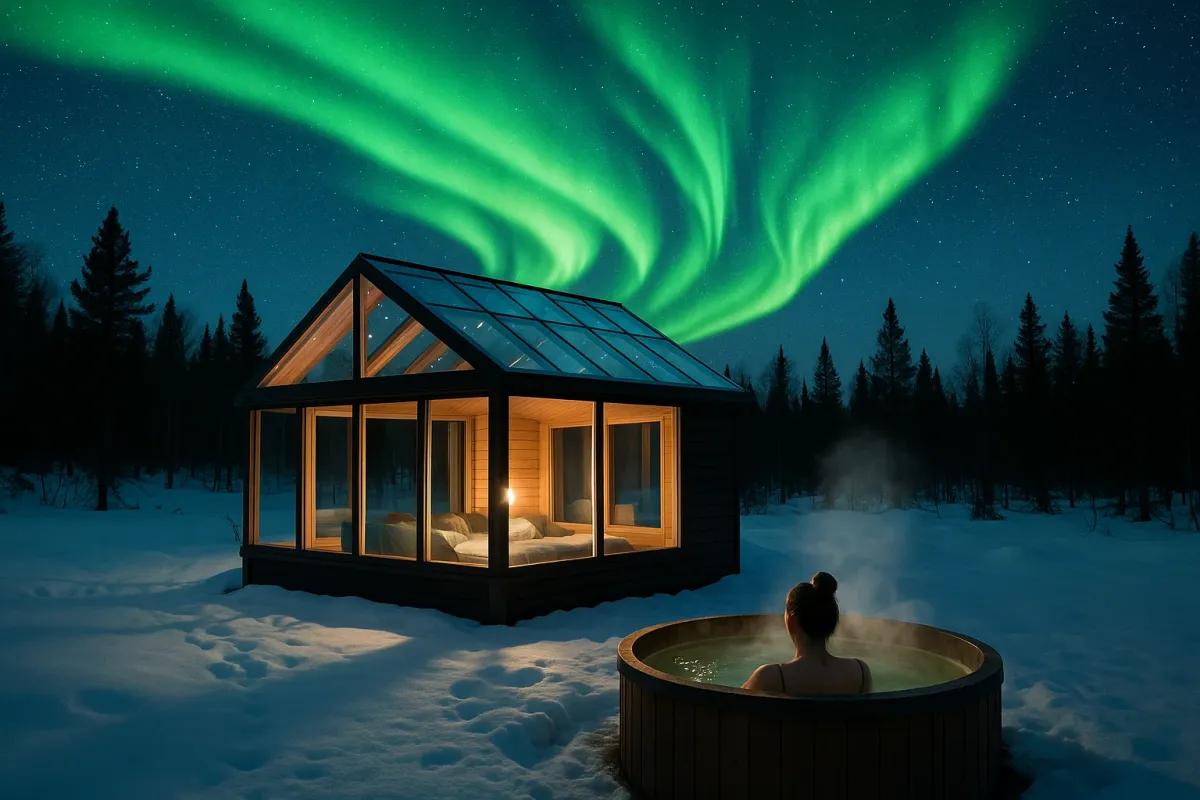
Where mass‑market travelers crowd onto buses from Tromsø or Reykjavik, those in the know instead book ultra‑limited suites: glass igloos with heated smart glass that reduces condensation, spa lodges with retractable roofs at secluded properties in northern Norway, and off‑grid chalets in Swedish Lapland with blackout‑controlled lighting schemes so that your room, deck, and outdoor hot tub are color‑calibrated to keep the sky, not the interior, as the star. The subtle trend: the best resorts are not promising that the aurora will appear—they’re promising that if it does, nothing in your orbit will get in its way.
Designing Darkness: The New Aesthetic of Night
One of the more refined shifts in exclusive aurora resorts is an appreciation that darkness, when intentionally designed, is as much a luxury as light. High‑end properties in the Nordic regions—particularly those clustered near Abisko in Sweden and the more remote reaches of Finnish Lapland—are now competing on their ability to sculpt the night rather than conquer it. This goes far beyond “low light pollution.” It’s about lighting that is orchestrated, not merely dimmed.
Architects are collaborating with light designers to create corridors illuminated by candle‑temperature LEDs that preserve night vision; path lighting that hugs the ground and uses narrow beams to avoid flare in the sky; and interior schemes that transition from warm dining light to aurora‑ready twilight as you move toward viewing terraces. Some top‑tier lodges now feature “dark concierges”—staff trained to calibrate exterior lighting levels, switch off non‑essential glow, and guide guests safely without compromising a single photon of the heavens above. When the Northern Lights erupt across the sky, you’re not craning around security floodlights or lobby glare; you are enveloped in a darkness that has been deliberately, exquisitely composed.
From Excursion to Residency: Slow Aurora Itineraries
The mainstream traveler flies in for three or four nights, chases the lights with a tour operator, and leaves with a handful of photos. Luxury travelers are doing something very different: turning aurora season into a temporary residency in the Arctic. High‑end resorts across northern Norway and Iceland are quietly curating longer, more atmospheric stays—ten days, two weeks, even month‑long immersions—where the Northern Lights become a recurring presence, not a one‑night spectacle.
These stays blend ultra‑comfortable private villas or chalets with rhythm and ritual: late‑night hot spring sessions in Iceland timed to peak aurora windows; sunrise snowshoeing and private heli‑skiing in Norway; midday sauna programs in Finnish Lapland that sync bio‑rhythms so guests remain alert and energized for late‑night skywatching. Rather than frenetically “hunting” the aurora, you allow it to arrive into a life you are temporarily living there. For UHNW guests who are increasingly embracing “longer, fewer, richer” trips, this slow aurora approach is less about ticking off a bucket‑list item and more about inhabiting a parallel winter existence—where spreadsheets and boardrooms feel as distant as the constellations overhead.
Private Science: Turning the Sky into Your Personal Observatory
The new apex of aurora luxury is not the room type, but the intellectual access wrapped around the experience. High‑end Nordic lodges and private tour operators are now partnering with astrophysicists, aurora researchers, and polar photographers to create what are essentially private observatories for one family, one couple, or one ultra‑select group. The experience is discreetly academic—but in the most indulgent way.
Imagine checking into a secluded, design‑driven cabin in northern Sweden and finding a curated library on space weather, a compact but sophisticated telescope system, and a pre‑programmed camera rig with ideal aurora settings waiting for you. In the evening, a visiting scientist from a nearby research station joins you for a fireside briefing on the current solar cycle, then steps outside with you as the sky ignites—translating the shifting colors into real‑time explanations of charged particles and magnetic fields. Some resort‑level experiences now quietly include post‑stay deliverables: an edited, gallery‑quality print of your own aurora photograph, or a bespoke “night sky report” recapping the solar activity during your stay. It’s the Northern Lights, elevated from travel memory to personal fieldwork.
Couture Comfort in Sub‑Zero Climates
Luxury in the Arctic is not a fur throw by a fireplace—it is the ability to step into ‑20°C and feel not a flicker of discomfort. As aurora tourism edges upmarket, the most sophisticated resorts are treating cold‑weather readiness the way five‑star urban hotels treat wardrobe pressing or car service: as an integrated, invisible standard. For guests flying in from Dubai, Singapore, or Los Angeles, this is the difference between a novelty and a repeatable ritual.
Top resorts in Finnish and Swedish Lapland increasingly offer bespoke cold‑weather outfitting on arrival: tailored‑fit down suits, insulated boots in your exact size already warmed by your suite’s built‑in drying system, gloves and balaclavas matched to your personal preferences and activity level. Night‑watch gear is laid out by your turndown service next to artisanal thermoses filled with whatever you drink at home before bed—single‑origin hot chocolate, genmaicha tea, or a particular Champagne cuvée maintained at precise serving temperature in the snowdrift outside. Luxury here is not ostentatious; it is the quiet assurance that when your private aurora alert pings at 1:17 a.m., you can be on your own heated deck in under three minutes, fully protected, with nothing between you and the sky but glass, steam, and the hush of falling snow.
Conclusion
As global fascination with the Northern Lights intensifies—fueled by viral photography, personal accounts of “perfect” viewing nights, and heightened awareness of solar cycles—the true frontier of exclusivity is shifting. For the ultra‑wealthy, the question is no longer whether a destination offers aurora viewing, but how intelligently, privately, and artfully it frames the experience.
From resorts that choreograph darkness like a design element to those bringing scientific expertise and couture comfort directly into the suite, aurora‑chasing has become a new benchmark for serious luxury: difficult to mass‑produce, impossible to fake, and best experienced in places where the only thing competing with the night sky is the precision of the hospitality beneath it.
Key Takeaway
The most important thing to remember from this article is that this information can change how you think about Exclusive Resorts.