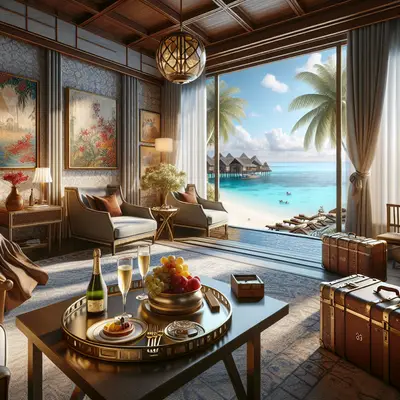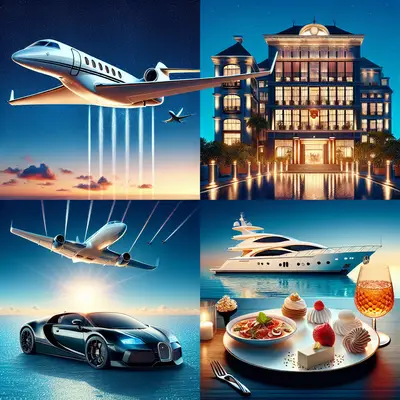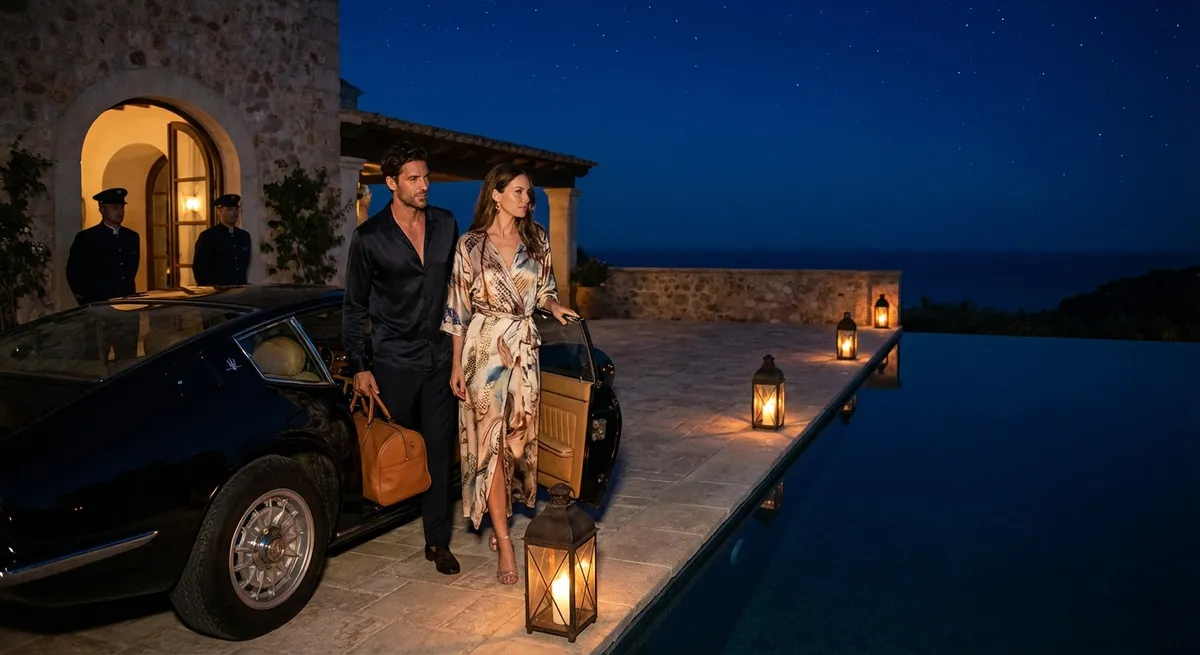
The most compelling luxury today is not a logo, a room category, or a table that everyone wants. It is the quiet choreography behind the scenes: the calls made before you arrive, the doors that open without names being spoken, the way your preferences appear before you articulate them. For the traveler who moves easily between continents and conversations, premium lifestyle is less about display and more about design—of time, of space, of privacy. This is the realm where experiences are not listed on websites, but arranged through relationships, where refinement is measured in precision rather than excess.
Below are five exclusive, seldom-discussed insights that define how the most discerning travelers move through the world—subtly, efficiently, and always a step ahead of the expected.
The Private Architecture of Access
True luxury travel is defined less by where you stay and more by what you can access without friction. For the genuinely well-traveled, “sold out” is simply a starting point, not a conclusion. This has little to do with bravado and everything to do with architecture: the invisible network of concierges, destination specialists, and relationship-driven advisors who operate beyond public inventory.
This architecture does not rely on generic loyalty status alone. It is built over years of consistent patronage, measured discretion, and quiet reliability. A traveler who treats staff well, confirms bookings promptly, and respects cancellation policies becomes the guest whose name opens doors when systems say no. For these clients, a museum closes late for a private viewing, an overbooked restaurant uncovers a “nonexistent” table, and a fully committed yacht suddenly finds an open week.
Those who understand this dynamic rarely ask, “What can I book?” Instead, they ask, “Who can I trust to curate what isn’t listed?” Luxury becomes less a catalog of options and more a private operating system—an ecosystem of people who anticipate needs before they become requests, and whose loyalty is nurtured quietly, over time.
The Precision of Arrival and Departure
For the affluent traveler, the journey begins long before a boarding pass is issued. The finest experiences in motion are measured in how little you feel the logistics, not how grand they appear. A truly premium lifestyle is expressed in the nuance of transitions: from home to airport, jet to car, suite to meeting, without the friction most travelers accept as inevitable.
This begins with deliberate control of time. Rather than chasing the earliest or latest flight, discerning travelers select departure windows that sync with their own circadian rhythms, local traffic patterns, and the tempo of their day on arrival. They leverage airport meet-and-greet services, fast-track immigration, and private lounges not as indulgences but as tools to preserve mental clarity and privacy. To them, a 20-minute immigration queue is not an inconvenience; it is a design flaw.
Ground transfers are treated with equal intentionality. It is not merely about having the “best car” waiting—it is about having the right vehicle for the context, the mood, and the city. In some destinations, an understated sedan offers the safest, most discreet arrival. In others, a chauffeured SUV becomes a mobile office with high-speed connectivity and sound insulation. The rarest luxury is to step out of one environment into another without feeling the seams.
The Curated Silence Between Commitments
In a world that applauds productivity and visibility, the most seasoned luxury travelers protect something rarer than any reservation: deliberate, unstructured quiet. They understand that a truly premium life in motion requires not just staying in exquisite places, but arriving with enough mental and sensory space to appreciate them.
This is why their itineraries are often less dense than they appear. On paper, the schedule looks efficient; in reality, there is intentional negative space built into every day—unblocked hours that are not “free time,” but reserved time. These intervals might hold a private in-suite spa treatment, a solitary walk before dinner, or simply the luxury of reading a physical newspaper on a terrace with no digital interruptions.
This philosophy extends to social commitments. The refined traveler learns to decline gracefully—not because they lack interest, but because they understand the cumulative cost of over-scheduling. They may attend one exceptional dinner rather than three average ones, visit one exhibition deeply instead of five superficially, and commit to one meaningful conversation instead of a dozen cursory exchanges. In doing so, they transform travel from a sequence of checkmarks into a collection of lived, fully absorbed moments.
The Discipline of Understatement
Among those truly accustomed to premium living, the most powerful aesthetic is understatement. It is visible not just in how they dress or which watches they wear, but in how they behave in transit spaces—lounges, lobbies, private terminals, transfers. The goal is not to be noticed, but to pass through spaces with effortless composure.
This discipline begins with attire and demeanor. Clothing is chosen for quality, fit, and versatility rather than overt branding: a jacket that moves from jet cabin to gallery opening without adjustment; luggage that communicates craftsmanship, not cost; footwear that is as suitable for polished marble as for a last-minute detour through an old quarter’s cobblestone streets. The effect is quietly commanding rather than conspicuously curated.
The same restraint applies to interactions. The truly affluent do not negotiate publicly at check-in or raise their voice at security. They understand that status is not proven by demands; it is reflected in how others respond when they speak quietly and politely. They know when to allow a front desk agent to “work on something” and when to involve their travel advisor behind the scenes. Over time, this posture builds a reputation: staff remember the guest who was gracious under pressure—and prioritize them long after louder personalities have passed through.
The Art of Invisible Contingency
The pinnacle of luxury travel is not the absence of problems; it is the presence of elegant contingencies. Savvy travelers assume that flights will misalign, weather will shift, and plans will change. Their serenity comes not from the illusion of control, but from the quiet architecture of “what if” that sits behind every decision.
This might take the form of soft holds on alternative flights, flexible check-in and checkout arrangements negotiated in advance, or restaurant bookings staggered to allow for delays. In destinations with complex political or climatic conditions, it can include backup routes, secondary accommodations, and local fixers who can rearrange logistics in real time. The magic lies in the fact that, to the traveler, these contingencies barely register—they experience only the smooth handover, not the frantic coordination behind it.
This mindset is supported by data and discretion. Health requirements, visa rules, and entry regulations are monitored quietly; medical contingency is considered, not dramatized. A preferred aircraft registry number, a trusted security driver, a familiar villa staff—these are not indulgences but continuity tools. The result is a style of travel where even disruption feels considered, almost choreographed. To the outside observer, everything appears to “just work.” The experienced traveler knows: it works because someone, somewhere, thought about ten other versions of the day that did not.
Conclusion
Modern luxury travel is no longer about the visible trappings of wealth. It is the sum of countless subtle decisions: whom you trust to curate your movements, how you engineer your arrivals, what you choose not to schedule, how quietly you inhabit shared spaces, and how you prepare for the unexpected without advertising it. For those living at this level, the world does not simply open; it unfolds—with precision, grace, and a generosity of detail that few ever see, but the right people always feel.
A premium lifestyle in motion is not an accident of resources; it is an expression of taste, discipline, and design. The most exclusive insight of all is this: true luxury is rarely loud. It is encoded in the way your life moves when no one is watching.
Sources
- [U.S. Department of State – Traveler’s Checklist](https://travel.state.gov/content/travel/en/international-travel/before-you-go/travelers-checklist.html) - Official guidance on preparation, documentation, and contingency planning for international trips
- [International Air Transport Association (IATA) – Timatic](https://www.iata.org/en/services/consulting/timatic/) - Authoritative source used by airlines and travel professionals for visa, passport, and health requirement verification
- [Forbes – The New Definition Of Luxury Travel](https://www.forbes.com/sites/forbesbusinesscouncil/2023/09/15/the-new-definition-of-luxury-travel/) - Explores evolving notions of luxury, including personalization, privacy, and experience over display
- [Virtuoso – 2024 Luxe Report](https://www.virtuoso.com/travel/travel-inspiration/articles/virtuosos-2024-luxe-report) - Insight into high-end traveler preferences, including private access, bespoke experiences, and flexible planning
- [Harvard Business Review – The Case for More Structured Free Time](https://hbr.org/2021/01/the-case-for-more-structured-free-time) - Examines the value of protected, unscheduled time, aligning with the premium traveler’s approach to intentional quiet and mental space
Key Takeaway
The most important thing to remember from this article is that this information can change how you think about Premium Lifestyle.