Fine dining is no longer about white tablecloths and foie gras on cue. For the world’s most discerning travelers, it has evolved into something quieter, more intricate, and decidedly more personal—an experience where the dining room becomes a private salon, the menu a coded language, and the chef a discreet architect of memory. The performance has moved away from spectacle and toward intimacy, away from ostentation and toward orchestration.
For luxury travelers, understanding this shift is the difference between booking a “nice” restaurant and curating a night that feels like it could only have happened to you, in that city, at that moment. Below, we explore five insider perspectives that define where fine dining truly lives now—behind the scenes, between the lines, and just beyond the visible choreography of the room.
The Unlisted Menu: Dining Beyond What’s Printed
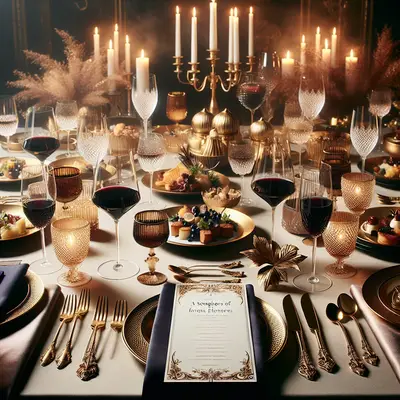
At the highest end of the spectrum, the menu you receive is only the opening move. The real experience lives in what never makes it to print: off-menu courses, cellar-only pairings, and ingredients reserved for those who know to ask. The most sophisticated restaurants maintain a quiet, unpublicized repertoire—dishes the chef will only send if they understand your preferences, your history with the property, or the occasion you’re quietly celebrating.
For luxury travelers, the key is not demanding special treatment, but signaling a deeper engagement with the restaurant’s philosophy. Share what you don’t want, then invite the kitchen to “cook freely” within your comfort zone; it’s the closest thing to culinary bespoke tailoring. The unlisted menu can be as subtle as a single dish inserted between courses, or as dramatic as a complete off-script tasting built around your favorite producer, region, or ingredient. Over time, repeat visits turn into a relationship, and the kitchen begins to hold things back for you: a wild catch that never goes online, a bottle not on the list, a dessert reimagined from your last stay.
The most memorable nights happen when you stop treating the menu as an order form and start treating it as a conversation starter. In the right room, “What would you cook if there were no menu?” is the most powerful question you can ask.
The New Theater: Rooms Designed for Atmosphere, Not Attention
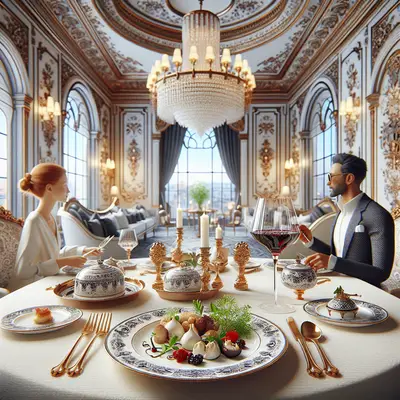
Once, fine dining rooms announced their importance with chandeliers, hushed servers, and a kind of reverent stiffness. Today, the most extraordinary spaces for high-end dining are sculpted not for display, but for emotional effect: soundproofed corners that make conversations feel confidential, lighting calibrated as carefully as a film set, and acoustics engineered so you hear the clink of glassware but never the next table’s negotiation.
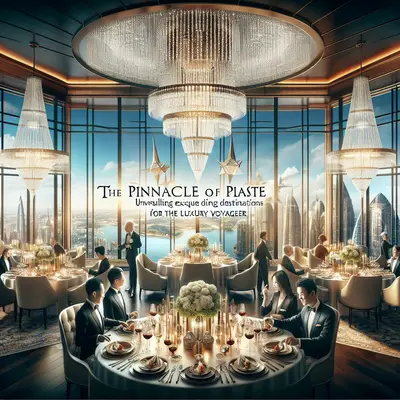
Luxury travelers are increasingly choosing restaurants the way they choose suites: by the hush of the room, the viewline from their seat, the spacing between tables, and how well the atmosphere protects their privacy. Top-tier properties now design dining rooms with layered zones—animated tables at the periphery, softer, more secluded seating for those who prioritize discretion or want to talk real business between courses.
The new theater of fine dining lies in what you don’t hear, don’t see, and don’t notice until you look back: how seamlessly your table was placed out of the camera-line of other guests; how natural it felt that no one passed behind your chair; how the playlist shifted imperceptibly as the evening progressed. These are not accidents—they’re directed, like a play, but rehearsed for invisibility. When choosing where to dine, look beyond the name of the chef and study the room: the best experiences feel as if the architecture is quietly on your side.
The Signature of the Chef: Reading a Menu Like a Collector
For seasoned travelers, a fine dining menu is less about choosing what sounds “good” and more about recognizing the chef’s signature in the details. At the highest level, it’s rarely the caviar, truffle, or wagyu that matters—those are commodities. The real luxury lies in the pairings that shouldn’t work but do, the restraint shown with an expensive ingredient, or the way a single herb, broth, or citrus note reappears as a subtle thread across multiple courses.
Cult diners approach a new restaurant the way serious collectors approach a gallery. They look for the tension between classic and modern techniques, for a dish that reinterprets a local staple with global precision, or for a course that appears deceptively simple but reveals layers of intention on the palate. The chef’s “voice” may be found in a single course that seems almost austere—a broth, a raw preparation, an unfussy plate of vegetables handled with absolute confidence.
Luxury travelers who understand this aren’t chasing the most elaborate plate; they’re looking for the one that could only have been created there, by that chef, in that season. When reading the menu, ask yourself: where is the risk, where is the restraint, and where is the memory? The dishes that answer all three are the ones that linger long after the last course.
The Private Network: Reservation Strategy as a Quiet Art Form
At this level, how you secure a reservation can be as revealing as where you choose to dine. The most sought-after tables aren’t necessarily the ones trending publicly—they’re the restaurants insiders whisper about, the chef counters that never go fully online, the dining rooms that “don’t have space” until the right call comes through. Access often flows through a layered network: your hotel’s most senior concierge, a trusted travel advisor with established relationships, private membership clubs, or even a favorite sommelier who has quietly changed properties.
Savvy travelers treat reservations not as one-offs, but as part of a long-term strategy. They build continuity: returning to a property annually, requesting the same section or sommelier, and allowing the team to track preferences that make future visits effortless. A brief follow-up note after an exceptional meal—sent via your hotel, PA, or advisor—can matter more than any public review. It cements you as a guest worth remembering.
There’s also a growing quiet luxury in deliberately avoiding the obvious names in favor of second-generation talents, private dining rooms within established venues, and chef’s tables that never make it to Instagram. Those in the know leverage their network not to be seen at the table of the moment, but to be recognized—discreetly—at the tables that will matter next year. In fine dining today, access is a currency, and the most valuable reservations are often the ones that never appear on your social feed.
The New Pairings: Beyond Wine Lists and Into Liquid Storytelling
Wine is no longer the unquestioned leading partner of haute cuisine. For luxury travelers, the most compelling fine dining experiences now think about the entire liquid journey of the evening: non-alcoholic pairings crafted with the same rigor as the wine program, rare teas brewed tableside, spirits libraries curated like private art collections, and cocktails engineered to interact with the exact structure of a tasting menu.
Top-tier restaurants are working with mixologists and sommeliers who approach pairing less as a checkbox and more as narrative pacing—introducing bitterness to reset the palate, minerality to bridge courses, and subtle aromatics that echo or contrast the dish without overwhelming it. Fermented juices, lightly carbonated infusions, and low-ABV aperitifs have become the new playgrounds for chefs who want to extend their creativity beyond the plate.
For the guest, the luxury lies in options that feel deeply considered rather than performative. A bespoke pairing built around your mood—lighter, shorter, completely non-alcoholic, or focused on a single region or producer—signals a restaurant that’s thinking beyond templates. Ask not just for a wine pairing, but for the philosophy behind the program: how they handle guests who don’t drink, what they consider their “quietest” pairing, which bottle or infusion they reserve for those who ask one question too many. The answers often reveal how fully the restaurant has embraced the idea that true fine dining is no longer just eaten—it’s sipped, savored, and slowly staged.
Conclusion
For the world’s most discerning travelers, fine dining has evolved into a private language—spoken through unlisted menus, meticulously tuned rooms, subtle signatures of the chef, invisible reservation routes, and liquid pairings that tell a story all their own. The luxury is not in what shouts, but in what barely announces itself at all: the extra course that appears because the kitchen knows you, the seat that feels fated rather than assigned, the pairing that seems to anticipate your next question.
To dine well at this level is to move beyond “the best table in town” and into something more nuanced: knowing where the real experience lives, how to unlock it without forcing it, and when to let the room and the kitchen take the lead. For those willing to engage at that level, fine dining ceases to be an evening out—and becomes another, quieter form of membership.
Key Takeaway
The most important thing to remember from this article is that this information can change how you think about Fine Dining.