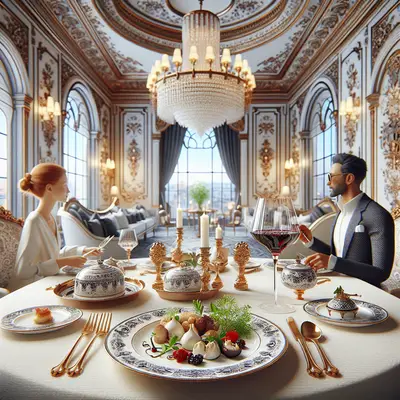
Fine dining at the highest level is no longer about grand chandeliers, encyclopedic wine lists, or foams arranged with surgical precision. For serious travelers, the most coveted tables are defined by what never appears on the website, never makes the menu, and never needs to be said aloud. This is the realm where a maître d’ remembers how you take your espresso in Tokyo because they quietly checked with Paris, and where the most exceptional dish of the night is the one that was never technically offered.
For the Jet Ready traveler, the restaurant is not simply a destination; it is a calibrated instrument of pleasure, privacy, and precision. Below are five exclusive, quietly powerful insights that sit behind the visible performance of fine dining—and subtly separate guests who are merely welcomed from those who are truly expected.
The Invisible Menu: How to Access a Kitchen’s True Personality
At many celebrated restaurants, the printed menu is a public compromise between creativity, logistics, and guest expectations. The real conversation starts once your preferences, timing, and appetite are understood—and communicated in a language the kitchen actually respects.
Luxury travelers who move comfortably through the world’s best dining rooms approach menus as an opening suggestion, not a constraint. They signal tastes in broad strokes—“vegetable-forward but not austere,” “curious about game,” “interested in local shellfish but no heavy creams”—and then step back. This is not an impromptu negotiation at the table, but a quiet choreography that ideally begins before you arrive: a note from your hotel, a pre-arrival email, a concierge who knows what you actually mean when you say “light.”
The invisible menu emerges when a chef feels both trusted and protected. That trust is built when you demonstrate you understand context: perhaps tonight is the first day of white asparagus in season, or the final evening for a rare local crab. Ask a single considered question—“If you were cooking for your closest friends tonight, what would you serve them that’s not on the menu?”—and then release control. In the right room, that one sentence can unlock a progression of dishes that no tasting menu could have promised.
The Quiet Art of Arrival: Reading (and Setting) the Room
In serious dining rooms, the story of your evening is written in the first three minutes—mostly in glances and micro-decisions you may never consciously notice. Where you are seated, what you are offered first, how and when your water is poured: these are not habits; they are signals.
Discreet travelers understand that arrival is a dialogue, not a check-in. They step into the room with controlled ease, taking a moment to read the energy—who is here, how close the tables are, how animated the bar feels, whether the kitchen’s pace seems taut or effortless. They match the tone without mimicry: too boisterous and they disturb the rhythm, too constrained and they become an anomaly the staff must manage.
The most skilled guests establish a tempo from the outset. A brief remark—“We’re here for a relaxed evening, no rush”—or conversely, “We have an engagement afterward; we’d love a focused experience over the next two hours”—is enormously useful if delivered once, clearly, and without urgency. That single calibration allows the team to design your evening with intention rather than guesswork. Your arrival becomes a subtle contract: you offer clarity and courtesy; they respond with precision and protection.
When Service Becomes Discretion: Navigating Attention Without Spectacle
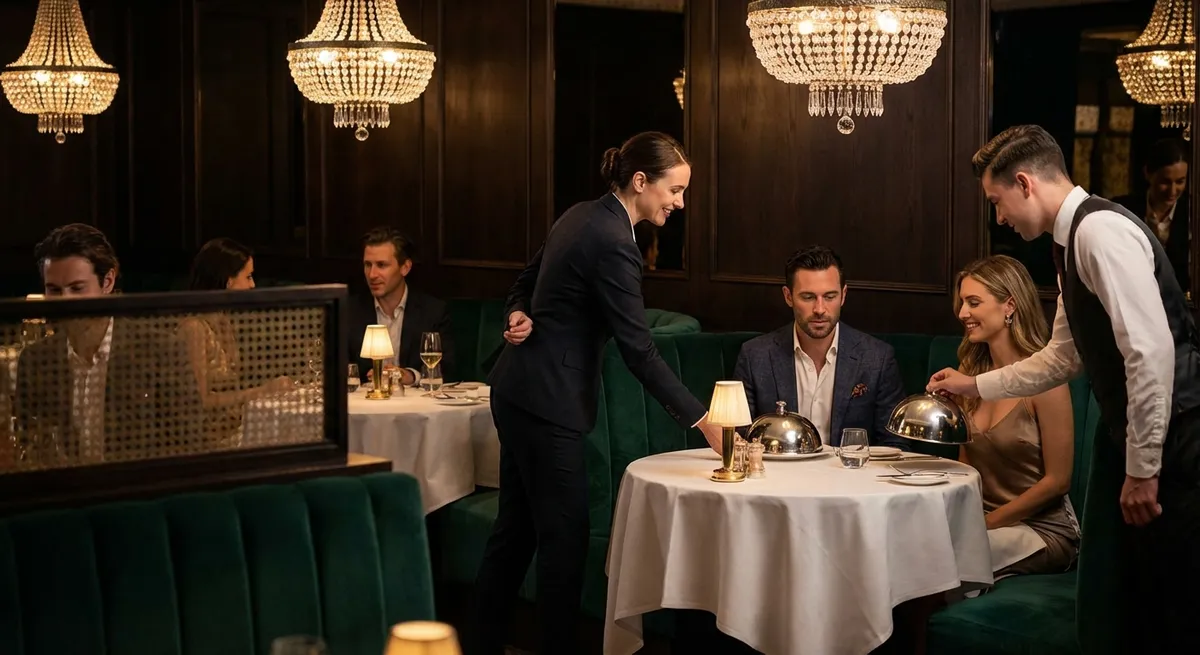
True luxury dining hinges less on elaborate service rituals and more on the precision of when staff are present—and when they are decisively absent. The highest expression of service is not hyper-attentiveness; it is discretion shaped around your personal bandwidth for interaction.
Experienced travelers know how to guide this without ever sounding demanding. They use concise, gracious cues: “We’re enjoying catching up; please feel free to keep explanations brief” or, at the other extreme, “We’re very curious about the wine pairings this evening.” Each phrase unlocks a different level of detail and proximity, giving the team permission to either recede elegantly into the background or lean in with stories, education, and narrative.
The finest rooms will tune their service to your conversational rhythm: they will recognize when a story about a winemaker should be paused mid-sentence because a guest has just shared something personal, then seamlessly resumed later, as if nothing had interrupted. What you are really purchasing in such places is not attention itself, but the ability to modulate that attention without ever having to ask twice—or raise your voice.
Beyond the Wine List: Intelligent Indulgence and Off-Label Access
At the upper end of dining, the wine list is often as intimidating as it is impressive. But for those who dine well around the world, the real luxury is not owning the biggest budget; it is having the confidence to buy intelligence instead of spectacle.
The most sophisticated move is often to abandon the performance of choosing and instead set a clear, thoughtful frame: region you’re curious about, your preferred structure (crisp vs. opulent, lean vs. generous), and a firm financial ceiling expressed with minimal ceremony. A single line—“We’d like to explore Champagne beyond the usual houses, with a focus on grower producers, around [your number]”—signals depth without ostentation and tells a serious sommelier that they are being engaged as a collaborator, not an order-taker.
From there, an entire hidden dimension can open: off-list bottles allocated to regulars, small-production wines the restaurant receives in laughably tiny quantities, or half-bottles and back vintages that were never intended to appear in front of someone comparing prices by the column. Over time, if you return and show curiosity rather than mere acquisitiveness, you may find the wine program reshaping itself around your presence: rare magnums held a little longer, a particularly fine Burgundy quietly “found” on a night the restaurant knows you are in town. The privilege is not in the label; it is in being known.
The Power of the Exit: Leaving a Trace Without Leaving a Mark
In exceptional dining rooms, the evening does not end when the last plate is cleared; it ends when the restaurant has decided exactly what it will remember about you. The exit, for discerning travelers, is therefore strategic—not in a mercenary way, but as an investment in future intimacy.
Two elements matter most: the quality of your feedback and the quality of your gratitude. Instead of generic praise or vague criticism, offer one or two precise observations: a dish that captured the restaurant’s identity perfectly, a pairing that surprised you, a moment of service that felt particularly human. Specificity signals that you were paying attention, which, in a world of constantly photographed courses, is increasingly rare.
The second lever is how you close the loop. If a particular server, sommelier, or manager elevated your evening, ask softly for their name and use it again before you leave. If appropriate, send a brief follow-up note through the hotel concierge or directly to the restaurant, mentioning one or two details you hope they keep. In doing so, you leave a trace that is not performative, but purposeful. Over time, your name will carry a quiet annotation in reservation books from Singapore to San Sebastián: considerate, engaged, worth cooking for.
Conclusion
For those who live much of their lives in motion, dining becomes more than sustenance or spectacle; it becomes one of the few recurring rituals capable of anchoring a city, a day, even a year in memory. At its highest level, fine dining is not about chasing every new opening or capturing every course on a screen; it is about cultivating a private, evolving conversation with the rooms and people who cook for you when it matters.
The five insights above share a single throughline: the most meaningful privileges in fine dining are rarely advertised, rarely requested outright, and rarely granted to those who treat luxury as a performance. They belong instead to travelers who move through the world with curiosity, clarity, and quiet respect—guests for whom a table is not just reserved, but truly kept.
Sources
- The World’s 50 Best Restaurants – Official List and Features – Offers insight into globally recognized fine dining destinations and how they define excellence.
- Michelin Guide – Official Website – Authoritative resource on restaurant ratings, hospitality standards, and the criteria behind Michelin distinctions.
- Court of Master Sommeliers – Provides educational materials and perspectives on wine service, sommelier practice, and beverage programs at the highest level.
- Cornell University School of Hotel Administration – Research on hospitality management, guest experience design, and service innovation in luxury settings.
- Fine Dining Lovers – Industry Insights – Articles and interviews with chefs and hospitality leaders on evolving trends in gastronomy and service culture.
Key Takeaway
The most important thing to remember from this article is that this information can change how you think about Fine Dining.