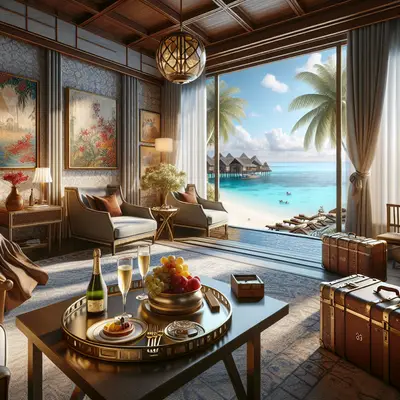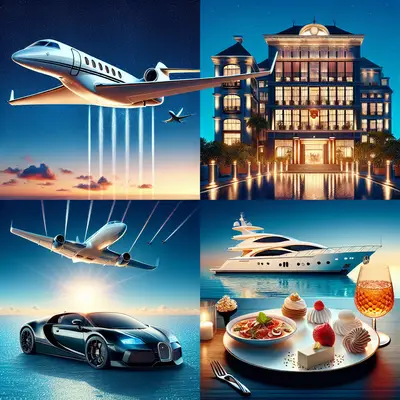
The highest end of travel is no longer about visible opulence; it is about the quiet precision with which a journey is composed. For the most discerning travelers, luxury is expressed in how time is protected, how access is arranged, and how seamlessly each moment connects to the next. This is not about collecting destinations, but about curating a personal geography—one that feels rare, unhurried, and unmistakably one’s own.
Below are five exclusive insights that increasingly define how sophisticated travelers move through the world—and how they design experiences that feel both elevated and profoundly private.
1. Treat Time as the Primary Luxury Asset
For the truly discerning traveler, time is not something to be filled; it is something to be preserved. The most valuable amenity on any itinerary is the absence of friction.
This starts well before boarding. Private or semi-private terminals, fast-track immigration services, and bespoke airport concierges are no longer indulgences but structural tools for reclaiming hours that would otherwise be wasted in queues and crowded lounges. The most sophisticated travelers work with specialists who build “time buffers” into connections, ensuring that delays disrupt neither their schedule nor their state of mind.
Once on the ground, premium itineraries minimize logistical noise. Transfers are synchronized to flights in real time, hotel check‑ins are pre‑completed, and special access (from early check‑ins to after‑hours viewings) is arranged so that the guest’s attention is never pulled toward administration. The subtle art lies in designing a trip where the traveler rarely has to ask, “What happens next?”—because the answer has already been executed.
2. Curate Access, Not Just Upgrades
First-class cabins, chauffeur services, and penthouse suites are visible symbols of luxury; meaningful access is what sits beyond them. The true premium experience is defined less by “better seats” and more by what those seats unlock.
Sophisticated travelers increasingly prioritize experiences that are normally out of reach: private before-hours entry to major cultural institutions, closed‑door tastings with winemakers, access to members‑only city clubs, reservations at restaurants that never technically “have availability.” Behind these experiences is often a network of relationships, not merely a credit card tier or loyalty status.
The difference is subtle but profound. An upgrade improves what was available to everyone; access reconfigures what is possible at all. For luxury travelers, the question is not “How can I be more comfortable within the standard framework?” but “Which doors can be quietly opened that others never see?”
3. Design a Consistent Sensory Signature Across Borders
Refined travel is not just about where you arrive; it is about what consistently follows you there. Discerning guests increasingly cultivate a personal “sensory continuity” that makes each location feel intentionally theirs, rather than a succession of unrelated stays.
For some, that means coordinating preferred bed firmness, pillow type, and room temperature across their favored hotel brands, so each room feels instantly familiar. Others arrange to have the same fragrance—room spray, candle, or amenities—waiting on arrival, anchoring new environments to a recognizable mood. A particular playlist, curated in advance and synced to in‑room audio systems or in‑car transfers, can turn even a new city into a coherent extension of personal taste.
This is not about standardization in the generic sense; it is about personal uniformity at a high level of refinement. When the lighting, textures, and soundscape echo a traveler’s preferences from city to city, the journey stops feeling like a disruption and starts feeling like a moving version of home—one that has been edited for beauty.
4. Let Experts Orchestrate, While You Retain Editorial Control
The most sophisticated itineraries are rarely self‑assembled in a browser tab marathon. They are conceived in collaboration with people whose full‑time work is understanding the nuances of aircraft configurations, villa inventories, seasonal demand curves, and on‑the-ground realities that never appear on booking engines.
Luxury travelers increasingly think of themselves as editors-in-chief of their own travel narratives, not producers. They define the tone, the non‑negotiables, the pace, and the emotional arc of the trip—then allow experts to propose structures, options, and hidden opportunities that align with that editorial brief.
This approach is especially potent when dealing with complex multi‑country journeys or time‑sensitive events (major art fairs, festivals, sporting events, or once‑in‑a‑lifetime natural phenomena). The value is not only in securing the best rooms or seats, but in the invisible risk management: alternative plans pre‑designed in case of weather, strikes, or disruptions, and discreet local support that can smooth last‑minute changes without drama. The luxury is knowing that while you make the final decisions, the choreography has been orchestrated by specialists who understand what’s at stake.
5. Compose Journeys Around Recovery, Not Just Movement
In a world of constant travel possibilities, the most exclusive choice can be restraint. Discerning travelers are no longer impressed by hyper‑compressed itineraries that cram five cities into eight days; they are impressed by itineraries that leave them more centered, not depleted.
This refined approach begins with a simple shift: building travel around energy rather than geography. Long‑haul flights are balanced with planned recovery windows that include evidence‑based interventions—circadian‑aligned lighting, access to high‑quality sleep environments, scientifically informed jet lag protocols, and nutrition that supports rather than disrupts equilibrium.
On arrival, wellness is integrated into the structure of the journey rather than tacked on as a spa day. That might mean prioritizing hotels with serious sleep programs, medically informed wellness facilities, or well‑designed fitness spaces rather than simply booking the most ostentatious suite. It could include private yoga or movement sessions timed to local sunrise, oxygen therapy after night flights, or simply placing quiet time on the itinerary with the same seriousness as a reservation.
The result is an understated but powerful new status symbol: returning home sharper, not exhausted; reset, not merely impressed.
Conclusion
At the highest level, premium travel is not about being seen—it is about moving through the world with deliberate ease. The new markers of sophistication are quiet: calendars that feel spacious, spaces that feel instinctively calibrated, experiences that feel impossibly tailored yet entirely unforced.
For those willing to think beyond upgrades and amenities, these five insights offer a blueprint for a different kind of journey—one in which rarity is measured not by price tags, but by how precisely each moment reflects the life you intend to live, wherever you are on the map.
Sources
- U.S. Department of State – Traveler Information - Authoritative guidance on international travel logistics, risk management, and preparation
- World Tourism Organization (UNWTO) - Data and analysis on global tourism trends, including luxury and high-spend segments
- International Air Transport Association (IATA) - Overview of fast-track and seamless travel initiatives shaping premium passenger experiences
- Mayo Clinic – Jet Lag Disorder - Evidence-based insights into managing jet lag and supporting recovery while traveling
- Forbes – The Rise Of Experiential Luxury Travel - Discussion of shifting luxury traveler preferences toward access, personalization, and experiential depth
Key Takeaway
The most important thing to remember from this article is that this information can change how you think about Premium Lifestyle.