In the upper echelons of travel, a restaurant is never just a place to eat; it is an orchestration of signals, access, and intent. For the luxury traveler, the finest tables are defined less by spectacle and more by the quiet precision of what happens before, around, and after the plate touches the table. Fine dining, at its most accomplished, is not an event but a continuum—of memory, of preference, of unspoken understanding.
This is where the real privilege lies: in subtleties that are invisible to most guests, yet unmistakable once you learn to recognize them. Below, five discreet but decisive insights into how the world’s most refined dining rooms truly work—and how to move through them with fluency.
The Invisible Reservation: How Access Is Actually Curated
The reservation book at a top-tier restaurant is not simply a calendar; it is an ecosystem of relationships. Above the publicly visible availability lies a hidden structure of soft holds, priority guests, and reciprocal favors with concierges, hotel partners, and select travel advisors.
For luxury travelers, the most valuable insight is that access is rarely secured by a single phone call. Elite hotel concierges often maintain direct messaging channels with restaurant leadership, and their request carries the weight of an established relationship. Similarly, certain credit card concierge services and luxury travel advisors are quietly given access to “off-grid” allocations—tables never released to public booking systems.
Timing matters as well. Confirming a table for a prime night is often easier several weeks out, or within 24 hours of the date, when last-minute cancellations quietly reopen the floor plan. Guests who are known for reliability—never missing their booking, arriving on time, treating staff well—are remembered. Over time, your name can shift from a line in the system to an actual guest profile, and that is when doors begin to open before you even knock.
For the frequent luxury traveler, the real strategy is continuity: staying with a small circle of preferred hotels, using a trusted advisor repeatedly, and returning to the same world-class restaurants in different seasons. Fine dining at this level remembers you—and that is one of its greatest indulgences.
The Precision of Personalization: When Service Becomes Memory
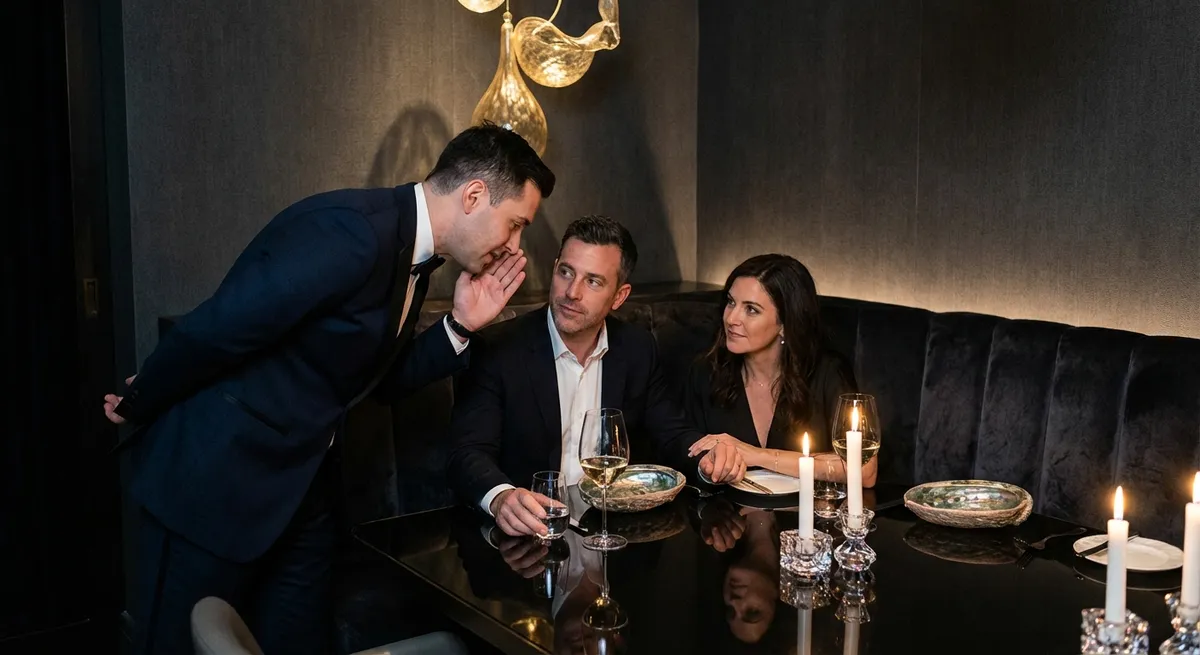
In a high-caliber dining room, personalization is no longer a flourish; it is a discipline. Guest profiles—built ethically and with discretion—often include not just allergies and preferences, but finer details: your preferred water type, glassware style, favorite digestif, whether you favor a corner banquette or a table with a view.
At the best restaurants, this is never performed with fanfare. You simply find the table already set the way you like it. Your welcome drink echoes the apéritif you chose on your prior visit. The chef makes a subtle adjustment to the tasting menu to avoid an ingredient you once left untouched—not because you announced it, but because someone noticed and recorded it.
This level of service is sustained by teams that train relentlessly in non-verbal reading: the pace at which you dine, how quickly you move through wine pairings, whether you’re there for celebration, conversation, or quiet. Courses may be slowed down or accelerated almost imperceptibly based on your energy. Lighting angles, napkin placement, and even the sound level around your table can be adjusted mid-meal without you ever witnessing the choreography.
Luxury travelers who appreciate this dimension of fine dining understand that consistency—returning, building rapport, sharing thoughtful feedback—turns a one-off experience into an evolving relationship. The true hallmark of an elite dining room is not just excellence for everyone, but refinement tailored specifically to you, again and again.
Off-Menu Elegance: The Parallel World of Unlisted Experiences
The most memorable fine dining experiences increasingly live outside the printed menu. For those who know how to ask, many elite restaurants operate a parallel world of unlisted options: off-menu dishes, extended tasting sequences, cellar-only pours, and private kitchen or chef’s counter experiences that never appear on the website.
Sometimes this begins with a simple, respectful question: “If the chef has any seasonal specialties not listed tonight, we would be delighted to experience them.” In other cases, advance communication transforms the structure of the night. Letting the restaurant know of a special occasion weeks in advance may unlock custom courses built around a favorite ingredient, or a quietly staged moment that never turns into a spectacle—but is unmistakably designed for you.
At the bar and in the cellar, the same principles apply. Many world-class restaurants retain a reserve list of rare wines and spirits shown only to trusted or visibly curious guests. Sommeliers, when engaged as partners rather than order-takers, often reveal their most interesting bottles to those open to discovery rather than labels alone. A willingness to explore lesser-known producers or regions signals an appreciation for craft and narrative—something the best wine teams respond to with enthusiasm.
For luxury travelers, this parallel world is less about entitlement and more about curiosity. When approached with genuine interest and respect for the craft, the restaurant’s full creative and experiential range often becomes available—quietly, exquisitely, and just for you.
The Architecture of Atmosphere: Sound, Light, and Spatial Privacy
What separates a merely “good” restaurant from a truly exceptional one rarely begins on the plate. Atmosphere—how it feels to inhabit the room—is designed with the rigor of a theater set, yet it should never feel staged.
Sound is one of the most revealing markers of sophistication. High-end dining rooms now invest heavily in acoustic engineering: paneling hidden behind fabrics, ceiling treatments that absorb rather than reflect noise, flooring chosen not just for beauty but for how it handles footsteps and service movement. The goal is distinct: to allow each table a cocoon of intelligible conversation while sustaining a vibrant hum in the room.
Lighting, too, is meticulously calibrated. Candlelight alone is no longer enough; layered illumination ensures that faces, plates, and centerpieces are lit in subtly different ways. Temperature and intensity may shift almost imperceptibly across the evening—brighter and crisper at early seating, warmer and lower as the night deepens. These refinements shape the emotional tempo of your experience without you consciously noticing.
For the luxury traveler, table positioning can be as important as the menu. The most experienced diners request not a specific table number, but a type of space: slightly offset from the main traffic line, with good sightlines but no direct exposure to doors or service stations. Elite restaurants understand this language and, when possible, respond accordingly.
What emerges is a sense of dignified privacy: you are fully part of the room, yet never on display. In the modern era of constant visibility, this carefully crafted semi-anonymity is one of fine dining’s most understated luxuries.
The Afterglow: How the Finest Restaurants Extend the Experience
The end of the meal is no longer the end of the experience. In the most accomplished venues, what happens after dessert is a deliberate extension of hospitality—a final, lasting impression that follows you well beyond the table.
This may begin with a refined, unhurried exit: the bill arriving only when its presence feels natural, payment handled discreetly, outerwear and personal items returned without pause or confusion. If you are staying in a partner hotel, charges may be seamlessly posted to your room, with preferences noted for future stays.
The afterglow often continues in more tangible forms. A small takeaway—housemade chocolates, a sealed jar of a condiment you admired, a printed card with the menu and wine pairings—serves as a sensory reminder of the evening. In certain properties, the relationship extends digitally: a follow-up note from the restaurant a few days later, perhaps with a recipe, a recommendation in another city, or an update on an upcoming menu evolution.
For repeat luxury travelers, the finest dining rooms begin to act as anchors in their global routines. You might be recognized as a regular even across continents, thanks to groups that share guest profiles responsibly among their flagship properties. Your tastes travel with you; your preferences are already waiting when you arrive in a new city.
This is the ultimate privilege of fine dining at the highest level: not merely to be served, but to be remembered. When you move through the world and the world quietly prepares itself for your arrival, the journey feels not just luxurious, but deeply, almost privately, considered.
Conclusion
For those who travel well, fine dining is less about status and more about fluency—understanding the unspoken grammar of access, personalization, discretion, and continuity that defines the modern high-end table. The most rewarding experiences live in the details that many never see: the invisible reservation networks, the engineered silence, the off-menu generosity, the memory embedded in every interaction.
To recognize and value these subtleties is to step beyond the visible menu and into a more intimate dialogue with the world’s best dining rooms. It is here, in this quiet exchange between guest and house, that fine dining becomes something more than a meal: it becomes a refined way of moving through the world.
Sources
- [Michelin Guide – The Art of Hospitality](https://guide.michelin.com/en/article/people-and-events/the-art-of-hospitality) – Insight into how top restaurants think about service, guest relations, and elevated hospitality
- [The World’s 50 Best Restaurants – What Makes a Great Restaurant?](https://www.theworlds50best.com/stories/News/what-makes-a-great-restaurant.html) – Discussion of the criteria and nuances that differentiate exceptional dining rooms
- [Cornell University School of Hotel Administration – Restaurant Atmospherics and Customer Experience](https://scholarship.sha.cornell.edu/cgi/viewcontent.cgi?article=1026&context=chrpubs) – Research on how sound, lighting, and design impact guest perceptions in hospitality
- [Harvard Business Review – Understanding Customer Experience](https://hbr.org/2007/10/understanding-customer-experience) – Explores how end-to-end experience, including post-service touchpoints, shapes loyalty and satisfaction
- [Forbes Travel Guide – Fine Dining Etiquette and Expectations](https://www.forbestravelguide.com/story/the-rules-of-fine-dining-etiquette) – Overview of modern fine dining standards from a global luxury hospitality authority
Key Takeaway
The most important thing to remember from this article is that this information can change how you think about Fine Dining.